Merchant of Justice – Is it all real?
Where did you get your setting, your characters, and your story elements? Are you talking about real patients and doctors?

I’ve been rewatching the early seasons of NCIS. Fascinating character creations. In one episode, the geek, Tim McGee, has written a best selling novel based on his NCIS experiences. However, McGee makes the mistake of barely changing the names of the characters from their real life inspirations. And the characters are almost carbon copies of their namesakes.
The inspiration for “Shadow Merchant” and it’s follow up “Merchant of Justice” came many years ago. In the field of medicine, there are many interesting and unique “characters”. There are some challenges in writing a story about the place you work and about the people you work with, no matter how fascinating.
First, all doctors are bound by patient doctor confidentiality to never share their patients’ situation. Every day when I came home from work, my wife would ask me about any interesting cases from that day. I carefully avoided answering her questions directly. I would only talk about a “case” in a more general sense if I felt like I needed her understanding, and sometimes solace, over a “case” that troubled me. In planning these books, I made it a rule to NEVER divulge information about real patients.
Second, because of this restriction, I would use only “interesting” cases as a basis for my fictional patients. The field of medicine is filled with “interesting” cases. At one time, I kept a running list of such cases primarily to follow up their course. In radiology, we see the imaging studies and most of the time never meet the patient behind the images. The only way we can find out what happened with the patients (and, subsequently, if our diagnosis was correct) is to keep track of them to see if they have follow up imaging studies with clinical information. This is not to pry or to snoop, but to have a real sense of closure and to learn from our involvement with the patient. Thus, there are many such “interesting” cases that have very similar outcomes and presentations. In my stories, the fictional patients are always a composite of such “interesting” findings and never based on a real patient.
Third, I had to write about my colleagues. One of the reasons I waited so long to write these stories was to give time for some of my colleagues (both within the field of radiology and out of the field) to retire. It’s very difficult to create a character that does not bear at least some resemblance to real doctors, nurses, and other health care personnel. One of the nurses in our department told me just last week she is reading “Merchant of Justice” and could see the stress I faced everyday in my practice. Did I base Dr. Jack Merchant on myself? Absolutely not! Jack and I are totally different people. I chose Jack’s personality based on a composite of differing personality traits. I would never base a character on myself or a colleague without asking permission. As I stated in earlier blogs, I asked one of my partners to give me permission to base a character almost completely on him. He agreed to and loved the character in the first book. Every other character is purely fictional. Any resemblance is only in the mind of my reader!
Fourth, the setting of my story could not be the place where I currently work. I created a fictional city and hospital system. My readers who live in north Louisiana would recognize bits and pieces of “Talako” and “Bayou City”. The setting just as easily be Shreveport/Bossier City or Monroe/West Monroe or Alexandria/Pineville. Squish them all together and place them close to Ruston and you have the location of my fictional cities. Astute readers will recognize certain landmarks such as colleges, restaurants, and so forth. In my first novel, “The 13th Demon” I mentioned the “Women’s Hospital” based on a local campus of the system I work in. At the time the novel came out, I had to give a deposition regarding my interpretation of imaging studies. During some down time when we were not “on the record” my attorney asked about my book and specifically asked about the location of that campus. The attorney representing the hospital system went ballistic! She was horrified I had mentioned our hospital in a fictional setting! She couldn’t give a good reason but I assured her I would never share hospital based “secrets”!
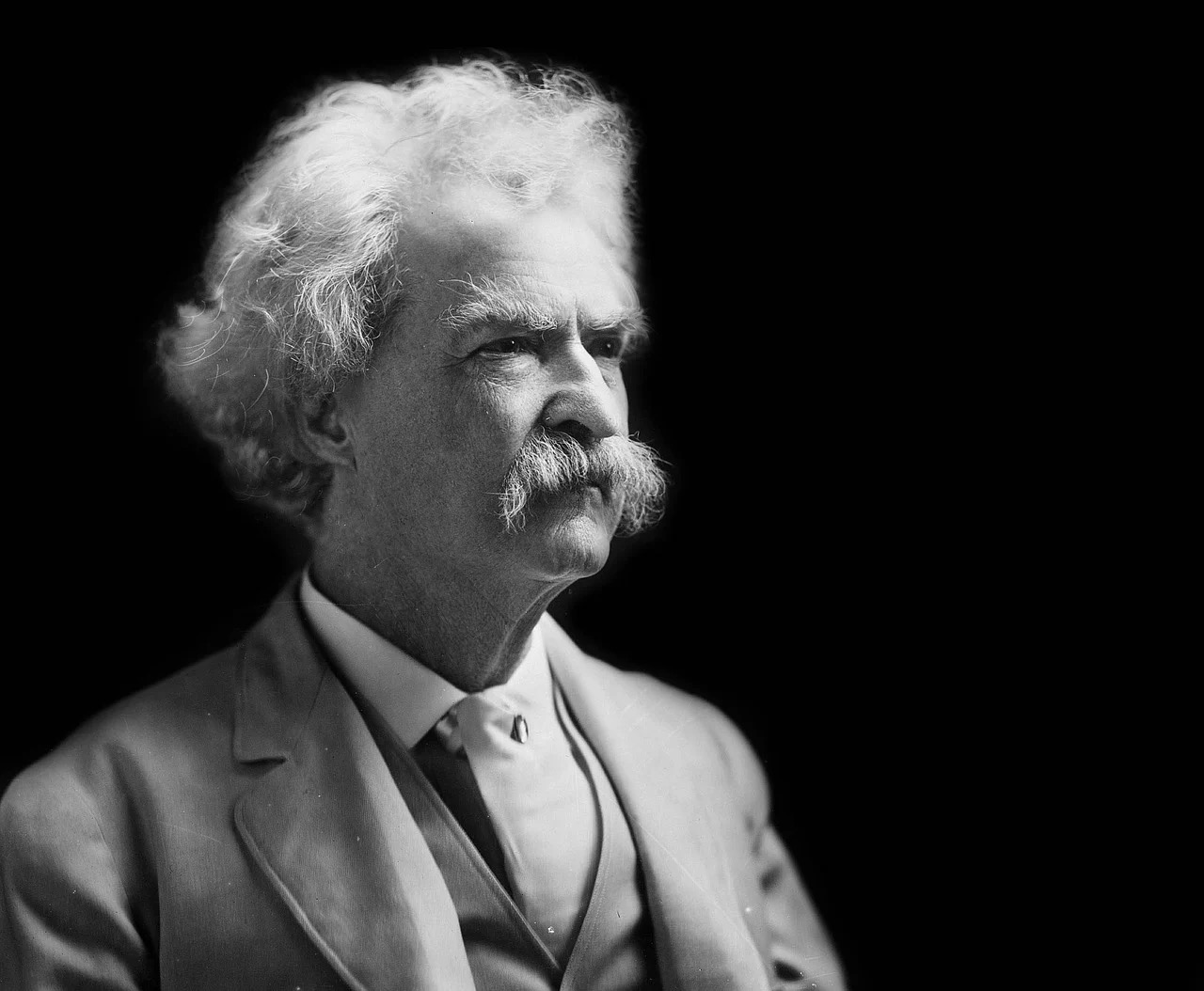
“Write about what you know.” A suggestion from many successful writers. I am hoping my stories are successful in bringing pleasure to my readers. No hidden agendas. No gossip or secrets revealed. All is fiction. But sometimes, “truth is stranger than fiction”. I wondered about where that saying came from and my every reliable AI search revealed: The quote “Truth is stranger than fiction” is widely attributed to Mark Twain. He is often cited as saying it in the context of his novel Pudd’nhead Wilson, where the character says, “Truth is stranger than fiction, because fiction is obliged to stick to possibilities; Truth isn’t.”.
Having stated all of these restrictions I have placed on my writing, I want the reader to understand how Dr. Jack Merchant and his partners, patients, and colleagues came to be. They exist in a fictional city in North Louisiana in a fictional medical center which gives me great latitude in my story telling. Dr. Jack Merchant is a unique creation with no relationship to a real person. He’s just an “interesting case”!

Posted on July 16, 2025, in Steel Chronicles and tagged Alexandria, Book review, books, Bossier City, fiction, forensic medicine, forensic radiology, jack merchant, jury duty, Monroe, murder trial, Pineville, radiology, Shreveport, West Monroe, Writing, writing-tips. Bookmark the permalink. Comments Off on Merchant of Justice – Is it all real?.

 Bruce Hennigan
You must be logged in to post a comment.