Can Christians Make a Difference Anymore?

I am stick to my stomach!
I am repulsed beyond repulsion!
I cannot believe what I read last week.
Two medical ethicists working with an Australian university have written a post in the Journal of Medical Ethics that if abortion of a fetus is allowable, so should be the termination of a newborn.
That’s right! If you missed your chance to have an abortion, then just have the newborn killed! And, we’re not even talking about throwing babies in the fire to worship Baal!
Here is more of what they said:
“Alberto Giubilini with Monash University in Melbourne and Francesca Minerva at the Centre for Applied Philosophy and Public Ethics at the University of Melbourne write that in ‘circumstances occur[ing] after birth such that they would have justified abortion, what we call after-birth abortion should be permissible.’”
They want to change the name of such a “procedure” to “after birth abortion” instead of infanticide because it
“[emphasizes] that the moral status of the individual killed is comparable with that of a fetus (on which ‘abortions’ in the traditional sense are performed) rather than to that of a child.”
You must read this article NOW at this link:
Why am I making such a big deal, other than the obvious reasons this is INSANE and WRONG?
We have seen the devaluation of human life before. When humans become mere chunks of flesh or “meat sacks” then we have lost our way as humans. We are indeed animals. No surprise here. Look what Paul said in Romans 1:
For although they knew God, they neither glorified him as God nor gave thanks to him, but their thinking became futile and their foolish hearts were darkened. Although they claimed to be wise, they became fools and exchanged the glory of the immortal God for images made to look like a mortal human being and birds and animals and reptiles.Therefore God gave them over in the sinful desires of their hearts to sexual impurity for the degrading of their bodies with one another. They exchanged the truth about God for a lie, and worshiped and served created things rather than the Creator—who is forever praised.
Now, I have friends who are atheists, agnostics, evolutionists, naturalists, Muslims, and Hindus. I cannot imagine a single one of them condoning the killing of a newborn because the mother and father no longer desire to raise the child. This transcends world views! This transcends philosophies and theologies. If we, as a culture, condone killing newborn babies, then we, as a culture deserve to disappear; be destroyed; be cast down and ground under like dust. The killing of newborns is NOT an act of a civilized nation. And, any thinking person MUST stand up to this! We simply must! For if we don’t, then we are no better than those who killed 6 million Jews because they were deemed “inferior”!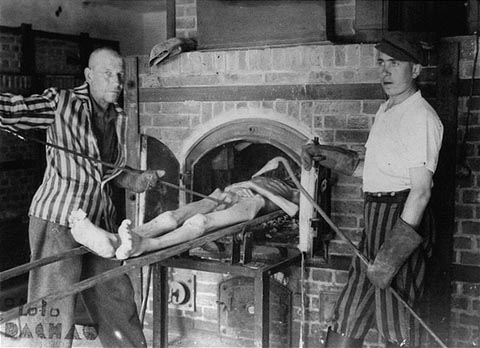
But in doing so, beware. To take a stand on anything implies that we have an absolute value system about that issue. It makes the statement that there are transcendent values; moral values that cannot be made or destroyed by human agency. Our Declaration of Independence labels these as “inalienable” rights. The right to LIFE, LIBERTY, and the PURSUIT OF HAPPINESS. Inalienable means a right that is transcendent and beyond human control. It CANNOT be taken away!
As published Christian authors, those of us who tell the Story of Truth can help to shape and mold public opinion. Writers have for centuries represent the forefront of cultural change mostly for the worse. But, we can do the opposite. We can write blog entries, essays, emails, Tweets, and, yes, stories that champion the kind of values that our culture has lost. We can be salt and light in the world, raising the beacon of Truth to a world steeped in darkness and evil. If we don’t speak up; if we don’t put into words our outrage over such changes in society, then God will hold us accountable for every letter, every word, every paragraph that was put forth for the world to see that failed to raise the light of Jesus Christ.
What do you think? What is our responsibility as followers of Christ? What can all of us, regardless of beliefs, do to help reshape a broken culture?
97 and Still Courting!
My father is 97 years old. He will be 98 in June. He still has a sharp mind. He just has NO filter! His favorite expression: “I’m 97 years old and due some consideration.” Meaning, “I can do whatever I please and say whatever I want.”
 The other day my wife was driving the minivan with my father in the front seat and I was in the back when my father started talking about a young woman at the nursing home, a worker no less, who he is “courting”. When my wife challenged him with the question: “Courting? Just what do you think you are able to do with a 35 year old woman?” I put my fingers in my ears and started humming the theme from Indiana Jones so I wouldn’t have to hear the ensuing conversation.
I never expected to see my father like this. When my mother died in 2004, I thought my father would pine himself to death. But, within four months he had put his sights on “the prettiest woman I ever saw” at church, a “mystery” woman and decided he was going to marry her. She, of course, was never apprised of my father’s plan, thank goodness. He soon moved onto another woman thirty years his junior but lost her to a “younger” man in his 80’s.
The old adage is “old soldiers fade away” but in my father’s case, “old ‘lover boy’s keep on going”. And going. And going. And going! The administrator of our hospital where I practice also is the administrator of my father’s nursing home. He is well acquainted with my father and his ministrations to the ladies. There are 103 women to my one father! So, the administrator tells everyone in the doctor’s cafe about my father and calls him “Lover Boy”. My father loves it!
What is strange is that my father and mother were married for 69 years. They loved each other and doted on each other all their lives. When my mother’s health turned for the worse and her mind began to slip, my father waited on her hand and foot. She was his queen. So, I was shocked to see how easily he moved on to other women. He never did this in life. He was always a one woman man and never stepped out on my mother.
But, I guess now that he is a bachelor again, it’s time to court! I will one day write a book about my father’s waning days. It will be entitled, “When Daddy Gets to Heaven, Momma’s Gonna Give Him Hell!”. I already have a song written with those lyrics so don’t any of you get the idea to turn it into a country western song. It’s copywritten!
The reason I bring this up is because of this incredible video I just ran across about a woman who is 108 years old and a survivor of the holocaust. Watch it and rejoice that life can be so wonderful as long as we have the right attitude.
I know that at times I grow weary of my father’s antics, but he is larger than life and to be lauded for having so much energy and optimism at age 97. How many men his age are courting someone who is 35?
Apologetics, Fiction, Drama, Speaking, and I’m Tired, Oh My!!!!
January and February are usually quiet months for me as an author. With one notable exception. Last year, my editor sent me the first editorial suggestions for “The 13th Demon” in February and I spent the month working on a major rewrite for the book that came out in October of 2011. This year, I was prepared to spend mid February to March on the book. I was thinking that January would be quiet. Dead. Nothing would happen.
Wrong!!!!!
Here it is the end of February and I am SOOOOO busy and I love it! Already, I’m out of breath and the year has just begun. And, according to my stalwart editor, Andy, the second book “The 12th Demon” out this coming October is MUCH better than book one. I’m getting stoked for a good year.
Bottom Line so far: God is so good. And, as I look forward to 2012 and look back to where God has brought me from, I realize I’m riding the wave of His plan for my life, not mine. And, that is just where I need to be.
Item #1 — Drama. I never wanted to be involved in drama. And yet, God positioned me to be in charge of a drama ministry at Brookwood Baptist Church for 15 years!!! Because of my experience with drama, I am requested often to speak on a multitude of topics relating to drama in the church. This past weekend, I spoke at the annual Louisiana Music and Drama Festival on my work with kids in our church’s Kidstuf program. That work involves writing and rewriting and adapting scripts for weekly drama and directing adults to act like kids. The weird things is, Kidstuf is oddly about apologetics. You know, the defense of the Christian faith; the establishment of the fact that our worldview is based on sound, rational thinking. So, how does Kidstuf work? Each month, we teach the kids a “virture” or value, like honesty, self-control, honor, generosity, sacrifice, etc. And those virtues are rooted in sound scripture. And how do we convey this to the kids? Through edgy sketches and drama that makes them THINK! That’s right! We’re making our kids think critically about the world around them. Imagine that! Which leads me toL
Item #2 — Apologetics. I never imagined I would be in this field. For one thing, I never knew it existed until I was challenged by my scientific colleagues on why I was a Christian. This story I’ve shared many times before. But, I never imagined I would become a trained apologist and then use that apologetics to defend my faith and help out with kids who are being twisted and deformed by our postmodern culture. In fact, since the first of the year I have spoken four times at major venues on apologetics! That is in addition to the speaking engagement at the drama festival. I had the wonderful opportunity to speak to our state Evangelism Conference. And then, I was invited to come and speak to Mark Sutton Ministries’ seminary class on apologetics. And then, I was invited to speak at two different “LifeGroup” sessions here in my home city. Tomorrow night, my best friend Mark Riser and I will be speaking at the launch of a new church series on the Life of Christ.
I mean, this is just too weird!!! How did I get into this? But, you know what else happened? Somehow apologetics made me want to write fiction that used those facts as the basis for stories and that led to . . .
Item #3 — Published Christian Author in Speculative Fiction. I started out at the age of 13 writing science fiction. For years I tried to get published and put my writing career on the shelf to conquer college and medical school. When I came back to it, God say “Write Drama” and that is what I did. In 1995 a series of children’s plays was published by Contemporary Drama. Wait! It’s supposed to be science fiction! And then, I got depressed. Bad depressed and worked through it in two years and my pastor said “Let’s write a book on depression.” And we did and in 2001 came “Conquering Depression” published by Broadman & Holman. But, where was the science fiction? I brooded over my multiple manuscripts of science fiction all in various stages of development and nothing happened. I told God I would write whatever he wanted me to write. After all, I hadn’t been too successful with the science fiction stuff, but God had used me to touch lives with other kinds of writing. Maybe the big Dude Upstairs knows what He’s doing!
I woke up one Saturday morning with this weird, scary, horror type story in my head that used, wait for it, apologetics as a center piece and the results, 30 days later, was “The 13 Demon”. I didn’t want to do what I now know is “speculative fiction”. I wanted to stick to good old hard science fiction. But, God had other plans. And now I’m writing, published, apologizing, kidstuffing and . . .
Item #4 — Speaking Career. Back in 2008 when I was taking a course in apologetics I was required to go to this Dynamic Communication Workshop and learn how to, uh, communicate. Get out of here! I already KNOW how to communicate! I write. I speak. I direct. I act. I chase little monkeys around the kid’s area. But, I had no choice. If I wanted to get my Certified Apologetic Instructor certification, I would head out at once to DCW. Guess what? Life. Changing. Experience! Bada bing! I was Co Mun Icating! And, now, I am getting all kinds of request to come and speak on everything from “How Can I Know God Exists?” to “Writing and Adapting Scripts for Children” to “Should I Self Publish or Not?”
Here I am smack dab in the middle of a plan I never imagined. I wanted to be the next Michael Crichton. Well, in a way, my speculative fiction is similar to the style he used. So, did God allow me to have the desires of my heart. You bet you He did! Man, what a year so far!
So, I’m contemplating a new endeavor. I’m considering starting a website dedicated to “apologetic fiction”. What does this mean? Simply, my goal would be to equip Christian fiction and non fiction writers with ways to use their writing to show the truth of the Christian worldview. I plan on talking about LEGACY — the mean and women of the past who used their writing to advance Truth. People such as C. S. Lewis and Tolkien and Chesterton. I plan on touching on BASICS, the basic tenets of apologetics — philosophy, history, science and how we can think again as Christians. How to use those elements in your writing. I plan on REVIEWS, covering books both fiction and non fiction about Christian apologetics so that you, the author, will know which book is best for your research. I plan on exposing FORBIDDEN topics, what my LifeGroup pastor, Weston, calls “speculative theology”. These are topics we Christians LOVE to argue over but that can become a stumbling block to non believers and skeptics we are trying to reach with our writing. And, I want to invite other authors to submit PARABLES, stories, poems, essays, blog posts illustrating the need for Truth in today’s postmodern culture. And finally, a little game in “NAME THAT WORLDVIEW” where I review a novel, a television show, a movie, etc. and see if you can figure what worldview is being portrayed.
So there it is. Look soon for the site intitled PARABOLE, the Greek word for parable. Is it more work? Yes! But, it is no more work than I am involved in right now preparing for these teaching and speaking engagements.
So, if you might be interested in exploring such a site, send me a comment. Make a suggestion. Let’s see if we can proclaim TRUTH to the world through our FICTION and our WRITING.
Now, if you’ll excuse me, I need a nap!!!!!
“The Realms Thereunder” by Ross Lawhead — A Book Review
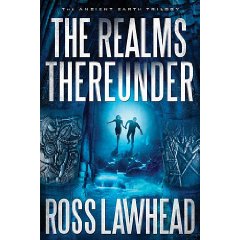 “The Realms Thereunder” is an exciting and fascinating book of inspirational fantasy by the son of Stephen Lawhead, Ross Lawhead. The story centers around two young adults who vanished several years prior to the present only to resurface to a world that is now filled with danger. Daniel lives as a homeless waif, wandering the streets of Oxford looking out for the reappearance of vile creatures who inhabit an underground world filled with gnomes and trolls and “yfelgopes”.
Freya is trying her best to put the past behind her and her obsession with doorways and portals underscores her bad experiences from the past. For, both young adults disappeared into an underground labyrinth with ageless knights who battle a growing evil that threatens to destroy the world. And they did so simply by walking through the wrong opening!
Daniel and Freya traveled with the knights to the underground kingdom of Nidergeard. There, they meet the almost immortal sage, Ealdstan the Ancient who revealed that they alone could stop the coming war with his nemesis, Gad. The book weaves back and forth from the present to Daniel and Freya’s experiences in the past.
Freya is soon fooled into thinking she has joined a band of fighters preparing for the coming invasion and thus is neutralized. Daniel falls through another portal into a fairy land where he must commit a vile crime in order to return to our world in time to stop the coming evil forces.
The Sleeping Knights were a really fascinating and engaging feature of the story. I loved this aspect of ancient knights reawakening to defend the world against evil. I kept recalling the old knight in “Indiana Jones and the Last Crusade” looking Indiana in the eye and saying “You chose wisely.” And, Ross Lawhead chose wisely. What great characters were these knights!
At first, the device of shifting back and forth between the present and the past was somewhat jarring. But, as the story progressed this feature was actually compelling as the story threads both reached a climax at the end of the novel. Well done.
“The Realms Thereunder” is well written and its fantasy worlds well realized and developed. The inspirational elements are toned down and, frankly, I would not call this book “Christian Fiction”. It functions well as a book in the secular world as well in the Christian fiction world. The reader will not be disappointed at the travails, trials, and triumphs of its two young adults. I can’t wait for book two!
* Book link – http://www.amazon.com/Realms-Thereunder-Ancient-Earth/dp/1595549099/
Author’s Web site – http://www.rosslawhead.com/blog/
Participants’ links:
http://ofbattlesdragonsandswordsofadamant.blogspot.com/“> Gillian Adams
http://tessbissell.wordpress.com/“> Red Bissell
http://www.AdventuresInFiction.blogspot.com/“> Keanan Brand
http://rbclibrary.wordpress.com/“> Beckie Burnham
http://www.hiddenvalleysimplicity.com“> Melissa Carswell
http://jeffchapmanwriter.blogspot.com/“> Jeff Chapman
http://csffblogtour.com/“> CSFF Blog Tour
http://tweezlereads.blogspot.com/“> Theresa Dunlap
http://home.earthlink.net/~wyverns/“> Emmalyn Edwards
http://projectinga.blogspot.com/“> April Erwin
http://vicsmediaroom.wordpress.com/“> Victor Gentile
http://going-greene.blogspot.com/“>Tori Greene
http://www.thehahnhuntinglodge.com/“> Nikole Hahn
http://realmofhearts.blogspot.com/“> Ryan Heart<
http://fantasythyme.blogspot.com“> Timothy Hicks
http://www.christopherhopper.com/blog/“> Christopher Hopper
http://www.spoiledfortheordinary.blogspot.com/“> Jason Joyner
http://carolkeen.blogspot.com/“> Carol Keen
http://krystisbooks.blogspot.com/“> Krystine Kercher
http://mharvireads.blogspot.com/“> Marzabeth
http://www.shannonmcdermott.com/?page_id=189“> Shannon McDermott
http://rebeccaluellamiller.wordpress.com/“> Rebecca LuElla Miller
http://thebookfae.wordpress.com“> Mirriam Neal
http://www.questwriter.blogspot.com/“> Eve Nielsen
http://linalamont.blogspot.com/“> Nissa
http://www.leastread.blogspot.com/“> John W. Otte
http://dragonbloggin.blogspot.com/“> Donita K. Paul
http://www.bookwomanjoan.blogspot.com/“> Joan Nienhuis
http://justanotherbookbag.blogspot.com/“> Crista Richey
http://www.sarahsawyer.com/blog“> Sarah Sawyer
http://www.chawnaschroeder.blogspot.com/“> Chawna Schroeder
http://reviewsfromtheheart.blogspot.com/“> Kathleen Smith
http://www.mindsinger.com/“> Donna Swanson
http://www.rachelstarrthomson.com/inklings/“> Rachel Starr Thomson
http://christiansf.blogspot.com/“> Steve Trower
http://frederation.wordpress.com“> Fred Warren
http://www.fantasyandfaith.com“> Dona Watson
http://www.shanewerlinger.com/“> Shane Werlinger
http://www.theravenquill.blogspot.com/“> Nicole White
http://finishedthebook.blogspot.com/“> Rachel Wyant
Pump up Your Writing by Speaking!
Here is a copy of one of my “how to” blogs for “Just the Write Charisma“. I thought I would reproduce it here for those of you interested in the writing life.
Recently, I was listening to an interview of a Christian speculative fiction author. A blogtalk radio “station” out of Canada with a listening audience in the hundreds of thousands had granted this author an hour long interview to talk about his book. As I listened, I was appalled. Was this man a communicator? Didn’t he write a novel? How was it he was such an inarticulate speaker?
 I began to listen to other podcast interviews and online interviews and I discovered something. As authors, we are the masters of the WRITTEN word, but often we are abysmal with the SPOKEN word. That author I mentioned above? That was me, Bruce Hennigan, in an interview for my first self published novel.
My journey since then has been totally unanticipated. I am an apologist, or one who is trained to defend the truth of the Christian worldview and since that interview, I have become part of a local organization, SBCAN or Shreveport Bossier Christian Apologetics Network, producing seminars and mini-retreats on how to defend the Christian faith in an increasingly hostile culture. I sat down and asked myself, “Why has God chosen to make me an apologist AND a novelist? What do the two have to do with each other?”
Well, God has shown me an answer. And it is simply this. One way we as authors can promote our WRITTEN word is by becoming SPEAKERS and communicating, with clarity, the message that underlies our novels. From a strictly utilitarian point of view, speaking in public can afford us the opportunity to promote our works. So, how is this accomplished? Let me give you four suggestions:
ONE — REFINE YOUR COMMUNICATION SKILLS
I enrolled in the Certified Apologetic Instructor program from my denominations North American Mission Board under the direction of one of the most awesome speakers and generally all around wonderful brother in Christ, Mike Licona. [link] As part of this intensive training program, Mike required us to attend the Dynamic Communications Workshop (Now known as the SCORRE Conference). Now, I have been a public speaking since high school. I am producer, director, playwright, and actor in church based drama. I have spoken at dozens of writer’s conferences on writing plays as well as dozens of regional and national drama festivals. Why would I have to attend a communications workshop?
While DCW isn’t the only workshop out there, I can tell you unequivocally that it changed my life. Really! It changed my life! This Christian based program showed me where I was going wrong and taught me invaluable skills in communication. I cannot recommend this program highly enough. Yes, it is expensive. Yes, it is intensive. But, as authors, we must master the skill of selling ourselves in interviews and podcasts and videocasts. If we stumble and mumble and “UMM” our way through an interview, who in their right mind would want to read what we write!
I had to humble myself and realize I can always be taught something and let the wonderful people at DCW teach me how to promote my novels; how to take my “commodity” of writing and turn it into a “product” that people will want to purchase.
TWO — SPEAK ON WHAT YOU KNOW
But, Bruce, I am NOT a public speaker. What do I know? I’m not an apologist!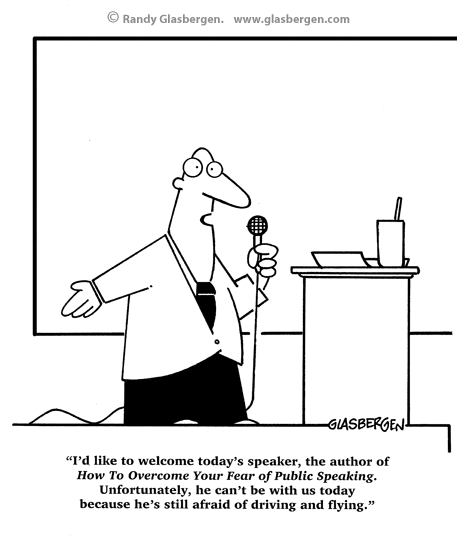
Stop, just a doggone minute! You are too an expert. You didn’t just pull the words out of thin air for your novel — well maybe you did. But, you did research for you novel, right? There is a definite message there; a genre; a “hook”. It might be historical information. It might be technical information. But, there is information there. And, you’ve written about it which makes you an expert. So, talk about it!
An old adage goes, “write about what you know”. As novelists we KNOW about something. If we can write about it, we can talk about it. If nothing else, we can talk about the process of being published authors. Think of all the aspects of the writing life we have had to become experts on. Marketing, publicity, social media, editing, research skills, etc. We have something we can bring to an audience. And, in that process, we promote our novels!
Now, this is not for everyone. Not all of us are comfortable in front of an audience. But, we should at least be articulate enough to pull off an interview or a podcast. Find that subject or subjects you can speak comfortably about and then PLUG your novel!
THREE — SPEAK ON WHO YOU ARE
I was so touched by Mike Dellosso’s accounts of his struggle with colon cancer in his blog. The man is a hero in my book. As a physician, I work with dying patients all the time. We will all face that medical crisis that might end our lives. And, how we face death is determined by our character; our faith; our strength. It also takes guts to speak about our weaknesses; our battles; our losses. But, it also gives us an opportunity to speak about our triumphs! And, as a Christian, I have found that EVERY triumph is ultimately due to the supernatural intervention of my God.
 Years ago, I battled depression. After two years of struggling through counseling and changing my life completely, God led me to develop some tools to keep me from getting depressed again. My pastor approached me about writing a book on the subject. Out of my pain, “Conquering Depression” was picked up and published by B&H Publishing in 2001. For the next three years, Mark Sutton and I offered a three hour seminar on “Conquering Depression”. We required that every participant (or, at least, every couple) purchase a copy of our book and that was included in the price for the seminar, a reasonable $25 per person. We spoke about who we were and we sold lots of books. The downside was the constant need to expose my very soul to my audience; to reveal my inner most secrets and struggles. But, God ultimately received the credit!
Every good novelists writes out of some corner of pain and suffering. Everyone of us bleeds onto the page because of the circumstances of our lives. Find that angle. Be willing to talk about it. Help others struggling with the same issues in life. And, in the process, you can promote your books!
We may end up speaking on something totally unrelated to the subject of our novel. But, people will check out our books because of WHO WE ARE!
FOUR — TIE IN YOUR SPEAKING ENGAGEMENT WITH YOUR WEBSITE
I was invited recently to speak to our state’s Evangelism Conference on apologetics. I chose to speak on the six most commonly asked questions from skeptics. I was anticipating about a dozen for each of my two sessions. I was shocked when over 100 showed up!
I provided a business card with my web address and contact information. And, I told the attendees they could download the pdf version of my notes and resources from my author website under the “Apologetics” tab. I mentioned in passing that I was an author. I even told them that my book, “The 13th Demon” was “apologetic fiction” and an exciting, scary read they could give to their skeptical friends. In one presentation, I guaranteed a possible 100 hits on my website during the next week. The presentation went well, thanks to my DCW training, and out of this presentation I received a dozen more invitations to speak!
Last night, I spoke to a seminary class for my friend and co-author, Mark Sutton. Check out his website for his Haiti ministry: Mark Sutton Ministries. I gave away six copies of “The 13th Demon” and had a wonderful conversation with my Christian brothers and sisters. The week after, I am speaking to our church congregation on apologetics. That following weekend, I will be speaking at our state drama festival. At each one of these venues, I will be passing out contact information and directing listeners to my website. I am hoping for a snowball effect. In fact, I want this to be so successful, I will have to turn down invitations. Although these presentations have very little to do with my novel, they still afford me the opportunity to promote my writing. Don’t know where to start? Ask your agent.
But, as exciting as this all sounds, my one goal is to glorify God through all that I do. God, and God alone is providing for my writing and speaking career. As Mike Dellosso so eloquently put it last week’s Just the Write Charisma blog:
If you expect to reach just one person through your writing then success is within your grasp. If you expect to glorify God with the best you have to offer then success is within your grasp.
So, consider adding a speaker career to your writing career. Start by polishing those communication skills and start turning your “commodity” of writing into your “product”!
What Happens? The Three “C”s of Plot
 James Bell Scott in his excellent book, “Plot & Structure” defines plot very simply: “The what happens is your plot”. What happens? In my editing of “The 12th Demon” I learned some powerful lessons about plot and today I wanted to talk about the three “C”s of plot.
COHERENT
Is you plot coherent? Is it believable? Does it make sense? In one scene in my upcoming book, I have a new character grab two men by the neck and use them like clubs to knock people out of his way. Now, that might work for the Hulk, but it is not a real life possibility. I had to change this part of my plot because it was not believable.
In “The 13th Demon” I originally had an angel appear and save the day. But, my editor suggested this was too much of a deus ex machina. What is this? Here is what our venerable Wikipedia has to say:
“god out of the machine” is a plot device whereby a seemingly unsolvable problem is suddenly and abruptly solved with the contrived and unexpected intervention of some new event, character, ability, or object.
Such a device is not coherent, it does not make sense and is too far fetched to be believable. Make sure your plot stays believable in the context of your story. Plot movement should make sense based on what has happened just before. If I wanted to bring in an angel, I needed to hint early on that such an intervention was possible so the audience would then be anticipating such an event.
COHESIVE
Does your plot hold together? Or, is it full of “plot holes”? In “The 12th Demon” I somehow had to get my main characters from Dallas, Texas to a foreign country. I couldn’t just drop them out of the air into the fray in, say, Transylvania. There had to be a reasonable string of actions leading to them arriving in the foreign country.
Also, there was an object/person very important to the final events in the book that I planted early on in the story. My editor heaped effusive praise on me for carefully planting this object early on so when it did appear it was not out of the blue but its journey through the story to the final events held together and made sense. That part of my story was cohesive.
For instance, Spock just happens to be on the very ice planet that Cadet Kirk is exiled to by the alternate time line Spock and there just happens to be a Federation Outpost with, wait for it, Lt. Montgomery Scott who just happens to have an old shuttle that just happens to have a transporter that can be configured to beam Kirk and Scott back onto . . . well you get it.

CONTINUITY
Continuity as it applies to characters. Because, characters can be used to advance the plot. In “The 12th Demon” I introduce an attorney whose function early on is to create a tension between Jonathan Steel and Josh Knight over the guardian issue. But, I also used this person in later plot developments. He became my “whipping boy”. Problem was, once I used him to advance plot I violated his basic character. In each subsequent scene he seemed to be a totally different person from the scene before. His character lacked continuity. I had to go back and recreate his character and make sure his use as a plot device showed continuity with his character.
So, there you have it. I learned these three “C”s in my editorial process. Make sure your plot is believable, that is COHERENT. Make sure your plot holds together without plot holes and is COHESIVE. And, finally, make sure your plot shows continuity particular with your characters.
Next, I’ll finish up with a discussion of those “characters”.
Lesson #1 Learned — Ditch the Dumb Dialogue!
I have now finished going through my manuscript, “The 12th Demon” twice and making the suggested changes from my editor. The first time was very comprehensive. The second time was for continuity. The third time, yet to come, will be to whittle down the word count. As with my first book edit for “The 13th Demon” my editor, Andy, has taught me SO much. And, since this is a blog for those wondering about the world of writing fiction, I thought I would share the three main lessons I learned in this edit over the next three posts.
DIALOGUE
 I have spend the past 23 years working in church based drama. For 15 of those years, I was the drama director of my church. And, the requirement from my pastor was that every production had to be an original piece written by moi. As time went by, I learned how to write short and long drama and, in fact, I have been speaking at regional and national drama conferences for 13 years. If that sounds like I’m bragging, that is not the point. The point to be taken is this: writing dialogue for the stage is VASTLY different from writing dialogue in fiction.
On the stage, dialogue serves many purposes and one is to introduce exposition. Unlike fiction, there are no descriptions of action and setting. There are no backstories to relate. It is up to the actor to portray these important elements of exposition through the dialogue and the acting. The challenge is to find a balance between dialogue that sounds natural and at the same time conveys important background information. The weak playwright uses “as you know”s to do this:
“As you know, my father is the owner of this vast estate. And, as you know, he just lost a fortune in a sugar cane fire.”
Good dialogue catches the right balance. Just listen to some of the dialogue in your favorite television dramas. See how many times the actors say something that you know they know and everyone else knows but the audience. The worst example is the droning on of “Trekkie” like scenes where the actor says things like, “Engaging autopilot, now!” Just flip the switch, Sulu!
In my writing, I have found that I tend to slide toward dramatic dialogue. I forget I have so many other tools for exposition. One rule I always tell aspiring dramatists is to read their dialogue out loud. This is mainly to avoid difficult to pronounce phrases. But, reading fiction dialogue out loud really gives you a good idea of the sound of the character’s voice. Would they really talk that way? Would they really say those particular words?
 In my just completed third book, “The 11th Demon” I tried something different. I originally wrote the book for Nanowrimo, or National Novel Writing Month. I decided to write each major scene/chapter from the point of view of one of the main characters in first person. This forced me not only to write dialogue as these characters would speak out loud, but to also speak with their inner voices. The exercise helped me further define the characters and find the voice for their dialogue.
Going back to the second book these past couple of weeks has allowed me to rewrite that dialogue now that I have a better feel for how these characters are thinking.
Lessons learned:
— Ask yourself, does the dialogue sound “off”? Does it sound almost “inhuman”? Avoid using dialogue for pure exposition.
— Read dialogue out loud! Try speaking in each character’s “voice”. Take a cue from Walt Disney and become each character as you read through the dialogue copying their body language and their vocal tones.
— Try to make dialogue as real and conversational as possible without dropping in inane drivel like, “Good Morning.” “Good Morning to you.” “How’s your morning going?” “Fine. How about yours?” ETC
— Keep the dialogue consistent. Don’t allow one character to sound like another. Give each character a distinctive voice.
Tomorrow — PLOT
The End of the Night
I am working furiously on “The 12th Demon” and there are vampires. Then, today’s prompt for storypraxis intrigued me so I wrote this short, short story that captures some of the flavor of the characters in “The 12th Demon”. I hope you like it!
the end of the night
“Why haven’t you ever asked to drink my blood?”
Sebastian glanced at our reflection, rather my reflection in the train window. “We are friends, Jon. I’ve never looked upon you as dinner.”
I pulled his cloak up around his shoulders. He was slumping in the train seat, his cloak rumpled, his hair askew and his features haggard. Gone were the imperious, powerful facial expressions of the vampire I had known for months now. “You look terrible, you know.”
Sebastian shrugged. “I’ve looked worse. You should have seen me during the Crusades. Kill or be killed. Drink or die. Blood everywhere. I was an unholy mess.”
I glanced at my watch. Ten minutes. “Why are you doing this?”
Sebastian turned away from the utter darkness outside the train window and his burgundy eyes were moist. He blinked and patted my hand. “It is time. There is always a time to cease; to pause; to exhale.”
“You don’t inhale.” I said.
Sebastian smiled and his fangs were visible. I glanced around at the other passengers on the train, all still and ensconced in their private worlds. Who would he have eaten? Which mortal would he have claimed?
“I could give you just a little.” I held up my wrist.
Sebastian pushed it gently away. “Do not tempt me, Jon. You are the reason I have chosen to die, you know.”
I felt my heart quicken. “Me?”
“Yes, you. Pulling me into your world of arcane investigations. Proving to me that their are monsters worse than I in this world. Showing me that the future of mankind is hopeful and you will prevail in time over the creatures of night and blood and death like me.” He turned back to the window. “How long now?”
“Six minutes.”
“I never chose this lifestyle, Jon. It was thrust upon me. But, I chose every victim over the centuries. Some reluctantly. Some with glee. You have given me Choice again. I don’t have to be this way anymore.” He sat upright in his seat and turned so that his gaze was fully on me. His eyes glowed with his power. “Do you think there is a place for me in heaven? Or, will I live forever, again, with the damned in hell?”
I swallowed under the intensity of his gaze. “I cannot answer that, Sebastian. I refuse to believe you have no soul. I refuse to believe that God’s forgiveness would be denied even you. I have to believe that even Judas could have claimed forgiveness.”
He nodded and released me from his gaze. I relaxed. Never would I feel those eyes on me again. I glanced at my watch. “One minute.”
Sebastian adjusted his cloak and his ascot. He ran a hand through his dark hair and like magic, it was straight and full. He was suddenly himself, his powerful vampire mastery filling the air with electricity. “So, it is morning in France?”
“Yes, we will be out of the Chunnel any moment now.”
Sebastian reached over and turned up his palm. “I have prayed to your God, Jon. I seek His forgiveness. We shall see if He will take me in this new morning at the end of the night. Tell Lydia she has chosen a good man in you. Will you hold my hand?”
I took his cold, frigid hand in mine and he turned his gaze fully on me. Light glimmered out the window for a second and with a lurch, the train passed out of the tunnel into the countryside of France. Sunlight gushed in through the window and fell upon Sebastian’s shoulders. He closed his eyes and waited.
Nothing happened. No fire. No ash. No explosion of flesh. His cheeks flared with crimson and his hand suddenly grew warm in mine. I gasped and released it. He opened his eyes. They were bright blue. His mouth fell open and my eyes grew wide. His fangs were gone. He turned and looked out the window and the morning sun fell full on his face. He looked through his own reflection and smiled.
“Jon, I am forgiven!”
Editing the Book — The Mystery Box!
 There was the mystery of the man in the rocker. My mother often told the story of how, at the age of 14 (which would be in 1932) she was forbidden by her mother and father to go to a dance party. In the small town of Saline, Louisiana there just wasn’t a whole to do for entertainment and my mother really wanted to go to the “Jump Josey” party. So, after she was sent to her room, she slid out the window and ran across the yard in the dark toward the neighbor’s house.
She would talk about how much fun she had at the party and suddenly realizing how late it was. So, she ran back to her house. It was now close to midnight and the little hamlet of Saline was quite and dead as a door knob.
 She eased up on the front porch with her shoes in her hand and into the house. As soon as she shut the front door behind her, she head someone rocking in the rocking chair. In the dim interior of the living room only lit by reflected moonlight, she saw someone sitting in the rocker. Her heart was beating and she was so afraid it was her mother and father. She quietly slipped by the chair but when she passed her parents’ bedrooms, they were both in the bed fast asleep. All of her sisters and her brother were in their beds. Then, who was in the rocker?
This was the great mystery. I remember sitting on the edge of my seat as my mother told this story. She told it over and over throughout my childhood. And, I jumped every time the big Reveal was, well, revealed. In fact, my mother and father were incredible story tellers. It seemed as if their entire lives were one unending story after another. I grew up believing in fairy tales and ghost stories and that good would always triumph over evil. I grew up believing that life, like stories, has a beginning, a middle, and an end and the best stories always have the strongest endings! I grew up believing that everything in life was a story; coherent; understandable; forward moving toward a satisfying end.
In our postmodern culture where relativism rules supreme, it is difficult to see where life in the 21st century matches the classic story. I guess that is why I absolutely LOVE anything written, directed, or produced by J. J. Abrams. Yes, I watched every episode of LOST with breathless anticipation. And, yes, I loved the finale. It fit. It was inevitable. It was a strong ending. I watched every episode of Alias. I went back and watched Mission Impossible III again and loved it. And, Fringe is one of my favorite shows right now. Just last week, I got hooked again by Alcatraz. And, as a life long Trekker, I was shocked and stunned by the brilliance of his reboot of Star Trek.
This past week I began the long process of re-editing my final version of my next book, “The 12th Demon”. Today’s post is about plot. My editor, Andy, had this to say about character development in light of the plot devices regarding one scene where Jonathan Steel has “lost” the teenager Josh again and is reeling with emotional conflict over this failure to keep his promise to Josh’s mother:
You’ve written a novel that centers around action, which is excellent. However here it would be good to dwell on Steel’s emotions. He’s just lost Josh. He would be feeling ashamed, angry, and even afraid. Help the readers connect with him on an emotional level by giving Steel a moment of vulnerability here. See this talk by JJ Abrams about the most important scene in Jaws (start at 10:00).
Here is the link to this most excellent discussion. Watch it over and over and bathe in the pure brilliance of the Mystery Box.
My mother gave me a “mystery box” each and every time she told me that story. It set the stage for my entire life. It has made me an investigator of all around me: people, places, things, situations, life in general. For in everyone of us, in every situation there is a mystery to be solved. And, it is in the journey to discovery that life finds its most satisfaction for me. In fact, the greatest discovery of my life was in finding a relationship with Jesus Christ. Opening that “mystery box” was the most profound experience of all.
Oh, yeah. The rocker.
 My mother slowly crept back into the living room, still carrying her shoes. The rocker was still but as she got closer, it began to rock again and she could now hear a deep, throaty breathing from the person in the chair. Who was it? Had someone come into the house to rob them? She should have run back to her parents’ bedroom and cried for help, but if she did, she would be in big trouble over the dance. So, she drew nearer to the chair and asked, “Who’s there?” More deep breath and now, a thumping sound like a heart beating hard and slow. She reached out in the darkness and felt hard, scratchy whiskers and she screamed, throwing her shoes up in the air. The man in the chair bolted up and landed right on top of her as they toppled to the floor. The man’s face grew close to hers and he . . . licked her. He licked her? The lights came on as the family tumbled into the living room and there perched on top of my mother was the family hound. You can figure out the rest!
Editing the Book — The Femme Fatale
Meet Vivian Darbonne. Without the apostrophe. In “The 13th Demon: Altar of the Spiral Eye”, Vivian is a minor character serving as the “administrative assistant” to the evil Robert Ketrick. She is seductive and surly and her catch phrase is “looky what the cat dragged in”. She drips with Southern charm but beneath her pouty exterior is a calculating creature of pure evil.
In my upcoming book, “The 12th Demon: Mark of the Wolf Dragon” due in October, 2012, Vivian becomes a major character. I recently began my first edit of that book with my editor for Realms books. He had some suggestions for Vivian.
Even the most direct women, I believe, seduce with words and physical suggestion before taking action. Coquettes and Sirens gain sexual power over their victims through the tease, through mixed signals, and through seeming helplessness. I want the audience to be seduced by Vivian. To love her, pity her, and hate her at the same time. You have to work to make her more human, less black leather.
His suggestion: look at the possibility of turning Vivian into a femme fatale. So, what is a femme fatale? That great, inexhaustible, and highly reliable source, Wikipedia describes a femme fatale like this:
A mysterious and seductive woman whose charms ensnare her lovers in bonds of irresistible desire, often leading them into compromising, dangerous, and deadly situations. She is an archetype of literature and art. Her ability to entrance and hypnotize her victim with a spell was in the earliest stories seen as being literally supernatural; hence, the femme fatale today is still often described as having a power akin to an enchantress, seductress, vampire, witch, or demon.
The list of literary “femme fatales” was long but two examples from films interested me. First, the character portrayed by Mary Astor from “The Maltese Falcon”. This is one of my favorite movies featuring Humphrey Bogart as Sam Spade and directed by John Huston. I immediately located the movie in my iTunes list and watched it again.
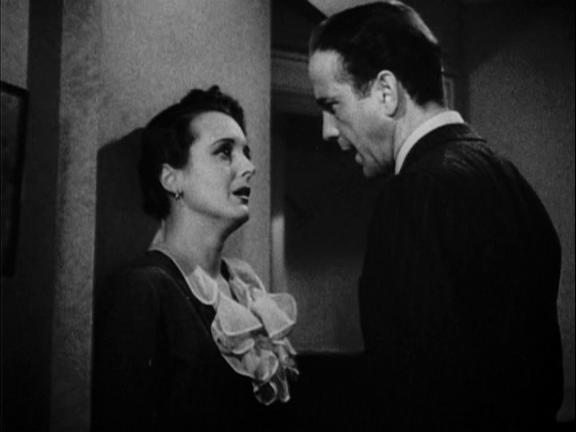 The first time I really sat and watched this movie was in 2005. I was preparing my script for “The Homecoming Tree”. This play was set in 1941 and I wanted to see a movie from that year. Watching the movie helped me work out the nuances of behaviors and habits from that period and most importantly, how men and women interacted.
Astor really irritated me. From the first frame I didn’t like her. I guess it was because instinctively I didn’t trust her. What was it about her that made me not trust her? Maybe it was because she was so ingratiating and so smooth with her conversation. So calm and unflustered. I never like her the entire movie, but I had to admit she was one brazen dame!
What qualities did she exhibit that classified her as a femme fatale? She was seductive, vulnerable, conniving, and slowly reeled in every man she met. Okay so this was one model to use for Vivian. But, there was another movie that I recalled from the 1980’s. It was a very steamy, very explicit movie by one of my favorite writers, Lawrence Kasdan. He had written the screenplays for three of my favorite movies, Raiders of the Lost Ark, The Empire Strikes Back, and Return of the Jedi. And, if you think about Leia in Empire and Marion Ravenwood in Raiders, they both have a bit of the femme fatale. But, nobody, and I do mean nobody can compete with Kathleen Turner as Matty. I tried to watch this movie again but had to turn if off several times when my wife walked through the room. Yes, I felt very, very guilty. But, Matty’s character is the perfect femme fatale for a more modern age than 1941.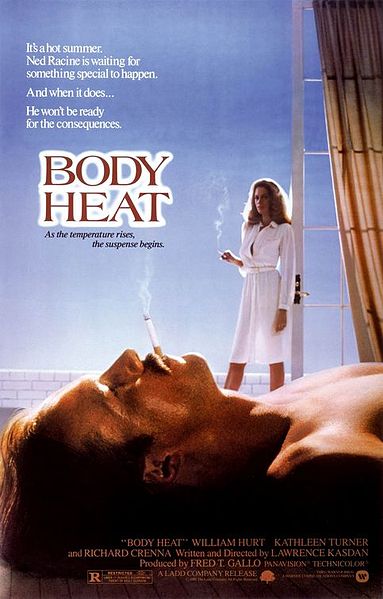
What sets her apart from Mary Astor’s character is the give and take with the man in her life. She pulls him close with her seduction than pushes him away. She entices him with subtle words then slaps him across the face and pushes him out the door. The most famous scene is near the first part of the story. Ned has visited her house for the first time and she has locked him out. Matty is standing in the foyer and she has locked Ned out. He goes from window to window to door and Matty is not moving. She sends the message, “I don’t want you to come in. But, I do want you to come in.” Finally, Ned breaks out a glass door and they, well, they connect.
Matty is up to no good and (spoilers here) she sets Ned up to kill her husband and take the fall then disappears with all her husband’s money to some exotic island.
Back to Vivian. How can I transform her into the perfect femme fatale? How can I take her seductive demeanor and make her helpless and fickle? That is the challenge. Vivian is a major character in “The 12th Demon” and clashes right off with Rudolph Wulf, a man in league with the twelfth demon. Now I have my work cut out for me. So, if you’ll pardon me, Vivian and I have a date tonight. Don’t worry. I’ll keep a close eye on her!
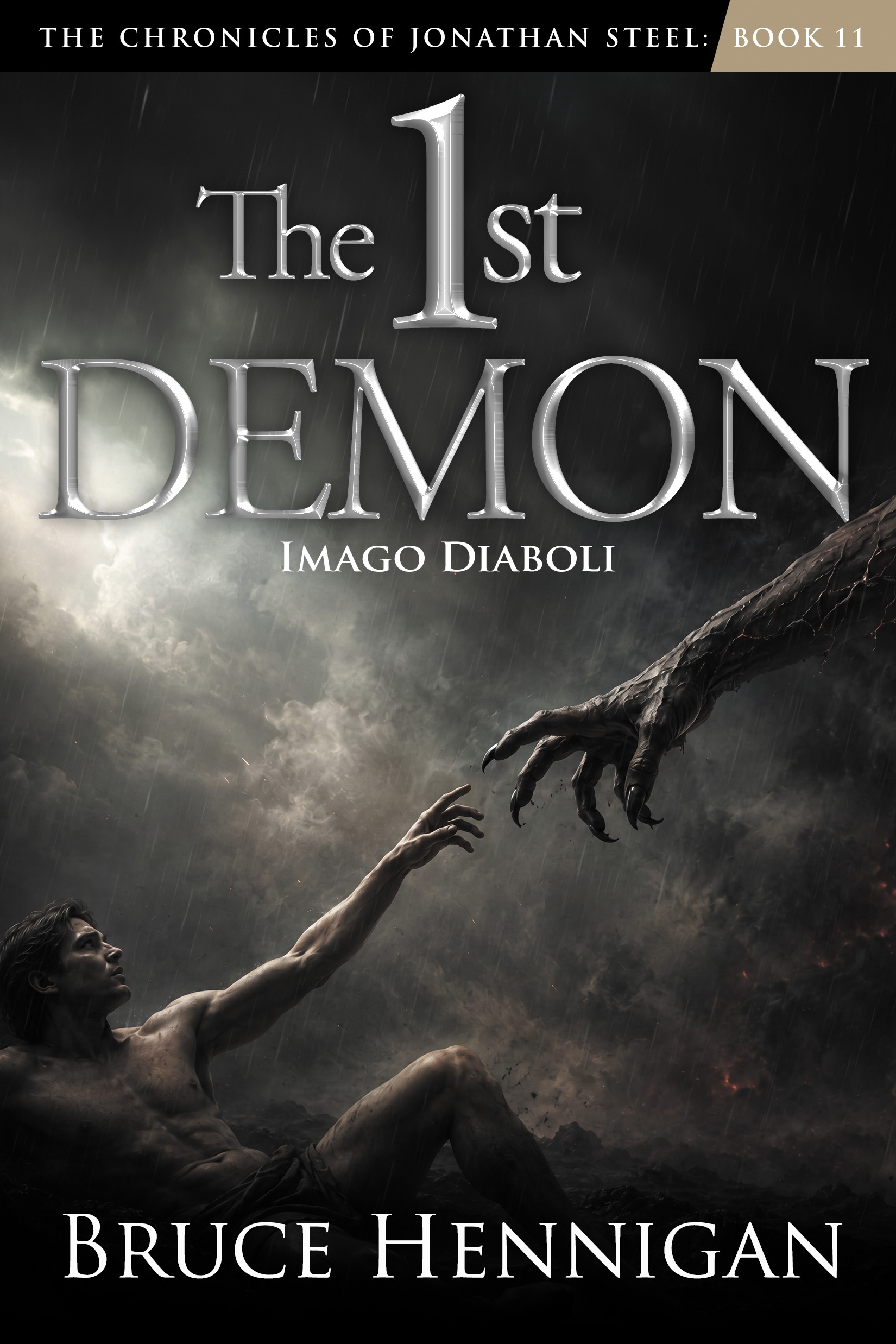
Do you have a favorite “femme fatale”? Share with me. Oh, and if you haven’t read “The 13th Demon” pick up a copy and meet Vivian Darbonne without the apostrophe. See what the cat dragged in!


You must be logged in to post a comment.