Blog Archives
Are We All Equal?
There were only two women in my medical school class of 100 students. Back in the late seventies, women doctors were few and far between. It was a time of women’s “liberation”. Frankly, I didn’t get why women were not treated “equally”. My mother and father had set an example for me. My mother was a working woman back in the 1950’s and 1960’s right up to her retirement as a school bus driver in the mid 1970’s. My father shared the job of cooking and cleaning. Every Saturday morning, he swept the entire house of all the dirt and dust of the prior week. I never heard him say anything about “women’s work”. Both of my sisters were career women even after they married and had children. I guess I was fortunate that my parents taught me that we are all equal in the eyes of God no matter what our gender, religion, race, or stature in life.
That particular belief did not come from a political point of view. It came from our devotion to the teachings of Christ. As I mentioned two posts ago, I want to look at the teachings of Jesus of Nazareth in this Christmas season and focus on those teachings without focusing on the religious claims about Jesus. I maintain that Jesus of Nazareth taught us powerful lessons that transcend culture and religion; lessons that even an atheist or agnostic can live with. In fact, Jesus taught us powerful lessons that everyone should apply to our lives.
Stop for a moment and consider the status of women in first century Palestine. Among the Roman culture, women were considered objects of sexual conquest and were often the center of many pagan religious practices. In the Jewish culture of Jesus of Nazareth, women were very low in status. They were little better than possessions. A man could divorce a women just be stating it was so. Women who had serious illnesses were considered “unclean” and “untouchable”. If a women was caught in the act of adultery, she could be stoned — forget about the man’s transgressions! The testimony of a woman was useless and never to be taken as truthful.
However, we see an entirely different attitude toward women in four encounters Jesus had with a woman of his time. Each encounter is a teaching moment for us all to understand.
First, Jesus met a woman at a well. This woman had been married many times and was considered an adulterer. She came to the well in the heat of the day hoping no one would be there to make fun of her. She was also a Samaritan, considered lower than low; the most undesirable of the undesirables by any good Jew of the day. She met Jesus of Nazareth that day. He did the unthinkable and SPOKE to her! He told her all about herself. He told her that the water she drank from this well was temporary but that she should seek the water of spiritual fulfillment.
Here, Jesus illustrates one of the first of many very powerful lessons that all people are of equal value and of equal worth.
Second, Jesus was dining with a religious leader of the day. A woman appears suddenly at the door. She ignores the ridicule and chiding of the religious leaders and comes to Jesus. She produces a vial of expensive fragrance, pours it on Jesus’ feet and his head and washes his feet with her tears and her hair. While the rest of the men present ridicule the woman’s actions, Jesus accepts them as a gift and says that wherever and whenever his teachings are told down through the ages, this woman’s devotion will be remembered.
Third, is the most beautiful account of the woman caught in the act of adultery. We know from the account that this was a setup to trap Jesus; a trap set by the religious leaders of the day. Jesus literally disarmed the men ready to stone the woman with one of the most powerful statements in history, “Let he who is among you that is without sin cast the first stone.” Then, Jesus does not condemn the woman but tells her she is free and to “go and sin no more”; that is don’t allow yourself to get into the situation you were just in that almost led to your death. Learn from this and CHANGE your life for the better.
Fourth, it is very interesting that the accounts of Jesus’ resurrection tell us that the first people he appeared to were women! A woman’s testimony was worthless! If the story of the resurrection were false; that is, fabricated by men. they certainly would NOT have used women as the first line of testimony to the resurrection. Whether you believe this fact or not, the idea that Jesus would appear to women first is significant. His acknowledgement of women’s worth for its time was astonishing.
We see in these few examples (and there are many more) that Jesus of Nazareth disregarded a person’s race (Samaritan), gender(female), and ethnic background (again, Samaritan). In fact, Jesus had harsh words for the religious leaders of the day calling them hypocrites (More on this later!). Jesus seems to be teaching that we are all equal in his eyes. Amazing, isn’t it? Don’t believe me? Look at this statement from a letter Paul wrote to the church in Galatia:
There is neither Jew nor Gentile, neither slave nor free, nor is there male and female, for you are all one in Christ Jesus. (Galatians 3:28).
Where did we go wrong? How did mankind continue to claim to be followers of Christ in western culture and still embrace the bigotry of race and slavery and the sexism against women? Because we are man; we are broken; we listen but we do not learn. Even our founding fathers ignored their own words from the Declaration of Independence when it came to slavery:
We hold these truths to be self evident that all men are created equal and are endowed by their Creator with certain inalienable rights.
It has only been in the last forty years that we have finally given race and sex a fair deal. But, Jesus taught this fairness two thousand years ago!
What have I learned from the teachings of Jesus of Nazareth that I think all men and women should embrace:
Each person is unique and worthy.
No person is better than another.
No person is greater than another.
One should NEVER be looked down upon because of a difference in race, gender, religious beliefs, or stature in life.
We should look upon EVERYONE with respect as our equal.
Once again, Jesus of Nazareth has taught us to do the HARD thing because it is the RIGHT thing to do!
ResAliens — A Website Review Day 1
It was September, 1966 and I was sitting in front of our new color television set, a short, stocky kid on the soft side of puberty waiting breathlessly for this new show that promised to deliver what Lost in Space had so squandered: real, hard edged science fiction. The opening scene came and left me breathless. The stars filled the screen and a swooshing space ship flew past to the words: “Space, the final frontier . . .” By the end of that episode, the one about Doctor McCoy and the salt vampire, I was thrilled beyond words. Here was a real, honest to God science fiction television show that was gritty, adult oriented and had some pretty scary, but believable monsters.

I was reminded of that day and the feelings evoked in my young mind and heart when I began to read some of the stories on the website, Residential Aliens. Good, old fashioned science fiction, fantasy, and speculative fiction. A combination of Star Trek, Twilight Zone, and Outer Limits with a good portion of Ray Bradbury’s Illustrated Man thrown in.
Where does the name, ResAliens, come from. Here from the website is the explanation:
ResAliens is short for Residential Aliens. A resident alien is, of course, a foreigner who is residing temporarily in a country not her own – an expatriate of sorts. Believers in heaven (or a “coming new age”) often consider themselves to be simply passing through this world on their way to a better land. The idea is that, although we’re currently inhabitants of earth, we’re really citizens of heaven and thus pilgrims, or aliens, on this planet.
The editor of ResAliens, Lyn Perry, defines his scope of publishing in his guidelines:
“In that I am a believer and follower of Christ, yes. The authors and audience, however, may or may not come from a position of faith. But what I think you’ll find here is a collection of quality stories with a moral or spiritual thread that appeals to the broad and varied interests of fans of speculative fiction.
In fact, we accept stories from people of all walks of faith or from none. From my submission guidelines: “I’m looking for quality speculative fiction with a spiritual foundation. Submissions need not be religious in nature. However, we are looking for engaging stories that are truthful to the human experience while offering the reader something of the eternal.”
I downloaded the Collection Issue 5.5 and spot read some of the stories. I also read “Some Assembly Required” and “Snow Angels” to get a taste of the type of fiction you can find on this site.
Today, on day one, I want to discuss the website content. Then, for the next two days, I’ll review the stories I read listed in the paragraph above.
ResAliens is not just another pretty site. It publishes short stories and the author gets PAID for the story! That ‘s right! You can actually get published and get some cold hard cash. Here are the guidelines and payment options:
ResAliens accepts…
+ Flash Fiction (900 to 1500 words)
+ Short Stories (1500 to 6000 words, firm; 7k to 9k stories are too long)
+ Query First: Serials (2 to 4 episodic installments; up to 20k words)
+ Query First: Poetry/Verse (Limited! Note: This is a very hard sell.)
+ Query First: Artwork/Artist Interview. Email: lyn at resaliens dot com.
We Pay…
We offer a one-time payment of $5 per story or artist interview upon acceptance via PayPal (or $4 via USPS), with the option to waive this payment. We’ll also provide a link to your website and/or project page in your Author or Artist Bio. Upon acceptance, your story will appear in an electronic issue, including but not limited to this online venue.
I counted 86 authors and there are short biographies of each author. If you lie one of the archived stories, you can find out what other works these authors have available. There are also some free downloadable anthologies and a store front for buying more of the site’s work.
Here is ResAliens’ Facebook page:
There is also a discussion forum, a Facebook page, a Storefront, and a Twitter feed.
What kind of fiction can you expect? Here is Lyn Perry’s own words:
Combining spec fic and spirituality, and wanting to contribute to faith-informed genre fiction, ResAliens Press offers fans of science fiction, fantasy, and spiritual & supernatural thriller a quality venue in which to share their passion.
After sampling some of the stories, this idea excites me to no end. Here, in one place are dozens of science fiction, fantasy, and speculative stories with a spiritual center. These are stories that push the edge of inspirational fiction and yet, provide the reassurance that there will be a spiritual focus somewhere in the story. Check out the site! Read some of the free stories.
Tomorrow, I will review the story “Some Assembly Required” by T. M. Hunter.
Web site link – http://www.resaliens.com/
Editor’s blog – http://residentialaliens.blogspot.com/
Editor Lyn Perry’s personal blog – http://blogginoutloud.blogspot.com/
CSFF Participants’ links
Noah Arsenault
Brandon Barr
Thomas Clayton Booher
Grace Bridges
Beckie Burnham
Jeff Chapman
CSFF Blog Tour
Carol Bruce Collett
D. G. D. Davidson
Dean Hardy
Katie Hart
Ryan Heart
Jason Joyner
Carol Keen
Shannon McDermott
Rebecca LuElla Miller
Lyn Perry
Sarah Sawyer
Jessica Thomas
Steve Trower
Fred Warren
Phyllis Wheeler
What is your God like?
I can’t help but wonder . . . perhaps no new C. S. Lewis has surfaced in the past fifty years for the very reason that so few writers are starting with the known and speculating from there.
Rebecca LuElla Miller
In the past few days, I have been following two posts: one at www.mikeduran.com about “glorifying God” in our writing. And, then at www.speculativefaith.com a post about how we portray God in our writing. Both of these posts are pale mirror images of each other for they reflect our imperfect human concept of Truth and God.
As a Christian, I believe my job is to do all to further the kingdom of God. If that is glorifying God, then sobeit. Several of the comments in both posts were disturbing to me. One commenter said the God of the Old Testament commanded us to bash babies heads in. I was appalled. Did I get this wrong? Have I read the Bible and missed that portrayal of God? I don’t think so.
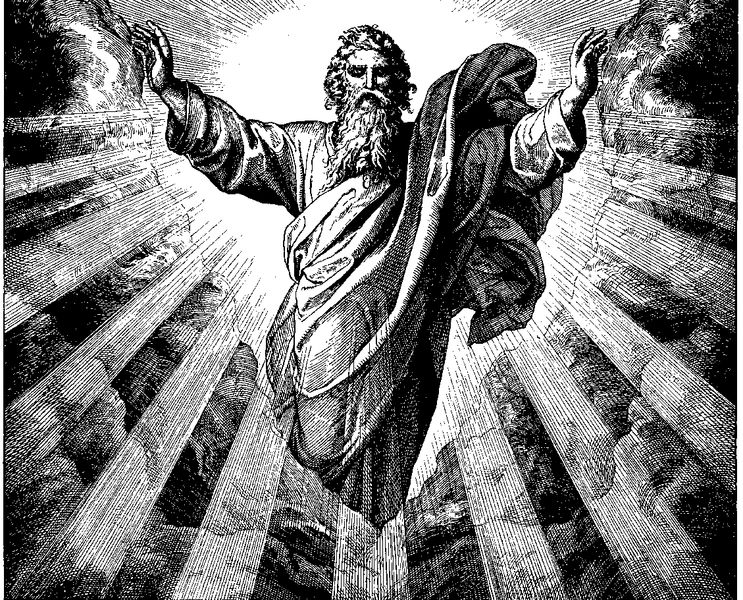
So, this brings up a really good point. We all see God through the lens of our experiences of God. God reveals himself in two ways. He reveals himself through his creation as Paul talked about in Romans 1. But, God has also revealed himself through the scriptures and ultimately, through the incarnation. If our experience of God is more “natural” we may be in danger of worshipping the creation; of making the earth and nature into a demigod. If our experience of God is only from the Old Testament, we may draw the conclusion, right or wrong that God is a hideous monster filled only with jealousy and wrath.

If we experience God only through Jesus, we miss out on the mystery and majesty of the trinity. We must synthesize and merge all concepts of God into our experience.
In our postmodern culture, truth is relative and as a Christian writer, I might find myself asking the question “Can truth be known?” This question implies there may not be such a thing as absolute truth. However, in light of the revealed God in scripture and in nature, truth exists. Jesus said “I am the way, the truth, and the life. And, no one comes to the Father except through me.” That statement is pretty absolute. There doesn’t seem to be any wiggle room. So, if we have truly experienced the God of the Bible, then as writers and Christians we do not ask a question. We make a statement with our writing and our lives. “Truth can be known.”
I was reading these comments in both of these posts because I wanted to be encouraged. Instead I was greatly distressed and depressed. A standard of communication and writing was established. The standard raised here is one I don’t believe anyone writing today can ever meet. Perhaps it is because we are so steeped in postmodernism that we cannot connect with that foundation of reality that drove Lewis and Tolkien and the other excellent authors of the past century mentioned in these comments.
But, we must TRY. Our culture is increasingly post-Christian and we as Christian authors have the onerous duty of trying to reveal truth to a godless, truthless society. It is hard enough to try and meet the standards of these authors. We will fail. But, we must try. We must strive for excellence and quality. And, we must know the God of the scriptures. We will never agree on our knowledge of God for each of us experiences God in unique ways. But, we can respect the Word of God as the revealed Truth as best as any man or woman could have written it.
I just finished Paul Copan’s book “Is God a Moral Monster?” and listened to an excellent podcast, “Straight Thinking” over on reasons.org featuring an interview with Copans. He made the point that much of the depiction of the God of the Old Testament (who commands us to bash in babies’ heads????) is linked to the literary style of writing at the time. Ah, the literary style?
So, even our Old Testament is subject to the same problems we are talking about in these comments. It is written by man, inspired by God, and we must filter the “knowledge” of the authors through their cultural and geopolitical situation at the time of the writing and take the “monstrous” God of the Old Testament with a grain of salt.
I would rather remember the passage where Moses pleaded with God to show Himself. Here, in Walter Wangerin, Jr.’s “The Book of God” is one human’s interpretation of that scripture:

Now, Moses closed his mouth and lowered his hands and turned his face aside. His hair was like smoke. His brow concealed a difficult thought.
Finally, he whispered, “I pray you, O Lord, show me your glory.”
Straightway the wind died. The yellow air stood still. The mountain hushed, as between the heaves of storm.
All at once the Lord God lifted his prophet bodily and set him down in the cleft of the rock. He covered Moses with his hand — that he might not, by the direct sight of the Holy God, die. Then the glory of the Lord began to pass that crack in the mountain, crying, “The Lord! The Lord!”
Only when he was going away did God remove his hand, and Moses saw the back of him.
But while it went, his glory proclaimed: The Lord, merciful, gracious, slow to anger — a God abounding in love. Forgiving iniquity, blotting out sin, but by no means clearing the guilty —
And Moses, as soon as he saw such majesty, bowed his head and worshiped.
Moses started from the “known”, he saw the back of our God and he wrote about his experience. This is the God I know. This is the God I worship. This is the God I write about!

 Bruce Hennigan
You must be logged in to post a comment.