Blog Archives
Merchant of Justice — Have you been on a Jury?

Every person I have met has the same reaction when the dreaded jury summons letter arrives. Emotions border on hatred and homicidal urges. No one wants to serve on a jury! Cooped up in a room with thirteen other strangers (twelve jury members and two alternates) for possibly days and getting paid a pittance! And to top it off, we have no choice! It is the law! Unless, we can come up with a good reason not to be on a jury. Strategies abound on how to dodge jury duty.
However, recently, my efforts fell on deaf ears and I showed up for jury duty. Within hours of sitting in the dull, oppressive courtroom, I was called in the first twelve potential members of the jury. The next morning after hours of lectures on the process of a jury and a trial and the definitions of murder, I was seated on the jury.
I will never forget the first time I sat in the jury box and studied the “perp” or rather, the accused at the far end of a long table. The prosecution sat at the end of the table closest to the jury. The accused and his attorneys sat at the far end.
Clad in a flannel shirt and wearing black rimmed glasses, the man seemed like an ordinary person I might meet at Starbucks or find sitting behind me in a pew at church. He certainly didn’t look like a murderer. Looks can be deceiving. Skin cannot hide what dwells within the heart of man. See what I did there? I’m a writer!
The trial unfolded swiftly after we were seated. Heartbreaking testimony from the victim’s friends and family. Body camera footage from the police arriving just moments after the shooting. On day two, grim and disturbing photographs of the victim’s body from a pathologist with monotonal delivery. He was far too calm for the carnage exposed on the photographs. I’m a doctor and I found the photos very disturbing, nauseating, dehumanizing. I couldn’t begin to imagine what the other jurors were feeling.
Have you ever served on a jury? If so, have you been part of a murder tria? I had trouble sleeping for about a week after it was all said and done. It is one thing to read about such atrocities. It is another to see it laid out in real time before you while looking the murderer in the eyes!
When the guilty verdict was finally delivered and the courtroom was cleared of everyone but the jury and the judge, my first thought was what if the murderer’s family, friends, or cohorts came after us for this verdict? Were we safe? The patina of apparent safety had been stripped away like pain thinner on the bubbled surface of old wood! No one was safe if this seemingly calm, ordinary man had been capable of the macabre and gruesome murder. I can never look around me now without studying every individual, every movement, every possible intention. Safety is an illusion!

The judge assured us that in the thirty years he had presided over criminal cases, no jury member had every suffered from retribution.
I walked away from that experience a changed man. Here are my thoughts.
First, if I was ever accused of a crime, I would want a jury of reasonable, thinking, willing individuals to objectively assess the evidence against me. I wouldn’t want angry, anxious to be done, uncaring people. I know jury duty is a drag. But it is a necessary duty to keep our society from devolving into chaos.
Second, if I were asked to serve on a jury again, I would do it. Did it waste my time? Yes. Did I get reasonable recompense for my time? No! Was I inconvenienced? Yes. But considering that the victim lost her life and was deprived of a future with her grandchildren and friends, four days in a jury box is nothing! When we are chosen to be on a jury, we become the instruments of justice. Even unwillingly, it is a duty we should, albeit reluctantly, embrace.
Third, the experience taught me a lot about law and what really happens in a courtroom. What we see on television and the movie screen during a tense courtroom drama is NOTHING like experiencing it in real time. This man’s life was in OUR hand! We could with a cavalier attitude put the man away for life! Or we could release a monster out on the streets. At the same time, justice could only be served if we did our job objectively and willingly. The harsh reality of the choices we were called to make puts any fictional drama in its shadow.
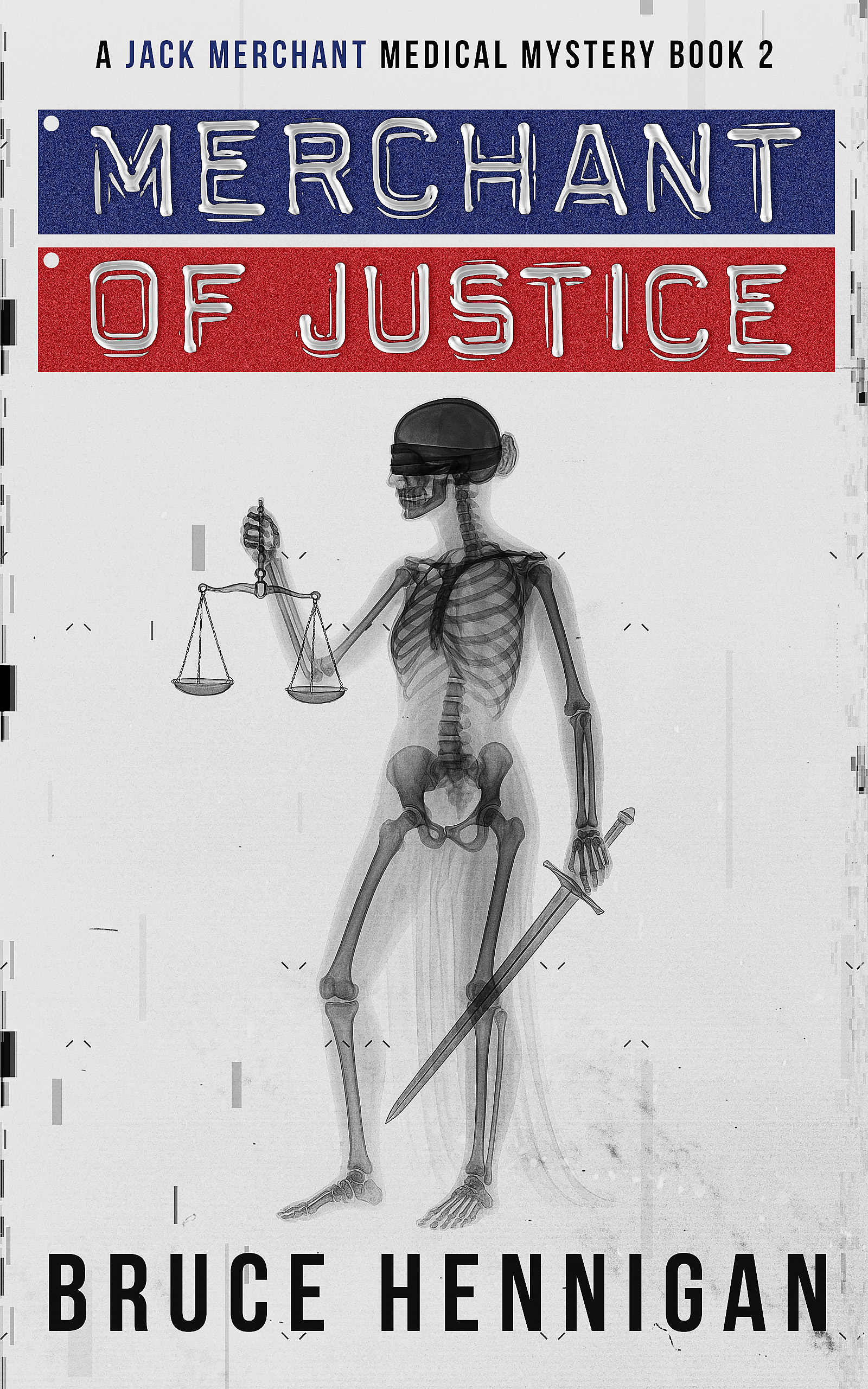
Fourth, the experience provided me an opportunity to share with my readers. My second book about Jack Merchant was not intended to feature jury duty. I had another pathway chosen for Dr. Merchant. But circumstances in my practice group and events concerning members of my practice came dangerously close in real life to what I had intended in fiction. I had to back off and come up with another story. For now. My experience on a jury during a murder trail became the central story of “Merchant of Justice”.
So join Dr. Jack Merchant as he reluctantly becomes the “13th juror”.
Merchant of Justice – Is it all real?
Where did you get your setting, your characters, and your story elements? Are you talking about real patients and doctors?

I’ve been rewatching the early seasons of NCIS. Fascinating character creations. In one episode, the geek, Tim McGee, has written a best selling novel based on his NCIS experiences. However, McGee makes the mistake of barely changing the names of the characters from their real life inspirations. And the characters are almost carbon copies of their namesakes.
The inspiration for “Shadow Merchant” and it’s follow up “Merchant of Justice” came many years ago. In the field of medicine, there are many interesting and unique “characters”. There are some challenges in writing a story about the place you work and about the people you work with, no matter how fascinating.
First, all doctors are bound by patient doctor confidentiality to never share their patients’ situation. Every day when I came home from work, my wife would ask me about any interesting cases from that day. I carefully avoided answering her questions directly. I would only talk about a “case” in a more general sense if I felt like I needed her understanding, and sometimes solace, over a “case” that troubled me. In planning these books, I made it a rule to NEVER divulge information about real patients.
Second, because of this restriction, I would use only “interesting” cases as a basis for my fictional patients. The field of medicine is filled with “interesting” cases. At one time, I kept a running list of such cases primarily to follow up their course. In radiology, we see the imaging studies and most of the time never meet the patient behind the images. The only way we can find out what happened with the patients (and, subsequently, if our diagnosis was correct) is to keep track of them to see if they have follow up imaging studies with clinical information. This is not to pry or to snoop, but to have a real sense of closure and to learn from our involvement with the patient. Thus, there are many such “interesting” cases that have very similar outcomes and presentations. In my stories, the fictional patients are always a composite of such “interesting” findings and never based on a real patient.
Third, I had to write about my colleagues. One of the reasons I waited so long to write these stories was to give time for some of my colleagues (both within the field of radiology and out of the field) to retire. It’s very difficult to create a character that does not bear at least some resemblance to real doctors, nurses, and other health care personnel. One of the nurses in our department told me just last week she is reading “Merchant of Justice” and could see the stress I faced everyday in my practice. Did I base Dr. Jack Merchant on myself? Absolutely not! Jack and I are totally different people. I chose Jack’s personality based on a composite of differing personality traits. I would never base a character on myself or a colleague without asking permission. As I stated in earlier blogs, I asked one of my partners to give me permission to base a character almost completely on him. He agreed to and loved the character in the first book. Every other character is purely fictional. Any resemblance is only in the mind of my reader!
Fourth, the setting of my story could not be the place where I currently work. I created a fictional city and hospital system. My readers who live in north Louisiana would recognize bits and pieces of “Talako” and “Bayou City”. The setting just as easily be Shreveport/Bossier City or Monroe/West Monroe or Alexandria/Pineville. Squish them all together and place them close to Ruston and you have the location of my fictional cities. Astute readers will recognize certain landmarks such as colleges, restaurants, and so forth. In my first novel, “The 13th Demon” I mentioned the “Women’s Hospital” based on a local campus of the system I work in. At the time the novel came out, I had to give a deposition regarding my interpretation of imaging studies. During some down time when we were not “on the record” my attorney asked about my book and specifically asked about the location of that campus. The attorney representing the hospital system went ballistic! She was horrified I had mentioned our hospital in a fictional setting! She couldn’t give a good reason but I assured her I would never share hospital based “secrets”!
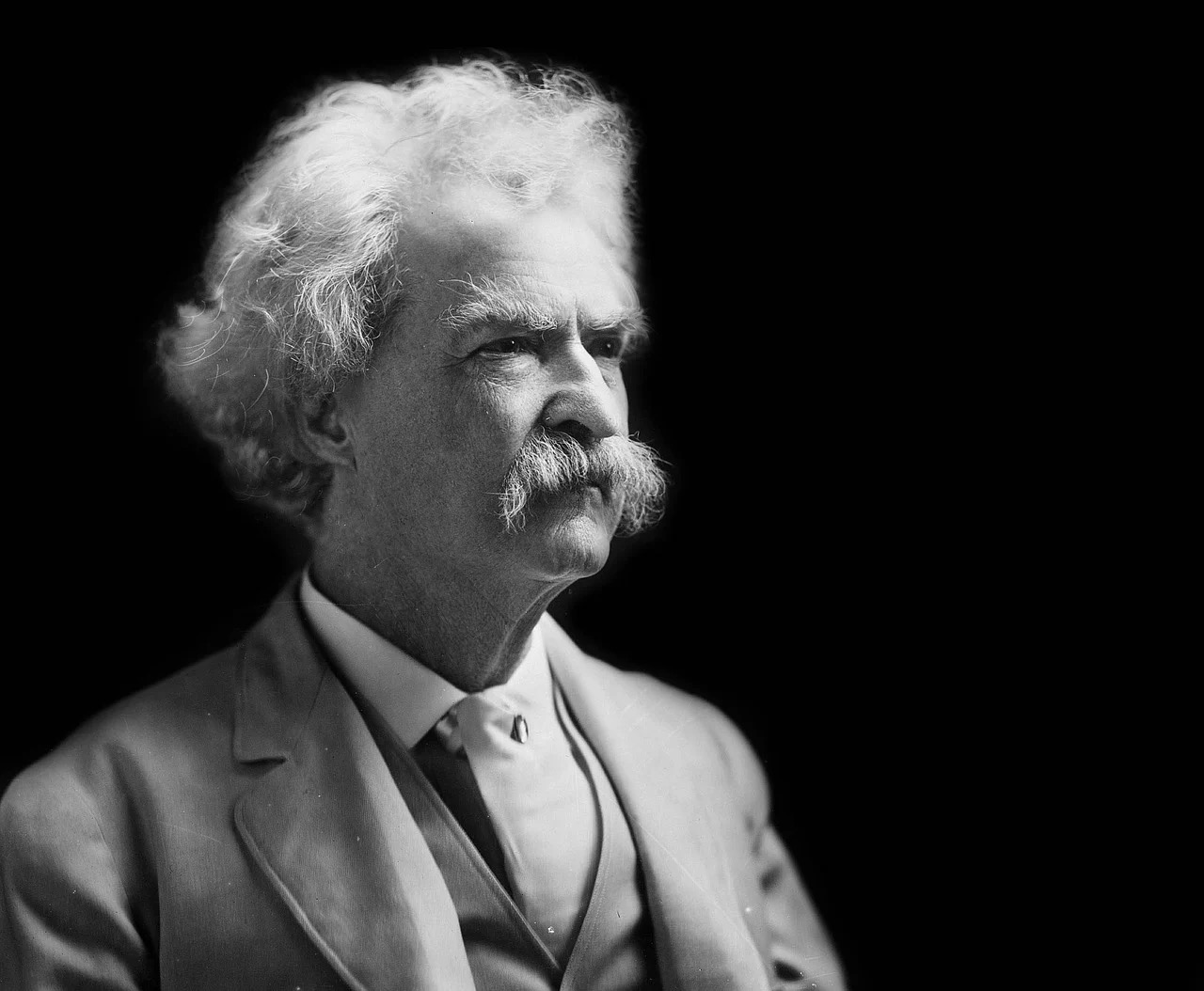
“Write about what you know.” A suggestion from many successful writers. I am hoping my stories are successful in bringing pleasure to my readers. No hidden agendas. No gossip or secrets revealed. All is fiction. But sometimes, “truth is stranger than fiction”. I wondered about where that saying came from and my every reliable AI search revealed: The quote “Truth is stranger than fiction” is widely attributed to Mark Twain. He is often cited as saying it in the context of his novel Pudd’nhead Wilson, where the character says, “Truth is stranger than fiction, because fiction is obliged to stick to possibilities; Truth isn’t.”.
Having stated all of these restrictions I have placed on my writing, I want the reader to understand how Dr. Jack Merchant and his partners, patients, and colleagues came to be. They exist in a fictional city in North Louisiana in a fictional medical center which gives me great latitude in my story telling. Dr. Jack Merchant is a unique creation with no relationship to a real person. He’s just an “interesting case”!
Merchant of Justice — Background
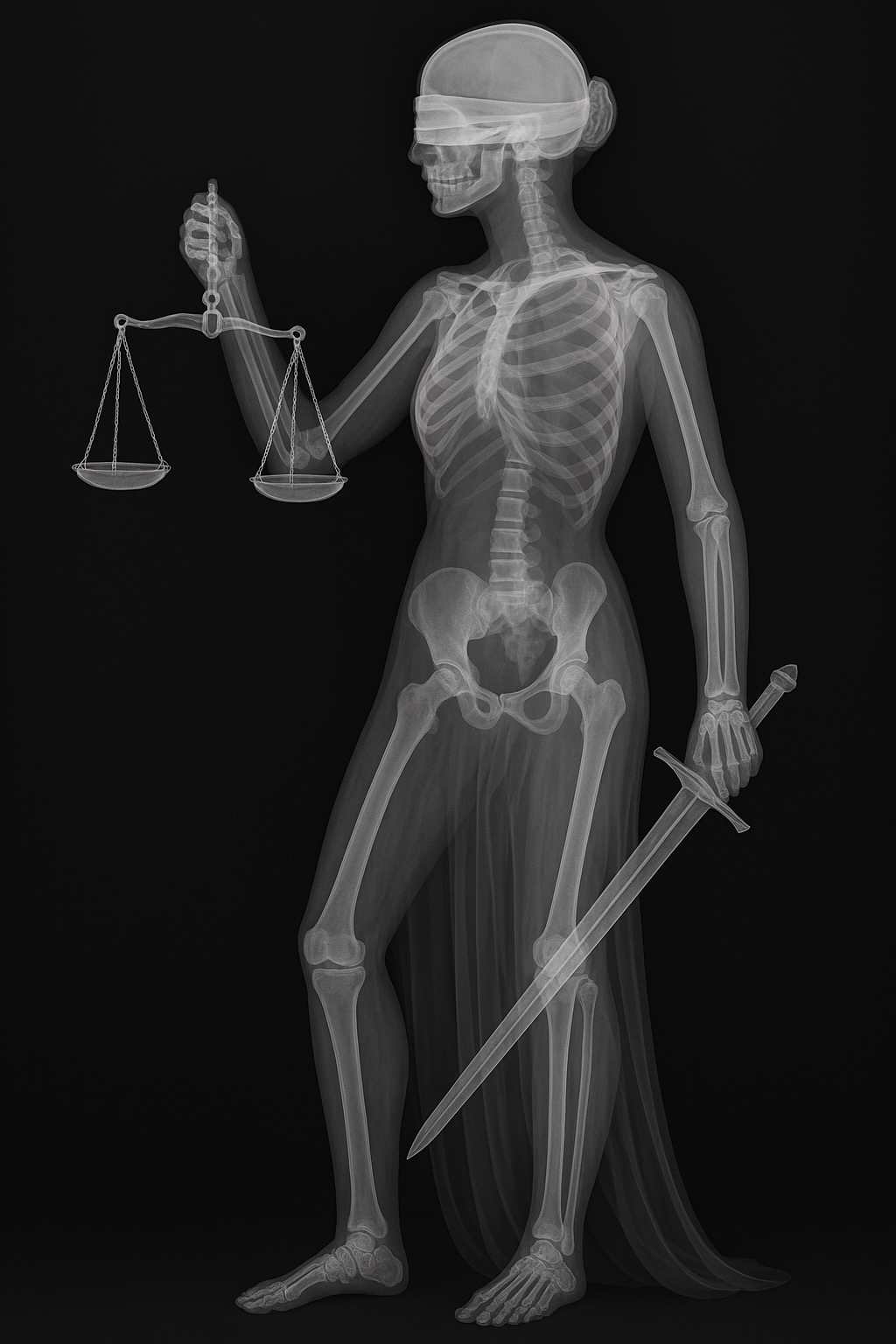
Someone asked me the question, “Why did you choose a forensic radiologist as your main character?”

I can’t remember exactly where I saw the lecture by Dr. Brogdon. I was an eager learner in medical school and had never heard of the field of radiology. Dr. Brogdon spoke eloquently about the field of forensic radiology — radiology imaging used to help solve crimes. He showed a number of cases and I remember my gut wrenching reaction to seeing these X-rays and CAT scans of murder victims.
One case in particular is forever burned into my memory. A patient reported to the emergency room with blood and water leaking from his nose from the beating he received from his assailant. No matter how hard the physicians tried, they could not stop his nose bleed. He soon died. Post mortem X-rays revealed an astonishing finding. Turns out he did not die from the beating. Rather, he died because of the knife blade in his brain.
Years before, in a similar fight for this “wanna be” gladiator in the Saturday night knife and gun club, he had been stabbed in the top of his head. He escaped from his assailant with only a cut on the top of his head. Or so he thought. The knife blade actually broke away from the hilt and lodged itself right between the frontal lobes of his brain, miraculously inserting itself between brain tissue. Over the years, the blade caused him headaches and unending pain which no doubt contributed to his drug use. Over time, the knife blade migrated downward under the pull of gravity until its tip pierced the roof of his nasal cavity. He had a runny nose for months but the latest fight had dislodged the knife blade causing it to pierce completely into the nasal cavity. He died of a nose bleed!
Years later, when I decided to become a radiologist, I felt the tug and pull of the mystery provided by a set of images. Each patient became a puzzle to be solved. I did not want to miss something as dangerous as a knife blade in the brain! In many cases, the radiologist is the knot at the end of the rope in a physician’s attempt to finding a diagnosis. I recall many such strange cases such as the child who was helping her father with remodeling the house. She pulled a nail from the wall with a claw hammer and somehow, the hammer bounced backwards and downwards and imbedded the nail through her sternum almost into her heart!
In today’s world of forensic medicine, forensic radiology is a growing tool for determining cause of death. Post mortem CAT scans are almost as reliable as an autopsy. Post mortem X-rays have been done for years and now, with the addition of CAT scans and even MRIs, the cause of death can be more reliably determined.
One day while working at one of our hospitals, the ER physician came over from his post in the emergency room to go over CAT scan results on one of his patients. I keep the lights low in the office to remove reflections from the high resolution screens. He stepped into my darkened office and laughed.
“Ah, the shadow merchant at work. Plying the shadows and seeking out truth in the darkness.” He said.
My perplexed look of confusion clued him to the fact I had no idea what he was talking about.
“When I was in the military, we called radiologists shadow merchants.” He said gleefully.
And now you know why my first book was named “Shadow Merchant”. I am intrigued by forensic radiology and like my main character, Dr. Jack Merchant, I want to learn more about the discipline of forensic radiology. I decided to write his story about his journey or discovery. And now, you too can join Dr. Jack Merchant as he plies the shadows and darkness for truth in the first book, “Shadow Merchant” and the follow up newest book, “Merchant of Justice”. Go to www.hopeagainbooks.com for more information.

 Bruce Hennigan
You must be logged in to post a comment.