Imago Dei Part 2 — Human Exceptionalism
Here is part two of my post on Imago Dei and Human Exceptionalism. Again, many will have different opinions on this matter but I am using evidence from and excellent book.
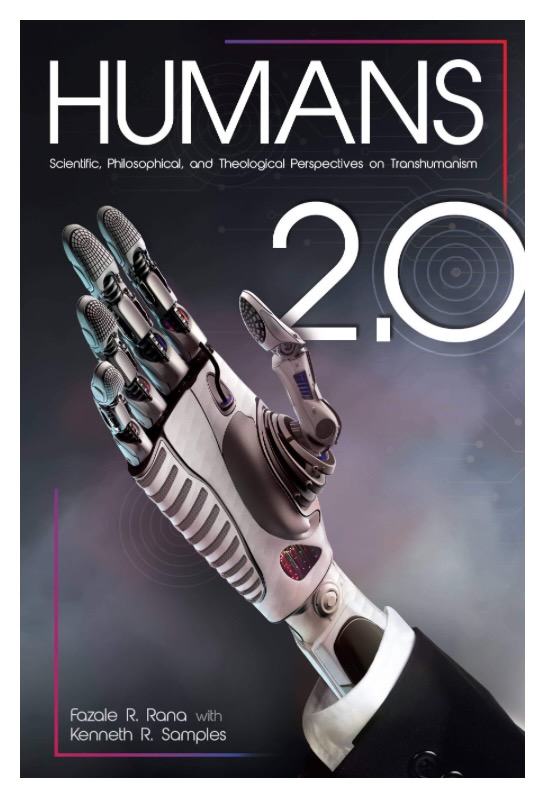
Are we mere animals? Is there scientific evidence that humans are “exceptional”? From the book, “Human 2.0” by Fazale Rana and Kenneth R. Samples, here is the evidence for Imago Dei from Human Exceptionalism:
- Symbolism
- Open ended generative capacity
- Theory of mind
- Capacity to form complex social networks
- Ethics and morality
Symbology is the capacity for symbolic behavior and correlates exclusively with the fossil remains of modern humans and can be understood from a Christian perspective to be a manifestation of the image of God. The Human capacity for symbolism manifests in the form of language, art, music, and jewelry.
“It enables us to combine and recombine basic elements such as people, objects, and actions into novel scenarios. Such nesting is also essential for reflection: our capacity to think about our own thinking. Nested thinking allows us to reason about the mental scenarios we entertain. . . . We can connect diverse scenarios into larger plots. . . . We can reflect on the relationship between past experiences and construct complex plans with embedded if-then steps.” Thomas Suddendorf
Open Ended Generative Capacity
“The capacity to offer opinions on a wide range of topics and to communicate ideas with language reflects our symbolism and open ended generative capacity.” Humans 2.0
“Human beings possess unique intellectual, cultural, and communicative abilities. Humans are thinkers, uniquely capable of abstract reasoning, and able to apply the foundational logical principle of noncontradiction (A cannot equal A and equal non- A).
Human minds alone develop propositions, formulate arguments, draw inferences, recognize universal principles, and value logical validity, coherence, and truth. Only human beings wonder why the physical universe corresponds to abstract mathematical theorems. “
Theory of Mind
We recognize that other people have minds just like ours, allowing us to understand what others are thinking and feeling.
Recent work by Spanish neuroscientists from the Basque Center on Cognition, Brain, and Language indicates that mere mortals do indeed have an unusual ability that seems a bit like telepathy. When we engage in conversations with one another—even with strangers—the electrical activities of our brains synchronize.
“To put it another way, the brain activities of two people in the conversation became synchronized, establishing a connection between their minds.” Humans 2.0
Complex Social Networks
Humans have a deep need to communicate with each other and they accomplish it through a sophisticated intellectual process. In contrast, animals also communicate (and possess many other amazing abilities) but they do not work with abstractions or ask philosophical questions.
”The oscillations of our brain’s electrical activity couple with the rhythmic patterns created by speech, suggesting our brain is hardwired to support our desire to communicate with one another symbolically. It is equally intriguing that our brains become coupled at an even deeper level when we converse, consistent with our theory of mind and human capacity to enter into complex social relationships.” Humans 2.0
Animal communication differs in kind from open-ended human language. Animal memory differs in kind from human mental time travel. Problem-solving in animals differs in kind from human abstract reasoning. Empathy displayed by animals differs in kind from morality.
“Social cognition in animals differs in kind from the cumulative culture possessed by human beings.” Suddendorf
Ethics and Morality
Egoism – each acts in one’s own self interest
Libertarianism – maximizing individual liberty
Utilitarianism – promoting the greatest good for the greatest number (The needs of the many outweigh the needs of the one.)
Relativism – subjective and changing standards
Pragmatism – whatever works, works
Egoism – Humans 2.0
“There seems to be no legitimate means for settling conflicts between individuals and between groups. Hotly competing self-interests can easily degrade into anarchy. The system appears to be arbitrary in insisting that the interests of one group count more than the interests of another.
Self-sacrifice, the opposite of self-interest, seems necessary in many critical relationships in life and society (e.g., marriage, parenthood, friendship, citizenship, etc.).”
Relativism – Humans 2.0
“A morality relative to either a person or a culture is ultimately incoherent (in effect, such a morality denies itself). Moral relativism, which pervades much of Western culture, leads to the logical quagmire of thinking that no human is better than another, no code of values exceeds any other, and all moral choices are equal.”
Theism
We Shall Not Commit Murder – EVERY human bears God’s image and has inherent value. Gen. 9:5-6.
We Shall not VERBALLY ASSAULT another person – Jesus equates verbal assault with murder! Matt. 5:21-22
We are commanded to LOVE our neighbor. – Jesus identifies the greatest commandment is love God and the second greatest is LIKE IT, to love our neighbors as we love ourselves. Matt. 22:35-41
”We are commanded to help the MARGINALIZED – Because all humans bear God’s image we must do whatever we can to help those people in need. Matt. 25:42-45 and James 4:14-15.
We are commanded to stand against INJUSTICE – to do whatever we can to make that which is wrong, right. To OPPRESS and EXPLOIT another human being is equivalent to ASSAULTING GOD himself! Isa. 1:10-20, Amos 2:4-8.” Human 2.0.
”We are to RESPECT human identity – Our identity as human beings is sacred and defined by the image of God. We are “very good” and “fearfully and wonderfully made”. Gen. 1 and 2, Psalm 139, Psalm 8:4-5.” – Human 2.0.
“Because we bear God’s image, there is something sacred about human nature and identity that extends beyond the value human beings inherently possess. We are to bring NATURE under our control – We’ve been designated caretakers of the planet. Our Creator expects us to use the earth’s resources wisely—avoiding damage and preserving the environment.” Fuz Rana – Gen. 1:28-31, Psalm 8
”The responsibility God has given us to care for creation makes it necessary to learn whatever we can about how nature operates. This learning provides the motivation for science.
As we learn about nature and how to develop technology that allows us to flourish as a species, we gain knowledge that can serve us well as the planet’s caretakers.
Notice that in all of these mandates, we are NEVER told to Worship nature as a force unto itself!” Fuz Rana
Do we see correlation between theism and Human Exceptionalism?
Symbology – The Bible itself!
Language, symbols, biography, poetry, – WORSHIP!
Open Ended Generative Thinking – Parables
Jesus spoke all these things to the crowd in parables; he did not say anything to them without using a parable. So was fulfilled what was spoken through the prophet:
“I will open my mouth in parables, I will utter things hidden since the creation of the world.” Matt. 13:34-35
Theory of Mind – Testing, theorizing, the concept of a unique mind is seen in these scriptures.
“All this I tested by wisdom and I said, “I am determined to be wise”— but this was beyond me. Whatever exists is far off and most profound— who can discover it? So I turned my mind to understand, to investigate and to search out wisdom and the scheme of things and to understand the stupidity of wickedness and the madness of folly.” Ecc. 7:23-25
“When they came to Jesus, they saw the man who had been possessed by the legion of demons, sitting there, dressed and in his right mind; and they were afraid.” Matt. 5:15
Brain Synchronization can be seen in these scriptures:
Do not conform to the pattern of this world, but be transformed by the renewing of your mind. Then you will be able to test and approve what God’s will is—his good, pleasing and perfect will. Romans 12:2
Finally, all of you, be like-minded, be sympathetic, love one another, be compassionate and humble. 1 Peter 3:8
Complex Social Networks are seen in the early church.
They devoted themselves to the apostles’ teaching and to fellowship, to the breaking of bread and to prayer. Everyone was filled with awe at the many wonders and signs performed by the apostles. All the believers were together and had everything in common. They sold property and possessions to give to anyone who had need. Every day they continued to meet together in the temple courts. They broke bread in their homes and ate together with glad and sincere hearts, praising God and enjoying the favor of all the people. And the Lord added to their number daily those who were being saved. Acts 2:42-47
Ethics
“On one occasion an expert in the law stood up to test Jesus. “Teacher,” he asked, “what must I do to inherit eternal life?” “What is written in the Law?” he replied. “How do you read it?” He answered, “‘Love the Lord your God with all your heart and with all your soul and with all your strength and with all your mind’; and, ‘Love your neighbor as yourself.’”
“You have answered correctly,” Jesus replied. “Do this and you will live.” But he wanted to justify himself, so he asked Jesus, “And who is my neighbor?” Luke 10:25-29
Hopefully, these concepts will start many conversations. As human beings, we must rise above being “mere animals” if we are to respect each other as equals. Tomorrow, I will post the final cover and launch dates for “The 1st Demon: Imago Diaboli”~

Posted on May 26, 2026, in Steel Chronicles and tagged Bible, brain synchonization, Christian fiction, Christian Speculative Fiction, Christianity, demons, Faith, Frazale Rana, God, Human Dignity, human equality, Imago Dei, Jesus, Jonathan Steel Chronicles, Kenneth R Samples, Symbology, theory of mind. Bookmark the permalink. Comments Off on Imago Dei Part 2 — Human Exceptionalism.



You must be logged in to post a comment.