Blog Archives
“The 2nd Demon: Tales of the Grimvox”
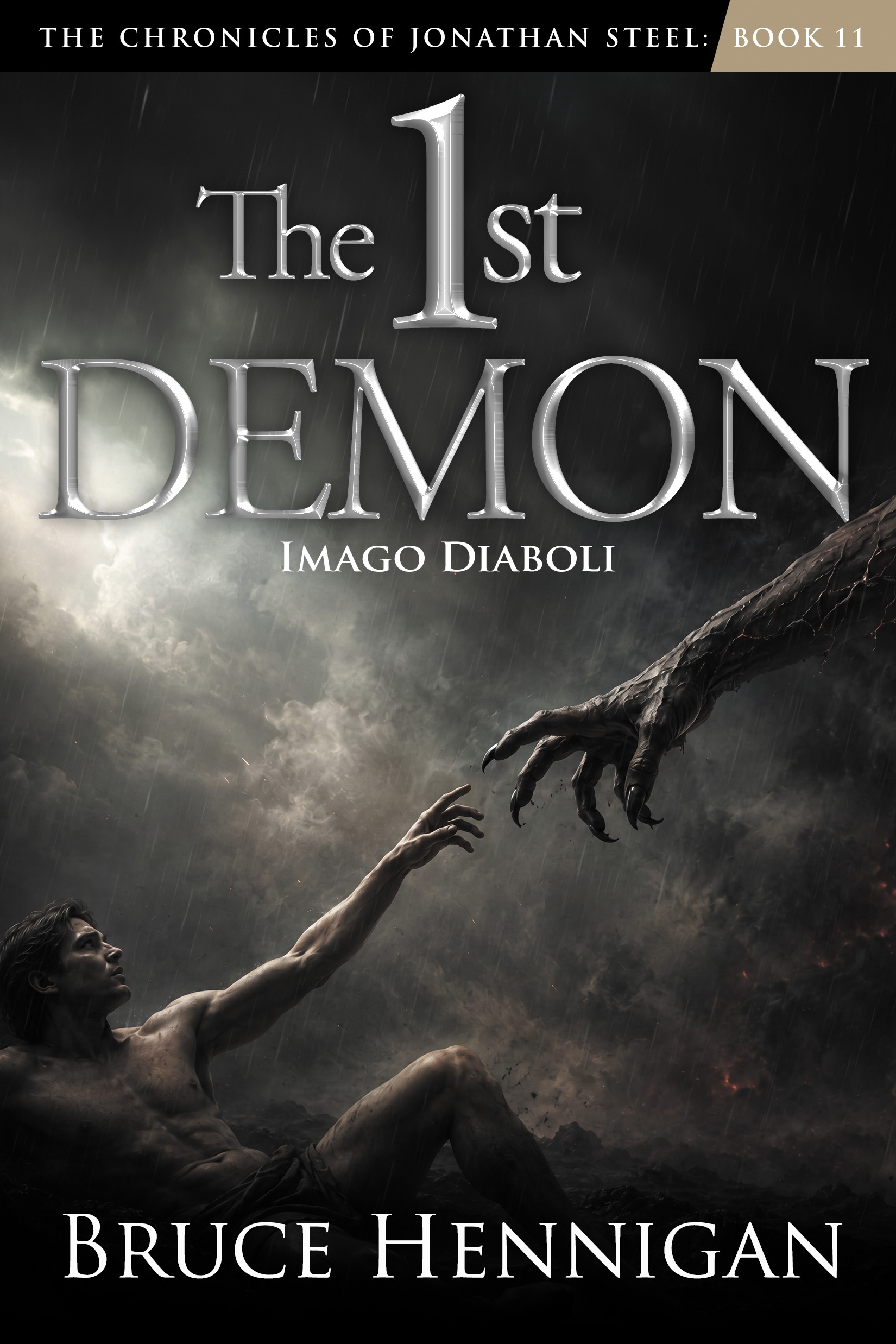
I received an email recently asking if “The 4th Demon” was the last book in “The Chronicles of Jonathan Steel”. It is NOT. The fact is, 2024 has not been a friendly year for my writing. Back in January, 2024 we went to Walt Disney World for the International Art Festival at EPCOT. The week were gone proved to be another “snowmageddon” in our deep south location here in northwest Louisiana. The temperature plummeted to 9 degrees that Tuesday night.
Three years before, a similar event took place and we had a pipe freeze in the attic above our garage. The ensuing flood took out the garage ceiling. We were at the house when it happened and found it promptly. Now, digging through frozen clay, ice, and snow to find the water turnoff valve was a chore but we managed. I had a cut off valve put in the attic to cut off water to that pipe which supplied only one faucet outside.
Well on that night in January, the cut off valve froze! Wednesday about 6 PM I checked out doorbell camera from our room in Disney World to see if we had lost power. Plenty of power but I saw water running across our front porch into the yard! A friend up the street was kind enough to check and we were able to let him into the house. The pipe had burst AGAIN and had taken out the ceiling over my study! Lots of computer equipment and memorabilia, etc. were taken out by the flood. Our entire first floor was flooded.
Read the rest of this entryTIP #4: GET OUT THE SCALPEL AND EDIT!

TIP #4: GET OUT THE SCALPEL, IT’S TIME TO EDIT!
I love to write. I love to just sit in front of a blank screen and bleed all over the page. There are snippets and gouges and puzzle piece bits of story saved all over my hard drives. Sometimes I see a file with an intriguing title and open it up to find a little nugget of gold I had forgotten I had written. More often than not, however, I open a file and find a little rat pill.
Not everything I write is worth saving. Not everything I write deserves your attention. Like excessive adverbs! I enjoyed reading the Harry Potter series but I don’t believe there is a single adverb in the English lexicon that J. K. Rowling failed to use in her book series. But, when you’ve sold billions of dollars worth of books, you can pretty much write anyway you want.
Lesson #1 Learned — Ditch the Dumb Dialogue!
I have now finished going through my manuscript, “The 12th Demon” twice and making the suggested changes from my editor. The first time was very comprehensive. The second time was for continuity. The third time, yet to come, will be to whittle down the word count. As with my first book edit for “The 13th Demon” my editor, Andy, has taught me SO much. And, since this is a blog for those wondering about the world of writing fiction, I thought I would share the three main lessons I learned in this edit over the next three posts.
DIALOGUE
 I have spend the past 23 years working in church based drama. For 15 of those years, I was the drama director of my church. And, the requirement from my pastor was that every production had to be an original piece written by moi. As time went by, I learned how to write short and long drama and, in fact, I have been speaking at regional and national drama conferences for 13 years. If that sounds like I’m bragging, that is not the point. The point to be taken is this: writing dialogue for the stage is VASTLY different from writing dialogue in fiction.
On the stage, dialogue serves many purposes and one is to introduce exposition. Unlike fiction, there are no descriptions of action and setting. There are no backstories to relate. It is up to the actor to portray these important elements of exposition through the dialogue and the acting. The challenge is to find a balance between dialogue that sounds natural and at the same time conveys important background information. The weak playwright uses “as you know”s to do this:
“As you know, my father is the owner of this vast estate. And, as you know, he just lost a fortune in a sugar cane fire.”
Good dialogue catches the right balance. Just listen to some of the dialogue in your favorite television dramas. See how many times the actors say something that you know they know and everyone else knows but the audience. The worst example is the droning on of “Trekkie” like scenes where the actor says things like, “Engaging autopilot, now!” Just flip the switch, Sulu!
In my writing, I have found that I tend to slide toward dramatic dialogue. I forget I have so many other tools for exposition. One rule I always tell aspiring dramatists is to read their dialogue out loud. This is mainly to avoid difficult to pronounce phrases. But, reading fiction dialogue out loud really gives you a good idea of the sound of the character’s voice. Would they really talk that way? Would they really say those particular words?
 In my just completed third book, “The 11th Demon” I tried something different. I originally wrote the book for Nanowrimo, or National Novel Writing Month. I decided to write each major scene/chapter from the point of view of one of the main characters in first person. This forced me not only to write dialogue as these characters would speak out loud, but to also speak with their inner voices. The exercise helped me further define the characters and find the voice for their dialogue.
Going back to the second book these past couple of weeks has allowed me to rewrite that dialogue now that I have a better feel for how these characters are thinking.
Lessons learned:
— Ask yourself, does the dialogue sound “off”? Does it sound almost “inhuman”? Avoid using dialogue for pure exposition.
— Read dialogue out loud! Try speaking in each character’s “voice”. Take a cue from Walt Disney and become each character as you read through the dialogue copying their body language and their vocal tones.
— Try to make dialogue as real and conversational as possible without dropping in inane drivel like, “Good Morning.” “Good Morning to you.” “How’s your morning going?” “Fine. How about yours?” ETC
— Keep the dialogue consistent. Don’t allow one character to sound like another. Give each character a distinctive voice.
Tomorrow — PLOT


You must be logged in to post a comment.