Blog Archives
The Man with Xray Vision!
I was ten years old and the advertisements in the back of the Superman comic book showed a man with glasses looking at his hand and seeing through the skin to the bones. The glasses were advertised as “X Ray Vision” glasses for one dollar. I knew that Superman had Xray vision and if I could just get those glasses . . .

That afternoon, I pinned a red towel to my back. My mother refused to allow me to tie the towel around my neck because I might “hang” myself. So we pinned the towel corners one to each shoulder. Little did she know I was about to do something as dangerous as the possibility of choking. I climbed up on the roof of the “garage apartment” as we called the one bedroom apartment next to our house and decided I could fly like Superman. If I could fly, I wouldn’t need Xray glasses!
I jumped and fell about eight feet landing square on my back. The blow knocked the wind out of me and still remember lying on the ground unable to breath. I couldn’t get my breath. Luckily, my daddy was out in the yard “piddling” (that means doing little odd jobs, not relieving oneself) and saw me fall. He came over immediately and kept telling me to breath. That was what I was trying to do! Eventually I got my breath back and was able to go into the house. I don’t know how I managed not to break anything. But that little incident bought me enough empathy from my parents that I convinced my mother to order the “X ray Glasses” from the comic book.
Of course, when the glasses arrived all they did was make something look blurry enough you thought you were seeing the bones inside. It was another scam against a young comic book reader like the “submarine” I acquired which was nothing but a cardboard box. Little did I know that one day, I would truly be the man with Xray vision!
Do you know your radiologist? I’m sure you know your internist, family practice doctor, OB/GYN doctor and so forth. Few people realize that if you have any kind of Xray or imaging study, particularly in a hospital or imaging center there is a radiologist responsible for reviewing those studies and dictating a report with the findings and a diagnosis. These doctors work in the shadows behind the scene but are absolutely essential to patient diagnosis. I know, because I am a radiologist.
Becoming a radiologist was NEVER my plan! In fact, one day I want to write a book about my life entitled, “Never My Plan!”. I was halfway through my internship in internal medicine the year after I graduated from medical school and realized I had made a huge mistake. I was miserable. I hated my internship. This was NOT what I wanted to do. I started looking at other residencies and one day, while working the emergency room, ran into my friend, Randy Brown down in radiology at LSU Medical Center. I’ve shared this story before, but I realized God was opening a door I never considered walking through and I ended up in the radiology residency program the following July.
After 4 years of residency and a short fellowship, I started working at Willis Knighton Medical Center with a group of radiologists. That was 42 years ago! I have never regretted the decision. I have been a “shadow merchant” since July 1980!
What does a doctor with Xray Vision do, exactly? I describe a radiologist and his practice with my character, Dr. Jack Merchant in “Shadow Merchant” and “Merchant of Justice”.
At the core of each hospital is a department of Radiology. Like very department in the hospital, radiology has its own drama, struggles, and personal quirks. It is here patients receive diagnostic imaging studies that range from simple X-rays all the way to PET scans.

The cover of “Shadow Merchant” features part of my daughter’s MRI of her brain by her permission, of course.
Xrays most people understand. You know, “hold your breath” when they take a “picture” of your lungs. Or that possible fracture you might have when they Xray your hand. However, the field of radiology includes CAT scanning with an Xray device that produces “slices” through the human body and can reconstruct those slices into 3D images. MRI uses massively powered magnets and no radiation to produce images of just about anything in the entire body. Just slide right into that tube over there! Ultrasound uses sound waves to produce fancy “sonar” images of many parts of the body. Nuclear Medicine uses radioactive tracers tagged to certain chemicals that can image body organs and evaluate their function as well as their anatomy. PET scans are a special kind of nuclear medicine study using a combination of nuclear pharmaceuticals and CAT scans for evaluation of almost any kind of cancer.
Mammography consists of 3D Xray imaging of the breast to rule out breast cancer. The gold standard for breast diagnosis in the twenty first century is the radiology controlled breast imaging centers where a patient arrives with a complaint related to their breasts and they don’t leave until there is an answer using mammography and ultrasound. In today’s world, the radiologist not only diagnoses a possible breast cancer but will discuss those findings with the patient and set them up for a biopsy under imaging guidance by the radiologist. Radiologist work hand in hand with breast surgeons, radiation therapists, and oncologists in the science of the diagnosis of breast cancer.
Most other types of biopsies are performed by a radiologist using CAT scan or ultrasound guidance. Most elective spinal taps are now performed by radiologists using Xray guidance which is much better for the patient. Interventional radiology, a field within radiology has exploded in the past decade and IR doctors now do all kinds of invasive diagnostic procedures or treatments using imaging guidance. And of course, the radiologist still performs upper GIs and barium enemas to look at the digestive system.
When I started out in radiology the field was not nearly as technologically advanced and I have had to LEARN a lot to keep up with the advances. In fact, I attend educational meetings every year just to keep up with the new advances and most of the subspecialties I mentioned above require regular recertification on a regular basis. In our practice group, we have subspecialty radiologists who are more expert in their areas. For instance, my subspecialities are breast imaging and PET scans. This way, our group can cover all of the new advances without every member learning every new advance as that would be almost impossible. This is how complicated this field of medicine has become.
Next time you show up for a “test” in radiology, pay attention to the technologists and the nurses and be aware there is a radiologist in charge who will be responsible for making your diagnosis or delivering your therapy. And, I would suggest you ask the name of your radiologist for the day. We would appreciate it!
How does a person of faith deal with death everyday?
My novels always include faith based issues. I refuse to preach but the Message must be imbedded in my stories. With regard to my character, Dr. Jack Merchant, a radiologist who also consults with the coroner, how does a person of faith deal with death?

I see death every day. I’m not a medical examiner. I am a radiologist. I interpret imaging studies every day I work. On some days, I might go through up to 250 patients and their studies. While I don’t see a dead patient, at least rarely, I see the death sentence right in front of me on the study. It might be a lung cancer, or diffuse metastatic cancer throughout the body, or a large infiltrating tumor in a woman’s breast. It might be a dissection in the aorta (deadly if not treated immediately) or a massive hemorrhage in the brain with the blood devastating and destroying viable brain tissue. I might not see death at the moment. But I see it coming and often soon.
Early on in my training, I recall a young boy with multiple skull fractures. I was a student at that point and when I found out what had been done to this child to cause such damage, I almost quit medicine! Not only do I see impending death, I see the evil that lives in the hearts of all people.
How do I deal with these realities?
First, such horrific outcomes are rare. I would estimate about 10% of the cases I read every day have such a possible deadly outcome at that moment in time. There are LOTS of good news, hope, and treatable diseases. I thrive on these cases!
Second, my personal journey in my career in medicine began with a calling from God to enter the field of medicine. The story is too long for today’s post but perhaps one day I will share it. It has become a humbling experience to realize I may be the answer to someone’s prayer. I would never be in the position to help diagnose, and sometimes treat, patients as a radiologist if I had not heard and responded to the Call. This is foundational for me and continues to give me strength and endurance in the face of death.
Third, I do not take it home with me. I started out in internal medicine. In that field the pain and suffering were right in front of me in the flesh. With radiology, there is some separation. Finding this field, again because of God’s direction, led me to realize it fit my empathic personality much better. Nevertheless, I discovered Walt Disney World shortly after completing my internship in internal medicine. That internship year was the most dehumanizing, destructive experience of my life. Walking into the Magic Kingdom provided an enthralling and all encompassing escape from the daily walk among sick and dying patients. I needed that renewal. However, my strongest renewal occurs from my faith.
Being a hospital based physician, I cannot share my faith or be sanctioned for proselytizing. However, if a patient opens the door to their own personal faith, I walk through fully and enthusiastically. I live for such moments!
So, how about Dr. Jack Merchant? Is he a man of faith? How does he deal with death, not only in his practice, but as a consultant to the medical examiner? The answer to that question is the substance of his journey in the current stories and the stories to come. He starts out with a faint connection to the divine and must decide how deeply to commit himself to faith. Part of his journey through the valley of the shadow of death is story I will tell. Be patient. God is not finished with Jack yet!
Merchant of Justice — Have you been on a Jury?

Every person I have met has the same reaction when the dreaded jury summons letter arrives. Emotions border on hatred and homicidal urges. No one wants to serve on a jury! Cooped up in a room with thirteen other strangers (twelve jury members and two alternates) for possibly days and getting paid a pittance! And to top it off, we have no choice! It is the law! Unless, we can come up with a good reason not to be on a jury. Strategies abound on how to dodge jury duty.
However, recently, my efforts fell on deaf ears and I showed up for jury duty. Within hours of sitting in the dull, oppressive courtroom, I was called in the first twelve potential members of the jury. The next morning after hours of lectures on the process of a jury and a trial and the definitions of murder, I was seated on the jury.
I will never forget the first time I sat in the jury box and studied the “perp” or rather, the accused at the far end of a long table. The prosecution sat at the end of the table closest to the jury. The accused and his attorneys sat at the far end.
Clad in a flannel shirt and wearing black rimmed glasses, the man seemed like an ordinary person I might meet at Starbucks or find sitting behind me in a pew at church. He certainly didn’t look like a murderer. Looks can be deceiving. Skin cannot hide what dwells within the heart of man. See what I did there? I’m a writer!
The trial unfolded swiftly after we were seated. Heartbreaking testimony from the victim’s friends and family. Body camera footage from the police arriving just moments after the shooting. On day two, grim and disturbing photographs of the victim’s body from a pathologist with monotonal delivery. He was far too calm for the carnage exposed on the photographs. I’m a doctor and I found the photos very disturbing, nauseating, dehumanizing. I couldn’t begin to imagine what the other jurors were feeling.
Have you ever served on a jury? If so, have you been part of a murder tria? I had trouble sleeping for about a week after it was all said and done. It is one thing to read about such atrocities. It is another to see it laid out in real time before you while looking the murderer in the eyes!
When the guilty verdict was finally delivered and the courtroom was cleared of everyone but the jury and the judge, my first thought was what if the murderer’s family, friends, or cohorts came after us for this verdict? Were we safe? The patina of apparent safety had been stripped away like pain thinner on the bubbled surface of old wood! No one was safe if this seemingly calm, ordinary man had been capable of the macabre and gruesome murder. I can never look around me now without studying every individual, every movement, every possible intention. Safety is an illusion!

The judge assured us that in the thirty years he had presided over criminal cases, no jury member had every suffered from retribution.
I walked away from that experience a changed man. Here are my thoughts.
First, if I was ever accused of a crime, I would want a jury of reasonable, thinking, willing individuals to objectively assess the evidence against me. I wouldn’t want angry, anxious to be done, uncaring people. I know jury duty is a drag. But it is a necessary duty to keep our society from devolving into chaos.
Second, if I were asked to serve on a jury again, I would do it. Did it waste my time? Yes. Did I get reasonable recompense for my time? No! Was I inconvenienced? Yes. But considering that the victim lost her life and was deprived of a future with her grandchildren and friends, four days in a jury box is nothing! When we are chosen to be on a jury, we become the instruments of justice. Even unwillingly, it is a duty we should, albeit reluctantly, embrace.
Third, the experience taught me a lot about law and what really happens in a courtroom. What we see on television and the movie screen during a tense courtroom drama is NOTHING like experiencing it in real time. This man’s life was in OUR hand! We could with a cavalier attitude put the man away for life! Or we could release a monster out on the streets. At the same time, justice could only be served if we did our job objectively and willingly. The harsh reality of the choices we were called to make puts any fictional drama in its shadow.
Fourth, the experience provided me an opportunity to share with my readers. My second book about Jack Merchant was not intended to feature jury duty. I had another pathway chosen for Dr. Merchant. But circumstances in my practice group and events concerning members of my practice came dangerously close in real life to what I had intended in fiction. I had to back off and come up with another story. For now. My experience on a jury during a murder trail became the central story of “Merchant of Justice”.
So join Dr. Jack Merchant as he reluctantly becomes the “13th juror”.
Merchant of Justice – Is it all real?
Where did you get your setting, your characters, and your story elements? Are you talking about real patients and doctors?

I’ve been rewatching the early seasons of NCIS. Fascinating character creations. In one episode, the geek, Tim McGee, has written a best selling novel based on his NCIS experiences. However, McGee makes the mistake of barely changing the names of the characters from their real life inspirations. And the characters are almost carbon copies of their namesakes.
The inspiration for “Shadow Merchant” and it’s follow up “Merchant of Justice” came many years ago. In the field of medicine, there are many interesting and unique “characters”. There are some challenges in writing a story about the place you work and about the people you work with, no matter how fascinating.
First, all doctors are bound by patient doctor confidentiality to never share their patients’ situation. Every day when I came home from work, my wife would ask me about any interesting cases from that day. I carefully avoided answering her questions directly. I would only talk about a “case” in a more general sense if I felt like I needed her understanding, and sometimes solace, over a “case” that troubled me. In planning these books, I made it a rule to NEVER divulge information about real patients.
Second, because of this restriction, I would use only “interesting” cases as a basis for my fictional patients. The field of medicine is filled with “interesting” cases. At one time, I kept a running list of such cases primarily to follow up their course. In radiology, we see the imaging studies and most of the time never meet the patient behind the images. The only way we can find out what happened with the patients (and, subsequently, if our diagnosis was correct) is to keep track of them to see if they have follow up imaging studies with clinical information. This is not to pry or to snoop, but to have a real sense of closure and to learn from our involvement with the patient. Thus, there are many such “interesting” cases that have very similar outcomes and presentations. In my stories, the fictional patients are always a composite of such “interesting” findings and never based on a real patient.
Third, I had to write about my colleagues. One of the reasons I waited so long to write these stories was to give time for some of my colleagues (both within the field of radiology and out of the field) to retire. It’s very difficult to create a character that does not bear at least some resemblance to real doctors, nurses, and other health care personnel. One of the nurses in our department told me just last week she is reading “Merchant of Justice” and could see the stress I faced everyday in my practice. Did I base Dr. Jack Merchant on myself? Absolutely not! Jack and I are totally different people. I chose Jack’s personality based on a composite of differing personality traits. I would never base a character on myself or a colleague without asking permission. As I stated in earlier blogs, I asked one of my partners to give me permission to base a character almost completely on him. He agreed to and loved the character in the first book. Every other character is purely fictional. Any resemblance is only in the mind of my reader!
Fourth, the setting of my story could not be the place where I currently work. I created a fictional city and hospital system. My readers who live in north Louisiana would recognize bits and pieces of “Talako” and “Bayou City”. The setting just as easily be Shreveport/Bossier City or Monroe/West Monroe or Alexandria/Pineville. Squish them all together and place them close to Ruston and you have the location of my fictional cities. Astute readers will recognize certain landmarks such as colleges, restaurants, and so forth. In my first novel, “The 13th Demon” I mentioned the “Women’s Hospital” based on a local campus of the system I work in. At the time the novel came out, I had to give a deposition regarding my interpretation of imaging studies. During some down time when we were not “on the record” my attorney asked about my book and specifically asked about the location of that campus. The attorney representing the hospital system went ballistic! She was horrified I had mentioned our hospital in a fictional setting! She couldn’t give a good reason but I assured her I would never share hospital based “secrets”!
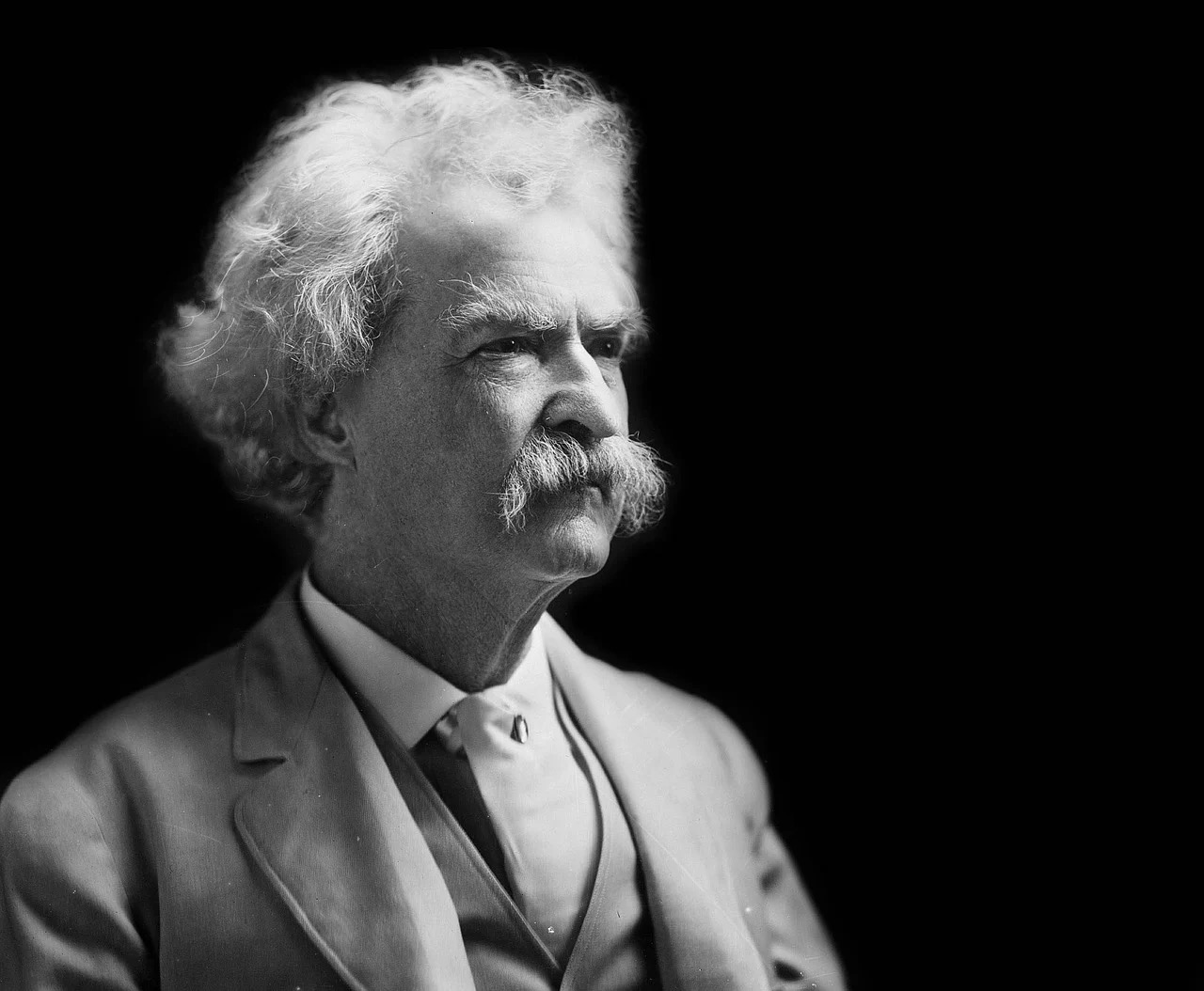
“Write about what you know.” A suggestion from many successful writers. I am hoping my stories are successful in bringing pleasure to my readers. No hidden agendas. No gossip or secrets revealed. All is fiction. But sometimes, “truth is stranger than fiction”. I wondered about where that saying came from and my every reliable AI search revealed: The quote “Truth is stranger than fiction” is widely attributed to Mark Twain. He is often cited as saying it in the context of his novel Pudd’nhead Wilson, where the character says, “Truth is stranger than fiction, because fiction is obliged to stick to possibilities; Truth isn’t.”.
Having stated all of these restrictions I have placed on my writing, I want the reader to understand how Dr. Jack Merchant and his partners, patients, and colleagues came to be. They exist in a fictional city in North Louisiana in a fictional medical center which gives me great latitude in my story telling. Dr. Jack Merchant is a unique creation with no relationship to a real person. He’s just an “interesting case”!
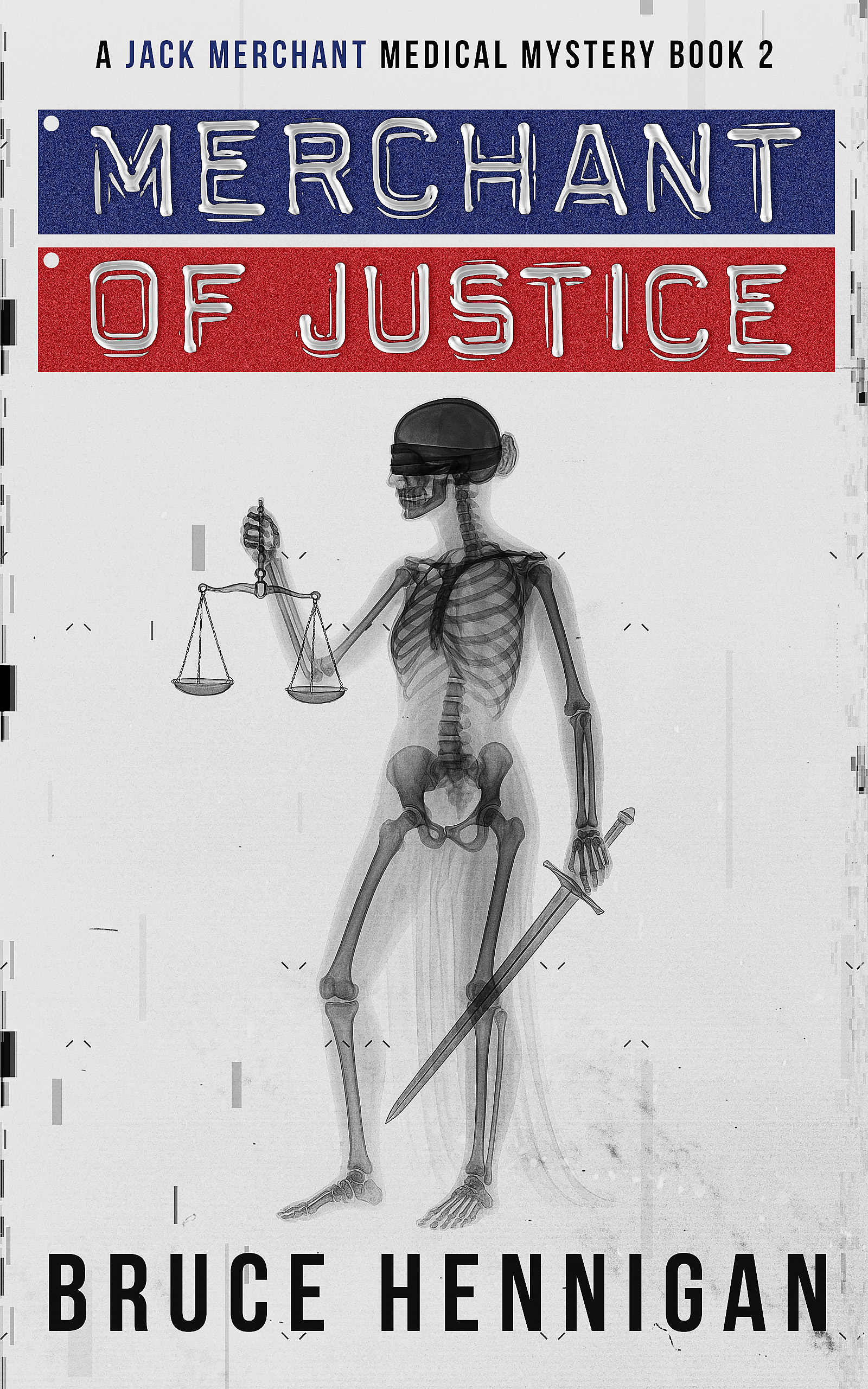
Merchant of Justice!
Today, the second book in the Jack Merchant Medical Mystery series is avaiable on all platforms in paperback and ebook format.
Much to my dismay, I held in my hands a jury summons. I was surrounded by the destruction of my home at the time. A day before, I had arrived back at my house after a trip to discover a pipe had burst in my ceiling and flooded the entire first floor of my home. There was no way I could show up the next day for jury summons! I sent an urgent message to the jury selection manager and my summons was delayed by six months. I put that date on my calendar, hoping against hope I would not be summoned. That hope was shattered and I appeared for my jury summons on a hot July morning.
Along with the 50 other odd people I sat in an aging courtroom hoping my name would not be called. I was in the first twelve called to the jury box. The experience of being asked personal questions and being told to “always tell the truth” almost threw me into a panic mode. I looked at the witness stand. Over a half a dozen times, I had sat in that very witness stand being grilled in an adversarial fashion by an attorney. Each time, the setting was a malpractice suit in which I was only a witness. But, one time, it became painfully obvious I was being set up to be added to a law suit. That story prompted the opening chapters of “Merchant of Justice”.
Of course I was selected for the jury. I was pulled into a horrific story of unrequited love, greed, and subsequent murder. That experience became the foundation for Dr. Jack Merchant’s next story. In “Shadow Merchant” Dr. Merchant, a local radiologist, is accused of murdering his wife and the story unfolds as he tries to clear his name. In the process he becomes a consultant to the local medical examiner.
In “Merchant of Justice” he has settled into this role rather uncomfortably. His practice partners are not so happy about the prior year when he was recovering from losing his wife. And now, he becomes “the 13th juror” on a murder trial. Reluctantly and not by choice, he fills his roll as an alternate and soon becomes a voting member of the jury. As the trial unfolds, his travails and hardship take second place to a growing realization he may know the perpetrator! Dr. Jack Merchant once again finds his life in danger as he seeks true justice for victims of wrong doing!
What is a “Shadow Merchant”?
The emergency room doctor had become a thorn in my side. He was demanding. He was demeaning. He was defensive. It was obvious to me he had suffered a painful experience with radiologists in his past practice. Pleasing the man was almost impossible. Every interpretation I gave him was insufficient. I was taking too long to report his ER cases. I was too vague in my reports. I was wrong with my diagnoses. You name it, he never appreciated my hard work.
As a radiologist, I was used to this kind of treatment. I’ve been in the business for almost 40 years and recall how poorly we were regarded at the beginning of my practice. Times have changed and radiologists are integral partners in patient diagnosis and treatment and we are accepted as equals by our colleagues in other specialities.
But that was not the case years ago with this emergency room physician. He sat in my office while I was going over the findings of a CAT scan of a patient’s abdomen and pelvis. He told me he was leaving our hospital for another practice. I was ecstatic but didn’t show it. In a rare moment of honesty he looked at me and said, “You know, I practiced in a military hospital before I came here. The radiologist there was not that proficient. That’s not a commentary on the military. Just a commentary on the person. Your group has done a good job while I’ve been here and I wanted to thank you before I left.”
I was stunned and he shook my hand. He stood up and before he walked out the door he said, “You’re the best of the shadow merchants in your group.”
“Shadow merchants?” I asked.
“Yeah. That’s what we call radiologists in the military. Shadow merchants. You live in the shadows and make a living by interpreting shadows on your films. Shadow merchants.” He walked out.
There is a suggestion for authors, write what you know.
Read the rest of this entrySeeing Cancer in 3D!
This month is Breast Cancer Awareness month. As a radiologist, I am very tuned in to breast cancer awareness. I read mammograms, breast ultrasounds, and breast MRI every day. It is part of my overall job as a radiologist.
In May 2013 I attended a breast imaging conference in Tampa Bay, Florida. During that conference, there was much discussion of a new technology known as tomosynthesis. This alternate form of mammography had just been approved by the FDA. As I watched the images stream before my eyes I was astonished!
Trying to read mammograms is a huge challenge. We have performing mammography, or Xray images of the breast since the 1960’s. In the past fifty years radiologists have tried and tried to come up with newer technology. You see, regular mammograms are the best test we have to detect early breast cancer. But, mammograms are not 100% accurate. In fact, most radiologists would gladly trade reading mammograms for anything that would give better results. The problems is, we just haven’t been able to find anything.
Until now.
Tomosynthesis is also known as 3D breast imaging. The technology is astonishingly simple but only now possible due to technological advances in computer processing. In this new form of imaging of the breast, the Xray tube moves through a 15 degree arc above the patient’s breast over 4 seconds. The series of exposures is then processed to produce “slices” through the breast. It’s like leafing through the pages of a book.
Did you get that? The amount of imaging time is the same as 2D mammography we have been performing for years. In fact, the radiation dosage is less than twice that of a normal mammogram. But, the results are astonishing!
Look back at my previous posts and you can watch my videos regarding this new technology. But, let me tell you that 3D breast imaging is allowing us to pick up to 50% more early invasive breast cancers than before. And, these early forms of breast cancer are small enough to actually allow us to decrease the death rate from breast cancer!
I am part of the Willis Knighton Health Care System here in the Shreveport – Bossier City area and I am proud to be a part of the launch of this new kind of mammography beginning last week on October 1. We are now performing 3D breast imaging at our Willis Knighton Pierremont outpatient breast clinic. Soon, Willis Knighton Bossier will have this technology and then, before the end of the year, Willis Knighton South will come on line. Already, we are seeing amazing results from this new technology just in one week!
Women, pay attention. If you have put off having your first mammogram or having that yearly followup mammogram, contact your doctor and see if it is time for you to have your first 3D mammogram. Let’s put an end to breast cancer!
A Baby Named Galley!
There is a moment in a published author’s life that is akin to seeing your unborn child for the first time by ultrasound. As a radiologist, I am fully aware of the excitement parents feel when they see that gray and white blob moving on the ultrasound screen and begin to catch glimpses of what the finished “product” will look like. They gasp when they see fingers. They laugh when they see arms and legs. And, they cry when they see the face even though it is such a poor reflection of the beautiful child they will hold in their hands in just a few months.
Friday, I had such an experience. A package waited for me by my front door when I got home from a long, hard day at the hospital. To say I was tired and frustrated and disillusioned by the direction health care is going is to say the least. Soon, I will weigh in on this issue because I can no longer keep my silence after the horrific events with the VA scandal. But, for today, I want to share something bright and happy and encouraging. I picked up the package and noted it was quite heavy for such a small box. When I got the thing inside and ripped off the tab, guess what I found inside?

Galley proofs.
What? What are galley proofs, you ask? In the days before electronic media prevailed, an upcoming book was printed out on rough sheets of paper to approximate what the final product would look like. Since 2006, I’ve been involved in the publishing of five of my books and each galley proof was presented to me as a PDF. My excitement was no less at receiving these electronic documents. But, here was a throw back to old school publishing. Why? Because this book required a careful review of the actual printed appearance, not just an electronic approximation. For, this book would have illustrations and break out text boxes and Lifefilters. . .
What is a Lifefilter? More on that later.
In the summer of 2012, as I have shared in the past, God did something truly miraculous and literally dropped a book project into the laps of yours truly and my co-author and best friend (and former pastor) Mark Sutton. We wrote a book on depression in 2001 (which is still an excellent book, by the way!) But, over the intervening years, things changed and we wanted to update the book. Our publisher was not interested. But, a new team took over the editorial direction at B&H Publishing and they wanted us to write a new updated version of the book.
Mark and I went to work immediately in the fall of 2012 and now, before me was the galley proofs of a book we are hoping will help millions. Did you see that word? Millions! Not because we want money. No, it is because we are in the midst of an epidemic of depression unprecedented in American history since the Great Depression.

So, I will grab a cup of coffee. I wish I could teleport myself to New Zealand and have one of those luscious “flat whites” as you can see my friend Alex drinking. Yes, that is a cup as big as a cereal bowl! They love their coffee in New Zealand. So, I will hunker down with my galley proofs and drinks lots of coffee and check this manuscript out.

When will you be able to get your hands on “Hope Again: A 30 Day Plan for Conquering Depression”? Stay connected to my site as Mark and I will be launching a new website this summer to keep you informed of the arrival of this important tool. For now, you can check out our rather static site for information on the current book here. And, don’t forget to pick up some copies of “The Chronicles of Jonathan Steel” for your summer reading!
Got to get to work!

 Bruce Hennigan
You must be logged in to post a comment.