In Whose Image? Part 1
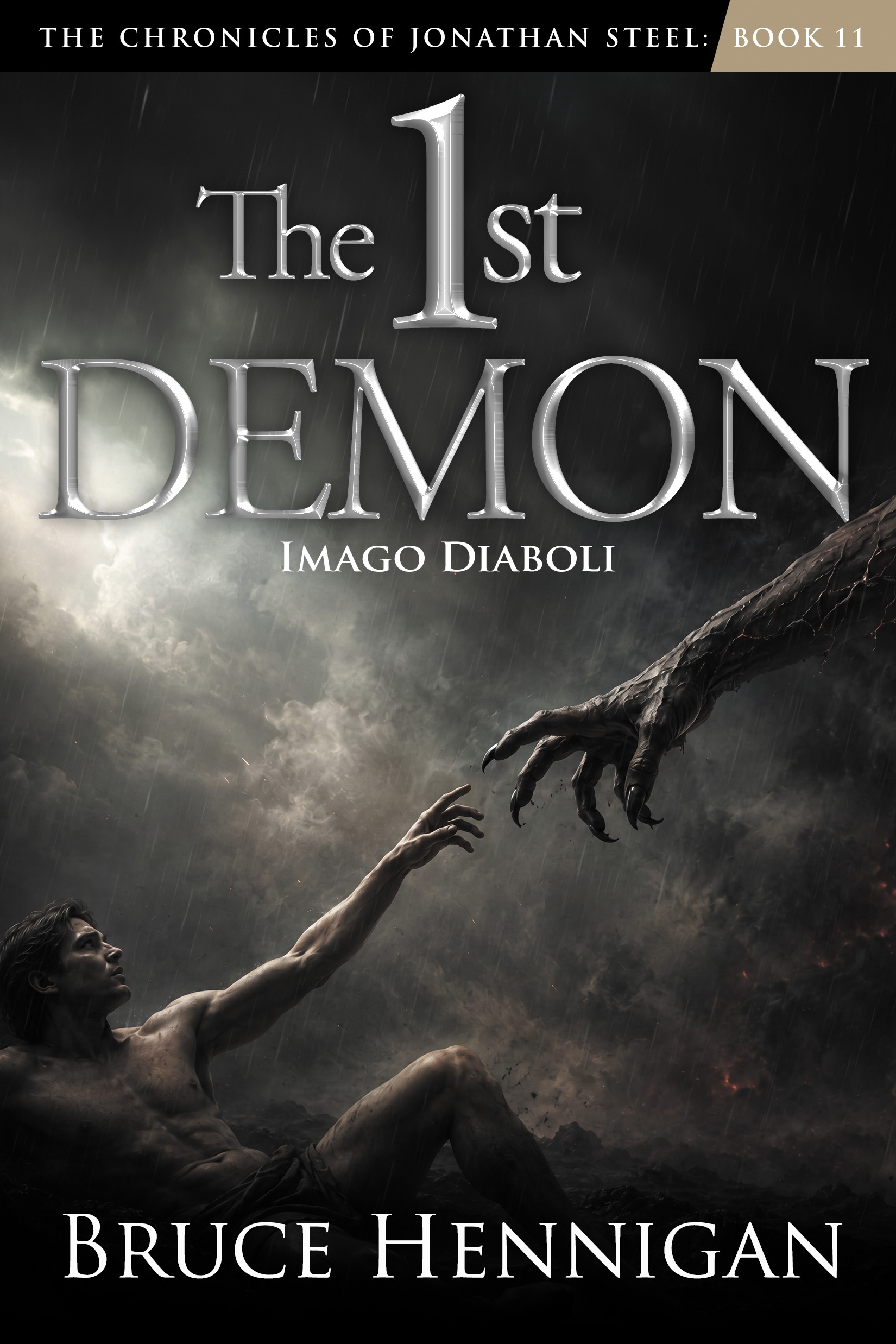
My upcoming book, “The 1st Demon: Imago Diaboli” I write about the important question, “What does it mean to be human?” Soon, it will be available for purchase and to begin to set the stage for my story I want to share my prior ideas that provide the foundation for ideas in this book. Note that some of what I will post is controversial!
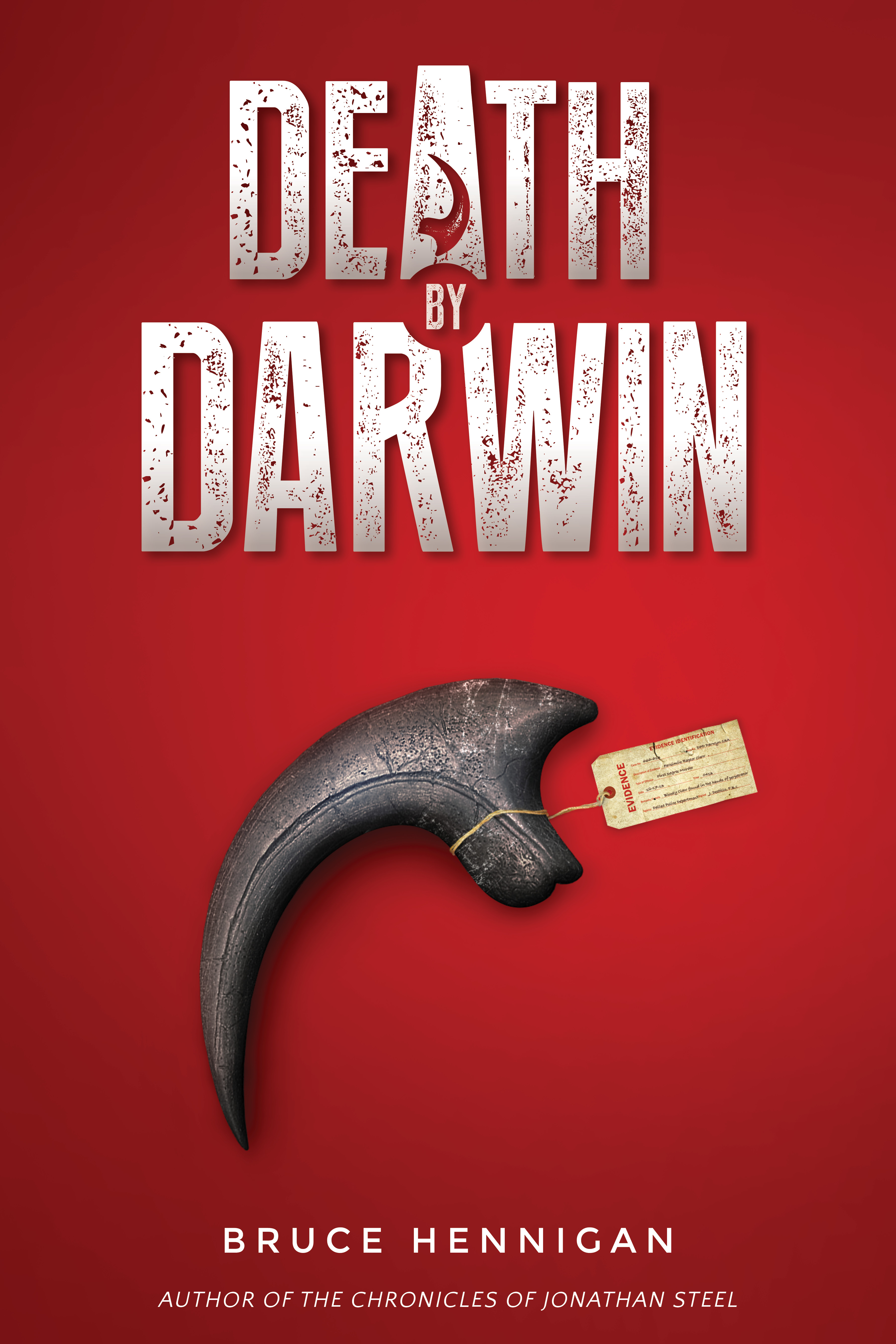
In my book, “Death By Darwin” Ruth Martinez reveals her greatest regret in successfully defending the serial killer, Reginald Drake. Both characters figure prominently in “The Chronicles of Jonathan Steel”. In a tense courtroom scene, Ruth has to approach the “death” of the victim on the operating table during the harvesting of the victim’s organs for transplant. Was the victim still alive? What constitutes “death”? Ruth has put the coroner on the stand.
Ruth retrieved a folder from the witness table and placed it on the edge of the witness stand. “Dr. McCormack, this is your final autopsy report on the victim, correct?”
“Well, I prefer a PDF, but some of us are old school.” He nodded toward Judge Tucker. The jury chuckled and Ruth waited for the gavel to rap in vain. The laughter died down.
“You may laugh at death, Dr. McCormack. But, I do not.” Ruth said quietly. “Would you turn to page 135 for me, please.”
McCormack sighed and grabbed the folder with meaty hands. He licked his finger as he thumbed through the pages. “Page 135. You want me to read the whole page?”
“No, just the final cause of death, please.”
McCormack shrugged. “I can tell you what she died of.”
“I don’t want you tell me anything, Dr. McCormack.” Ruth said loudly. “I want you to read what you put in the official record as the cause of death. That is all that matters right now. This folder has been placed into evidence by the prosecution and I could care less what you think. I want to know what you wrote down. So read the last entry! Now!”
Ruth was startled at the ferocity of her own voice. McCormack’s face grew red and he smacked his lips. “I don’t like being talked to that way, young lady.”
“I am not a young lady, Dr. McCormack.” Ruth stepped closer. “And, while you and the judge play glad hands with each other, I can easily file an injunction for a mistrial. I have an entire room full of witnesses to your harassment of this attorney and your scorn and disregard for this court of law. Now, read the entry!”
Ruth’s voice echoed around the chamber and she waited for the gavel to fall. She was met with only silence. McCormack glared at her and looked down at the page. “Cardiorespiratory arrest.”
“Thank you.” Ruth reached forward and took the folder from him. “Now, I will ask you to please, in layman terms, tell this jury what that phrase actually means.”
McCormack pursed his lips and crossed his arms. “It means the heart stopped and the victim died.”
“The heart stopped. What about the brain?”
McCormack blinked. “What?”
“What about the brain? When did it die?” Ruth pressed on.
“Honey, the victim was beaten and suffered brain damage.”
Ruth nodded and felt nausea creep up her throat. “Brain damage. But, when did the brain die?”
McCormack shrugged. “I’m not sure what you’re getting at.”
Ruth tossed the folder back onto the evidence table and retrieved another folder. “Are you familiar with the Unified Declaration of Death Act of 1981, the statute that established the medicolegal definition of death?”
McCormack uncrossed his arms and shook his head. “Of course, I am. I’m the coroner. I know death when I see it.”
“So, isn’t it true that statute established a bifurcated definition of death?”
“Bifurcated? What the heck do you mean by that?” McCormack said. “Marshall, stop this nonsense.”
Ruth glanced at Tucker and he was leaning forward in his chair, his eyes narrowed. “I think you may be onto something, Ms. Martinez. Dr. McCormack answer the question.”
“But, Marshall.”
Tucker picked up his gavel. “Don’t make me use it.”
McCormack shrugged again. “I guess you mean the duel definition of death. Brain death versus cardiac death.”
“Exactly, Dr. McCormack. Now, let me ask you something. In your professional opinion as a medical doctor and the medical examiner for this county, is it possible for the brain to still be alive after the heart stops beating?” Ruth moved across the floor toward the stand, the other folder in her hand.
“Well, sure. That is why we use cardiopulmonary resuscitation. Keep the circulation going to keep the brain alive.”
“So, when the heart stops, the brain is still alive?”
“Technically, yes. But, the victim’s brain was—”
“What?” Ruth was at the stand now.
“Damaged.”
“But, was her brain dead?” Ruth asked.
McCormack opened his mouth and looked over her shoulder at Tucker.
“Don’t look to him for help. YOU are the expert. You said ‘you know death’. Only YOU can answer this question. Was the victim’s brain dead when her heart stopped?”
“No. Damaged but not dead.” McCormack said.
A key piece of legislature went before the Louisiana legislators a few years ago removing the requirement for two doctors to sign off on a certificate of death for patients donating their organs after death. Dr. Jeff White, a local cardiologist and expert on medical legal law, authored a position paper against the bill. You can read the paper here.
The key issue came down to checks and balances to make sure the donor’s status as a “dead” was not a rushed affair. The bill did not pass. Why was Dr. White against the bill? Because it reduced a person to nothing but a sack of meat, a biological engine. Who cares if the brain is still working but the body can’t support it anymore? In the mind of certain thinkers, the human body is but the sum of its parts. And its parts are more useful when they can be parceled out to other needy biological engines.
This may seem harsh and I am an avid supporter of organ transplant. Most transplant surgeons I have worked with have the highest regard for their donors and their loved ones. But I see a creeping danger in the devaluation of a human being to nothing more than a mass of muscle and organs.
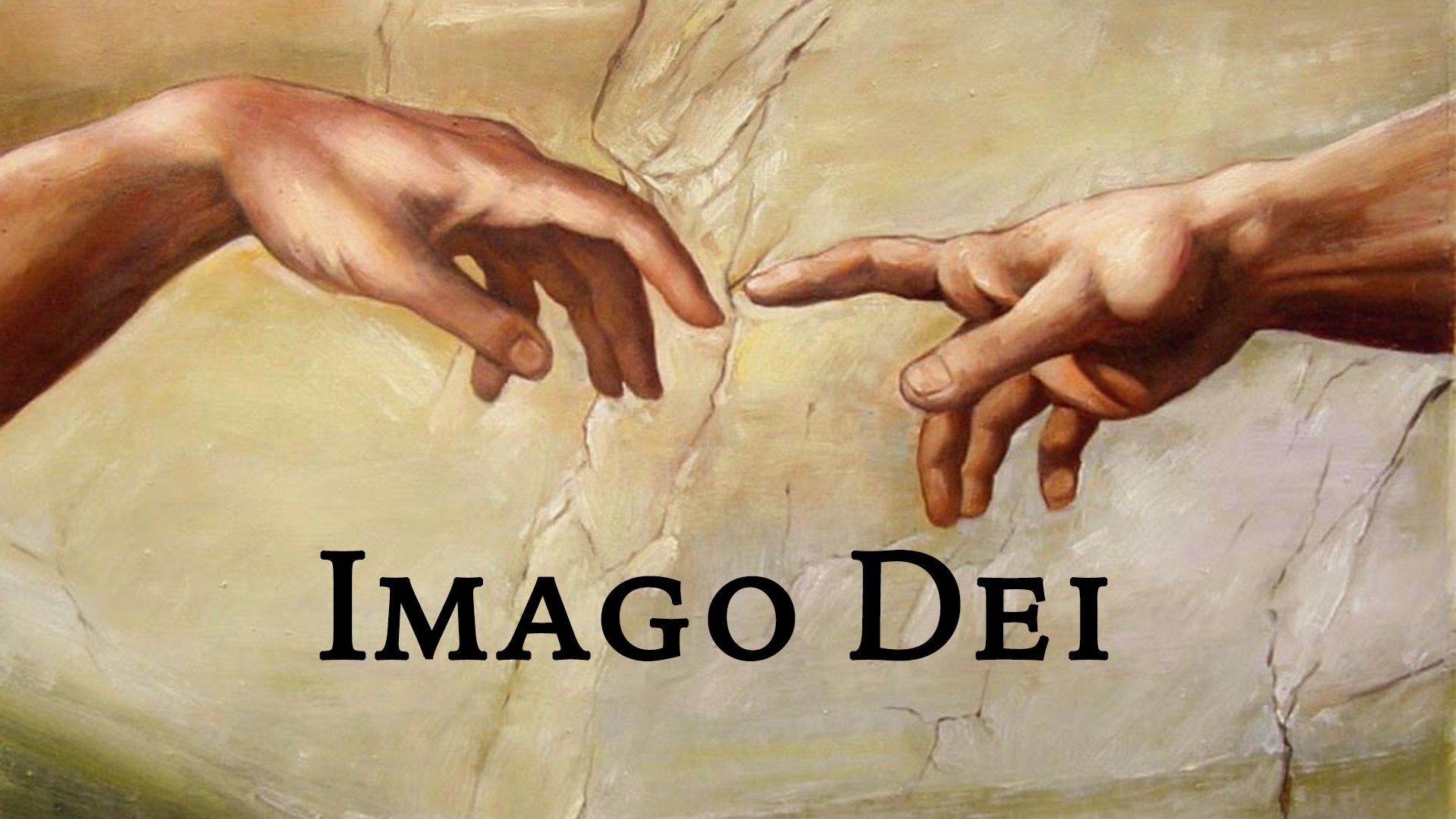
The concept of the “imago dei” is an essential doctrine in Christianity. We are made “in the image of God”. Some of us take that a little too far and regard ourselves as gods with a little “g”. This was predicted by Paul in Romans 1. Go read it!
Two conflicting concepts are represented by these thoughts. Are we as humans nothing more than highly evolved bipedal hominids? Or, is there something special, sacred, unique about being a human being? I explore this question in my upcoming book, “The 1st Demon: Imago Diaboli”.
The following is from a presentation I gave to a high school class on “What Does It Mean to be Human”. All quotes are from G. K. Chesteron and from “Human 2.0” by Kenneth Samples and Fuz Rana (reasons.org). Note that these ideas are presented in the form of my conclusions based on years of study. Some of you will object to these ideas and I understand. I have included, at the end of the post, a sort of rebuttal to my ideas for balance. I will finish the second part in a later post.
The Imago Dei is the foundation of human value, human dignity, and ethics. G. K. Chesterton, famous fiction author and Christian apologist said, “How do you value human life? There is only one place where you can locate your identity and your self worth that will actually support you — and that is in the image of God. The most difficult doctrine to accept in the Scriptures is not the Trinity, the Virgin Birth, or the Incarnation. It is the value that God places on each individual human being.”
Intrinsic Human Value
Human Value is vital and Chesterton continues: “There is only one place where you can locate your identity and your self worth that will actually support you — and that is in the image of God. If there is a God who has revealed himself in Jesus Christ, who has on the cross paid the ultimate price for each one of us, then each of us bears tremendous value. But, if atheism is true, then we bear none at all.” (I provide a rebuttal from William Provine at the end of this post.)
He had more to say: “For religion all men are equal, as all pennies are equal, because the only value in any of them is that they bear the image of the King.”
Even a well known spokesman for atheism, Sam Harris, had this to say: “The problem is that whatever attributes we use to differentiate between humans and animals; intelligence, language use, moral sentiments and so on, will equally differentiate between humans themselves.”
Human Dignity
Only if we are made in the image of God will we have human dignity — the state or quality of being worthy of honor or respect. The UN Declaration of Human Rights state: “Recognition of the INHERENT DIGNITY of the human family is the foundation of freedom, justice, and peace in the world.” Rodney Stark stated: “Amid this universal slavery, only one civilization ever rejected human bondage: Christendom. And it did it twice!”
Foundation of Ethics
What is the basis for treating others with compassion and dignity? The Biblical truth that every person is made in the image of God provides a foundation for the ethical treatment of all people. Other philosophies than the Christian worldviews struggle to explain why the world is broken and why people make bad decisions.
The Biblical truth that every person is made in the image of God provides a foundation for the ethical treatment of all people. The idea of universal human dignity and value is rooted in the Biblical teaching that human beings are made in the image of God. The Christian understanding that we are broken reflections of God’s image allows us to point people toward the ultimate hope of God’s redemption.
Do we have evidence that human beings are more than just animals? The answer lies in a scientific discipline: human exceptionalism. A growing minority of anthropologists and primatologists – steeped within the evolutionary paradigm – now believe that human beings really are exceptional. This is the notion that human beings differ in degree, not kind, from other creatures and is known as the discipline of Human Exceptionalism.
In an upcoming post, I will talk more about Human Exceptionalism. And now, giving equal time to a world renowned atheist, William Provine, here is his take on this subject. This comment is from a 1994 debate he had with Phil Johnson, a well known Christian apologist. (Note there is some language in his comments but I will present them exactly as said.)
https://www.arn.org/docs/orpages/or161/161main.htm
William Provine:
When you die, you’re not going to be surprised, because you’re going to be
completely dead. Now if I find myself aware after I’m dead, I’m going to be really
surprised! But at least I’m going to go to hell, where I won’t have all of those grinning
preachers from Sunday morning listening.
Let me summarize my views on what modern evolutionary biology tells us loud and
clear — and these are basically Darwin’s views. There are no gods, no purposes, and
no goal-directed forces of any kind. There is no life after death. When I die, I am
absolutely certain that I am going to be dead. That’s the end of me. There is no
ultimate foundation for ethics, no ultimate meaning in life, and no free will for humans,
either. What an unintelligible idea.
Christian humanism has a great deal going for it. It’s warm and kindly in many ways.
That’s the good part. The bad part is that you have to suspend your rational mind.
That part is really nasty. Atheistic humanism has the advantage of fitting natural minds
trying to understand the world, but the disadvantage of very little cultural heritage —
and that’s a real problem.
So the question is, can atheistic humanism offer us very much? Sure. It can give you
intellectual satisfaction. I’m a heck of a lot more intellectually satisfied now that I don’t
have to cling to the fairy tale that I believed when I was a kid. Life may have no
ultimate meaning, but I sure think it can have lots of proximate meaning. Free will is
not hard to give up, because it’s a horribly destructive idea to our society. Free will is
what we use as an excuse to treat people like pieces of crap when they do something
wrong in our society. We say to the person, “you did something wrong out of your free
will, and therefore we have the justification for revenge all over your behind.” We put
people in prison, turning them into lousier individuals than they ever were. This
horrible system is based upon this idea of free will.
Since we know that we are not going to live after we die, there is no reward for
suffering in this world. You live and you die. I’ve seen bumper stickers (very sexist
ones, actually) that say “Life’s a bitch, and then you die.” Well, whatever life is, you’re
going to die. So if you’re going to make things better for yourself or for those you care
about, you had better become an activist while you’re still alive.
Finally, there is no reason whatsoever that ethics can’t be robust, even if there is no
ultimate foundations for ethics. If you’re an atheist and know you’re going to die, what
really counts is friendship — and that’s why I value Phil’s friendship so much.
In an upcoming post, I will discuss more about human exceptionalism.

Posted on May 19, 2026, in Steel Chronicles and tagged Christian fiction, Christian Speculative Fiction, ethics, Fuz Rana, G. K. Chesterton, Human Dignity, human exceptionalism, Human value, Imago Dei, Kenneth Samples, Rodney Stark, Symbology, William Provine. Bookmark the permalink. Comments Off on In Whose Image? Part 1.


You must be logged in to post a comment.