Category Archives: My Writing
Starflower — A Book Review
 It is a sad confession on my part to reveal that I have never read any of Anne Elizabeth Stengl’s “Tales of the Goldstone Wood”. And, now, I am reviewing a book that takes places thousands of years before those four books. I have missed out on a rich, immersive experience by not reading the first four books. I shall soon remedy that situation because “Starflower”, the newest entry into this “canon” of books is excellent. It is a moving fantasy far deeper than most fantasy; deep with character development; deep with thematic lessons; deep with a rich, lush tapestry of a world against which the action unfolds.
I will only be doing a one day book review because I have plans for finishing up my blog entries about the teachings of Jesus of Nazareth that transcend any religious devotion. I want to finish this by Christmas so I will be giving one day only to this review. And, all I can say is if you love Narnia; if you miss Middle Earth; if you enjoyed such stories as Alice in Wonderland, then you MUST read this book. Anne Elisabeth Stengl has created a setting in which rivers and trees come to life; a world in which animals talk and faeries can take on human or animal form. I haven’t encountered such a rich environment since I went back and rediscovered George MacDonald’s fantasy worlds. Those stories, by the way, were deeply inspiring to C. S. Lewis and he attributes MacDonald’s influence on his desire to create Narnia. The world of “Starflower” reaches those levels of fantastic believability
The Characters
The story begins with Hri Sora. Once a dragon and now stripped of her wings by the Dark Father, she cannot remember all of her former life. She can only remember a burning lust for revenge.
Eanrin is a bard, the prince of poets, an immortal faerie and part cat. I know it sounds strange but just like a cat, he is also haughty and arrogant until he meets the character of Starflower. He finds his inner strength.
Starflower is the maid and is cursed. Her trials and travails are what endeared her to me. Made strong in her weaknesses by a love and a selflessness that even her cursed tongue cannot hold back.
The Story
The story begins with Hri Sora vowing to carry out a nefarious plan for the Dark Father in order to regain her dragon status. Hri Sora makes a deal with her father to bring back a special treasure. In order to do that, she must kidnap the Queen’s sousing who knows what the treasure looks like.
Eanrin goes after the kidnapped love of his life, Lady Gleamdren and in the process encounters Starflower. He comes across Starflower after she has drunk from the enchanted river. He feels sorry for her and agrees to take her to a witch owing him a favor and soon the girl is wakened from her deep sleep. Starflower is under a curse and cannot speak. He takes her with him as he pursues Hri Sora and, or course, we learn that there is a connection to the dragon witch! You’ll have to read the book and immerse yourself in this wonderful tale. Be prepared to be transported to a land of magic and enchantment! The story is fast paced and filled with moments of exhilaration and excitement. The world inhabited by the story is very complex and real; frankly refreshing and exciting.
I highly recommend the book to anyone who enjoy fairy tales and fantasy and I can’t wait to go and read the other four books!
In conjunction with the CSFF blogtour I received a copy of ” Starflower”.
*Book link – http://www.amazon.com/Starflower-Tales-Goldstone-Elisabeth-Stengl/dp/0764210262/
Author Website – http://anneelisabethstengl.blogspot.com/
Author Facebook page – http://www.facebook.com/pages/Anne-Elisabeth-Stengl/120543861335559
Participants’ links: Be sure and check out these other reviews!
Gillian Adams
Nikole Hahn
Janeen Ippolito
Carol Keen
Emileigh Latham
Shannon McDermott
Meagan @ Blooming with Books
Rebecca LuElla Miller
Anna Mittower
Rachel Starr Thomson
Robert Treskillard
Steve Trower
Dona Watson
Shane Werlinger
Phyllis Wheeler
We’ll Follow the Old Man Because We Love Him!
 Every Christmas I make sure and watch one of my favorite movies of all time, White Christmas. Yes, I love the song. Yes, I love the romantic angle. Yes, I love the story of loyalty to old friends. But the real reason this movie touches me is because of the relationship between General Waverly and his men. When the film opens, a tired, war weary group of men are trying to celebrate Christmas Eve on the German front. General Waverly is being sent back to the states. The men sing a song to “the old man”.
We’ll follow the old man wherever he wants to go
Long as he wants to go opposite to the foe
We’ll stay with the old man wherever he wants to stay
Long as he stays away from the battle’s fray
Because we love him, we love him
Especially when he keeps us on the ball
And we’ll tell the kiddies we answered duty’s call
With the grandest son of a soldier of them all!
It is hard for us to understand this kind of devotion in today’s jaded, cynical world. A group of men so tightly devoted to each other they would tell their leader they “love” him? Unthinkable!
Why did they love General Waverly so? What characteristics of his leadership inspired this kind of devotion? A key to understanding the answer to this question can be found in the following dialogue. Bob Wallace, played by Bing Crosby and Phil Davis, played by Danny Kaye have arrived at the General’s inn in Vermont and watch as the man once a commander is now cleaning kitchen floors. This is what they said:
Bob Wallace: We ate, and then he ate. We slept, then he slept.
Phil Davis: Yeah, then he woke up and nobody slept for forty-eight hours.
 One of my favorite photographs shows Walt Disney walking through Snow White’s castle in a very early Disneyland. Walt was famous for his “management by walking around” philosophy. He would pop up unannounced and ride the rides; watch the shows; listen to the musicians. Yes, he was a stickler for quality but more than anything, he wanted to be a part of his creation. He would wander the hallways of the animation studio after the animators left for the day and dig through their trash to find new ideas. He really believed in his animators. And, his expectations were very tight and rigid, but inside he cared about his employees; he loved them. There were many times he would take an employee who was in trouble and pay his salary while he dried out in what we would call today “rehab”. In fact, when his animators joined the union, Walt was devastated. He considered them a part of his family and the decision to join the union was akin to saying they didn’t appreciate his tender care.
I’ve been writing blogs the past few days about the teachings of Jesus of Nazareth. I’m trying to focus on his teachings and put aside, for now, his claims to be the Messiah. His teachings are universal and transcend anyone’s religion. And, in the history of mankind no one has changed the world than this one man and his 12 followers. What did Jesus do that inspired these simple men to go out and literally turn the world upside down?
Many books have been written about Jesus’ “leadership” style but I believe it comes down to a simple act that typified Jesus’ approach to assuring these men would indeed change the world.
It is the night of his betrayal and Jesus and his disciples are gathered in a room to celebrate the feast of unleavened bread prior to the Passover. It is a somber and moving dinner filled with meaning and remembrance of the passing over the children of Israel by the angel of death while they were slaves in Eqypt. Imagine the men talking among themselves; eager to take their place at the right hand of this new king who would soon overthrow the tyranny of the Romans. They are excited; filled with hubris and arrogance; over confident after Jesus’ reception by the people of Jerusalem. Suddenly, the door to the other room opens. Standing in the doorway is Jesus. He has taken off his robe and wrapped a towel around his bare waist. His chest glistens with sweat and his eyes are filled with a haunting passion. He holds a wooden bowl filled with tepid water. As the disciples watch in utter amazement, this man; this king; this ruler of all of mankind kneels before the first of his disciples and begins to wash the man’s nasty, dirty feet.
Shocked and stunned they whisper among themselves as their leader takes their feet, dipping them into the warm water and washes away the dirt. Their king is kneeling before THEM! The world has turned upside down.
This stunning development was just the beginning of a huge paradigm shift for these men. Later, anticipating a board room meeting in which each man would receive his marching orders and his assignment in the new hierarchy Jesus shocks them again with these words:
“As the Father has loved me, so have I loved you. Now remain in my love. If you keep my commands, you will remain in my love, just as I have kept my Father’s commands and remain in his love. I have told you this so that my joy may be in you and that your joy may be complete. My command is this: Love each other as I have loved you.
Stop here for a moment and really hear those words. Jesus is talking about love? Not conquest or battle strategy or corporate intrigue. He has become a servant to his men and now he speaks of love! How has he loved these men? Listen to his next words:
Greater love has no one than this: to lay down one’s life for one’s friends. You are my friends if you do what I command. I no longer call you servants, because a servant does not know his master’s business. Instead, I have called you friends, for everything that I learned from my Father I have made known to you. You did not choose me, but I chose you and appointed you so that you might go and bear fruit—fruit that will last—and so that whatever you ask in my name the Father will give you. This is my command: Love each other.
There is an awful lot love mentioned in this section. The word here is a Greek word, agape meaning “the love of God or Christ for humankind. In the New Testament, it refers to the covenant love of God for humans, as well as the human reciprocal love for God; the term necessarily extends to the love of one’s fellow man. Many have thought that this word represents divine, unconditional, self-sacrificing, active, volitional, and thoughtful love.”
In fact, the original Greek word, agapao, has taken on this meaning through its use by Jesus of Nazareth and his followers. There are some interesting words in the above definition such as “the love of one’s fellow man” and “unconditional, self-sacrificing”. I could go on but lets stop right here for now. Let’s look at what Jesus of Nazareth is telling us about his concept of being a “king” or a “leader”. Simply, put Jesus of Nazareth is teaching us:
You cannot be an effective leader until you know how to follow.
You cannot ask someone to serve you until you know what it is like to serve someone.
Loyalty is freely given and cannot be demanded.
The truest form of “friendship” is based on “agape” love.
Jesus of Nazareth redefined love as unconditional and self-sacrificial love for his fellow man; his friends.
As this season approaches, no matter what your worldview; no matter if you believe in God or not; these simple teachings of Jesus of Nazareth carry profound implications for us today. If we are to be the kind of leader that changes the world; the kind of leader that results in “love” from our “followers”; the kind of leader that inspires the kind of creativity and self sacrifice we see in the above two modern examples then we must first understand that the highest place to lead from is often at the feet of those we serve!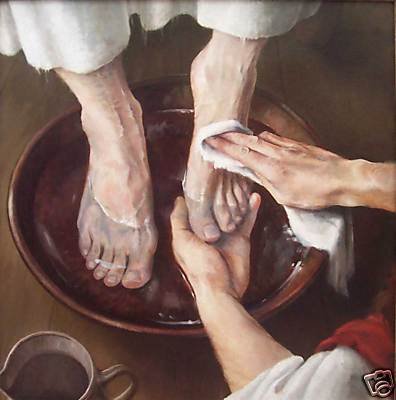
And Now, For a Word From Our Sponsor
I’m taking a short break from discussing the essential teachings of Jesus of Nazareth for this message from your sponsor.
This holiday season if you are looking for an action packed thriller for the man on your gift list who likes books by Ted Dekker or Frank Peretti, then check out my two books in the Jonathan Steel Chronicles. The first book is “The 13th Demon: Altar of the Spiral Eye” and is followed immediately by the second book, “The 12th Demon: Mark of the Wolf Dragon”.
Jonathan Steel is a Christian version of Jason Bourne afflicted with amnesia yet having skills like an assassin or a mercenary. His one memory is of the day he became a Christian and this memory sits at odds with his nature. He wants to recover his lost life and find out why he seems to be at such odds with himself. In the stories, Steel comes up against some very evil human beings in league with demons from a “Council of Darkness”. The council is charged with carrying out the plans of Lucifer to destroy humanity and claim their souls. Steel ends up being the man in the Council’s path
Note that the numbers of the demons are in descending order. They get more powerful the closer we get to the number ONE demon. The 13th demon is the first book; the 12th demon the second, etc. You can check out the review page for discussions of my books.
Also, if you have a teenager who likes Twilight or Hunger Games, they will like these books. One of the major characters is a teenager named Josh who ends up fighting demons alongside Steel, much to Steel’s dismay. Let’s just say they don’t get along very well.
Each book also features strong female characters and a hint of romance. My sisters LOVE Jonathan Steel and want to read more of the book, so if you like thriller type romance novels, this book is for you.
Now, if you or someone you love is suffering from depression this holiday season, check out Conquering Depression: A 30 Day Plan for Finding Happiness”. This book has had an amazing history and continues to help people literally around the world. My co-author, Mark Sutton and I still get emails weekly from people who say the book “saved my life”. It is an easy to read introduction to begin the process of conquering depression in your life. Each chapter is a “day” in the 30 day plan. You take it in small, gradual doses and the LifeFilter cards in the back are there to give you a daily tool. We highly recommend the book and it continues to help those who suffer from depression or who have friends or family who suffer from depression.
Now, that’s it! No more commercials. Come back in the next two days for more posts leading up to Christmas.
Just Another Plankeye!
I was interviewed on Nightwatch Radio Tuesday evening. Todd and Hugh and Johnny and I had a great time talking about monsters and movies and comic books. Eventually, the subject of religion came up. After all, I am a Christian and my Christian fiction book, “The 12th Demon” was the subject of the interview. I found it interesting to hear the usual attitudes towards average “Christians” from Todd. And, I can’t blame him! That reputation is well earned. Todd was very gracious in his comments and I had to agree with him. As a Southern Baptist, I can talk about Southern Baptists. But, my comments on today’s blog go beyond my denomination to all denominations of the Christian church.
You see, the accusations that are always aimed at us are universally recognized. They are represented by such words as judgmental, arrogant, holy roller, Bible thumper, and so on and so on until the “H” word is finally uttered. HYPOCRITE! As an apologist, one who defends the truthfulness of the Christian faith, I can’t possibly count all of the times I have heard the number one objection to someone becoming a Christian: “All of you Christians are nothing but a bunch of hypocrites!”
 I’m in the middle of examining the teachings of a simple carpenter; focusing on his words of wisdom and trying not to focus on his “religious” claims. As I stated in earlier posts, no matter what our station in life I think we can all agree that these teachings of Jesus of Nazareth can be applied to every human being. And, the world would be a much better place if we did. So, just what is a hypocrite? Here is a definition of hypocrisy:
“the practice of claiming to have moral standards or beliefs to which one’s own behavior does not conform. ORIGIN Middle English: from Old French ypocrisie, via ecclesiastical Latin, from Greek hupokrisis ‘acting of a theatrical part,’ from hupokrinesthai ‘play a part, pretend,’”
Anyone who claims to have certain moral standards OR to adhere to certain beliefs and then acts in the opposite manner is a hypocrite. Interesting. Nowhere in that definition does it say: “A person professing Christianity who acts in a manner contrary to the teachings of Christ.”
Although I would certainly say that the above statement would be consistent with a hypocrite, hypocrisy is NOT CONFINED to religion. In fact, I would claim that every single human being on the face of the planet is a hypocrite. We all espouse a high system of behavior or beliefs but we routinely violate those principles with our actions. A simple example would be the claim that I do not lie. Yet, when my wife asks me “Does this dress make me look fat?” I wisely choose to be a hypocrite rather than to become a fool!
What did Jesus have to say about this? Or did he even address it? After all, he was a religious person. And, in the minds of most people if you are religious then by default you are a hypocrite. Was Jesus a hypocrite? Let’s see what Jesus had to say as recorded by his disciple Matthew.
“Thus, when you give to the needy, sound no trumpet before you, as the hypocrites do in the synagogues and in the streets, that they may be praised by others. Truly, I say to you, they have received their reward. But when you give to the needy, do not let your left hand know what your right hand is doing, so that your giving may be in secret. And your Father who sees in secret will reward you.”
“And when you pray, you must not be like the hypocrites. For they love to stand and pray in the synagogues and at the street corners, that they may be seen by others. Truly, I say to you, they have received their reward. But when you pray, go into your room and shut the door and pray to your Father who is in secret. And your Father who sees in secret will reward you.”
“And when you fast, do not look gloomy like the hypocrites, for they disfigure their faces that their fasting may be seen by others. Truly, I say to you, they have received their reward. But when you fast, anoint your head and wash your face, that your fasting may not be seen by others but by your Father who is in secret. And your Father who sees in secret will reward you.”
“Why do you see the speck that is in your brother’s eye, but do not notice the log that is in your own eye? Or how can you say to your brother, ‘Let me take the speck out of your eye,’ when there is the log in your own eye? 5 You hypocrite, first take the log out of your own eye, and then you will see clearly to take the speck out of your brother’s eye.”
“You hypocrites! Well did Isaiah prophesy of you, when he said: “‘This people honors me with their lips, but their heart is far from me;”
“Woe to you, scribes and Pharisees, hypocrites! For you tithe mint and dill and cumin, and have neglected the weightier matters of the law: justice and mercy and faithfulness. These you ought to have done, without neglecting the others.”
“Woe to you, scribes and Pharisees, hypocrites! For you clean the outside of the cup and the plate, but inside they are full of greed and self-indulgence.”
“Woe to you, scribes and Pharisees, hypocrites! For you are like whitewashed tombs, which outwardly appear beautiful, but within are full of dead people’s bones and all uncleanness.”
On and on, Jesus used the word, hypocrite. And, here is what is interesting. Jesus was speaking to the religious leaders of the day! He was calling them hypocrites because their behavior and their religious claims were totally at odds. In fact, it was because of these kind of statements that angered the religious leaders that contributed to his death.
It would be very easy to apply these teachings to those of us who practice religion in the 21st century. But, I believe the lessons of Jesus of Nazareth cut both ways. In fact, I would say that his accusations of religious hypocrisy also could apply to our behavior towards one another in general. Look at the specific truth in each of the above statements:
First, we crave recognition for actions that should best be kept to ourselves. When we pray, it should not be for recognition but a private affair between us and God. When we give to those in need, it should not be for recognition but because it is the right thing to do.
Second, we want to tell someone what they “should” do but we fail to stop and look at our own behavior first. What set of circumstances gives us the right to tell others what they should be doing? Frankly, we should practice what we preach!
Third, we set up rules and regulations, just as the Pharisees did, and then follow them to the letter disregarding the necessity for us to ALSO show mercy and forgiveness. Rules are important but never more important than the needs of the one person they are going to hurt or destroy.
Fourth, on the outside, we often appear perfect, polished, poised, collected, in control but more often than not inside we are dying. We are often the walking dead; filled with regret, shame, doubt, fear, suppressed anger, and the like. This one category alone describes almost all of us and we are all hypocrites in this respect. What if we lived in a world where we were honest about our faults and our doubts and our shortcomings? What if we lived in a world where we truly had to rely on each other to get through the day? What if we lived in the kind of world that Jesus longed for us to have — a world of mutual respect, kindness, mercy, openness, giving, and compassion?
Fifth, you don’t have to be a Christian to appreciate these realities. In fact, when we call other people hypocrites, we are ourselves becoming a hypocrite, setting ourselves up as morally superior when in fact, through our judgmental, arrogant attitudes we have just become a hypocrite!
 This Christmas season, let’s listen to the teachings of Christ. Let’s look at each other through his eyes and see the person within that may be hurting or in need of just a little love and compassion. That could be the greatest gift we could give to someone this holiday season!
Are We All Equal?
There were only two women in my medical school class of 100 students. Back in the late seventies, women doctors were few and far between. It was a time of women’s “liberation”. Frankly, I didn’t get why women were not treated “equally”. My mother and father had set an example for me. My mother was a working woman back in the 1950’s and 1960’s right up to her retirement as a school bus driver in the mid 1970’s. My father shared the job of cooking and cleaning. Every Saturday morning, he swept the entire house of all the dirt and dust of the prior week. I never heard him say anything about “women’s work”. Both of my sisters were career women even after they married and had children. I guess I was fortunate that my parents taught me that we are all equal in the eyes of God no matter what our gender, religion, race, or stature in life.
That particular belief did not come from a political point of view. It came from our devotion to the teachings of Christ. As I mentioned two posts ago, I want to look at the teachings of Jesus of Nazareth in this Christmas season and focus on those teachings without focusing on the religious claims about Jesus. I maintain that Jesus of Nazareth taught us powerful lessons that transcend culture and religion; lessons that even an atheist or agnostic can live with. In fact, Jesus taught us powerful lessons that everyone should apply to our lives.
Stop for a moment and consider the status of women in first century Palestine. Among the Roman culture, women were considered objects of sexual conquest and were often the center of many pagan religious practices. In the Jewish culture of Jesus of Nazareth, women were very low in status. They were little better than possessions. A man could divorce a women just be stating it was so. Women who had serious illnesses were considered “unclean” and “untouchable”. If a women was caught in the act of adultery, she could be stoned — forget about the man’s transgressions! The testimony of a woman was useless and never to be taken as truthful.
However, we see an entirely different attitude toward women in four encounters Jesus had with a woman of his time. Each encounter is a teaching moment for us all to understand.
First, Jesus met a woman at a well. This woman had been married many times and was considered an adulterer. She came to the well in the heat of the day hoping no one would be there to make fun of her. She was also a Samaritan, considered lower than low; the most undesirable of the undesirables by any good Jew of the day. She met Jesus of Nazareth that day. He did the unthinkable and SPOKE to her! He told her all about herself. He told her that the water she drank from this well was temporary but that she should seek the water of spiritual fulfillment.
Here, Jesus illustrates one of the first of many very powerful lessons that all people are of equal value and of equal worth.
Second, Jesus was dining with a religious leader of the day. A woman appears suddenly at the door. She ignores the ridicule and chiding of the religious leaders and comes to Jesus. She produces a vial of expensive fragrance, pours it on Jesus’ feet and his head and washes his feet with her tears and her hair. While the rest of the men present ridicule the woman’s actions, Jesus accepts them as a gift and says that wherever and whenever his teachings are told down through the ages, this woman’s devotion will be remembered.
Third, is the most beautiful account of the woman caught in the act of adultery. We know from the account that this was a setup to trap Jesus; a trap set by the religious leaders of the day. Jesus literally disarmed the men ready to stone the woman with one of the most powerful statements in history, “Let he who is among you that is without sin cast the first stone.” Then, Jesus does not condemn the woman but tells her she is free and to “go and sin no more”; that is don’t allow yourself to get into the situation you were just in that almost led to your death. Learn from this and CHANGE your life for the better.
Fourth, it is very interesting that the accounts of Jesus’ resurrection tell us that the first people he appeared to were women! A woman’s testimony was worthless! If the story of the resurrection were false; that is, fabricated by men. they certainly would NOT have used women as the first line of testimony to the resurrection. Whether you believe this fact or not, the idea that Jesus would appear to women first is significant. His acknowledgement of women’s worth for its time was astonishing.
We see in these few examples (and there are many more) that Jesus of Nazareth disregarded a person’s race (Samaritan), gender(female), and ethnic background (again, Samaritan). In fact, Jesus had harsh words for the religious leaders of the day calling them hypocrites (More on this later!). Jesus seems to be teaching that we are all equal in his eyes. Amazing, isn’t it? Don’t believe me? Look at this statement from a letter Paul wrote to the church in Galatia:
There is neither Jew nor Gentile, neither slave nor free, nor is there male and female, for you are all one in Christ Jesus. (Galatians 3:28).
Where did we go wrong? How did mankind continue to claim to be followers of Christ in western culture and still embrace the bigotry of race and slavery and the sexism against women? Because we are man; we are broken; we listen but we do not learn. Even our founding fathers ignored their own words from the Declaration of Independence when it came to slavery:
We hold these truths to be self evident that all men are created equal and are endowed by their Creator with certain inalienable rights.
It has only been in the last forty years that we have finally given race and sex a fair deal. But, Jesus taught this fairness two thousand years ago!
What have I learned from the teachings of Jesus of Nazareth that I think all men and women should embrace:
Each person is unique and worthy.
No person is better than another.
No person is greater than another.
One should NEVER be looked down upon because of a difference in race, gender, religious beliefs, or stature in life.
We should look upon EVERYONE with respect as our equal.
Once again, Jesus of Nazareth has taught us to do the HARD thing because it is the RIGHT thing to do!
Turn the Other . . . What?!?!?
I was asked to talk to an irate patient. I went to the patient’s hospital room and tried to soothe his ruffled feathers. After all, I am regarded as a very calm person under pressure; a peacemaker. The man claimed we had been experimenting on him during his recent diagnostic test in the department of radiology. I calmly explained the procedure he had undergone and thought I had succeeded in calming the man down. Then, he cut his eyes in my direction, let loose with a long string of vile curse words and called me a liar.
Something popped behind my eyes and anger took over. I wadded up his complaint sheet, threw it at his face where it bounced off of his shocked and surprised eyes and then told him I hoped he died the next day during his surgery. I was in a daze after that and found myself sitting at my desk down in radiology wondering “what just happened?”. As you can imagine, so did the administrators who had sent me to the man’s room to calm him down and answer his admittedly baseless complaints. Instead, I had told the man I hoped he died! Where did that come from? Why had I reacted in that way? How did I allow this man to push all of my buttons?
It is no mystery to anyone that we live in a very angry, frustrated culture. Road rage is at all time highs. Revenge is encouraged and there are revenge “sites” on the internet. Our entertainment glorifies blowing someone away. We’ve taken Dirty Harry’s advice to heart and we hope that someone will “Make my day!” so we can unload onto them. Rage and fury and revenge are the emotions of the day. They fuel the hate and violence in the Middle East. They have spread across the globe in wave after wave of destruction and death. Where did we go wrong?
I want to explore the simple teachings of a rather simple man, a carpenter, a philosopher, a teacher who changed the world. Put aside the trappings of deity and savior we associate with Christ for the moment. Let’s look at his words. Words spoken by a simple man to simple, struggling people. The populace of first century Palestine were not too different from today. They were under repression by a very effective, cruel Roman government. Their king was a vile man with perverted tastes in pleasure and a ready tendency to lop off the head of anyone who displeased him. Their local leaders were strict, legalistic religious leaders who were devoid of compassion, mercy, and love. They were being taxed into poverty; crucified for speaking out against the government; sold into slavery at a whim. In short, these people were ANGRY.
So, why would Jesus of Nazareth, regarded by the people of this era as a future king and conqueror, tell these angry people thirsting for vengeance that the best response to an attack on their person was to “turn the other cheek”? What? Be a coward? Bow to the repressive and abusive leaders around them? Worse, don’t fight back, even in self defense?
This teaching, more than any other by Christ, has been discussed and explored down through the centuries. In fact, it has been claimed that a follower of the teachings of Christ must be a coward if they are true to those teachings. But, I believe, this is a very poor understanding of the teachings of Jesus of Nazareth. I may be a simple man with no deep background in theology or Christian doctrine but I believe there is a deeper, more profound thought here than just turning tail and running.
As a physician I am aware of a condition known as the “fight or flight” response. When we are threatened physically or mentally, our body goes into flight or fight mode. Adrenaline kicks in, the heart races, the lungs bring in more oxygen, blood is shunted from the skin and gut to the brain preparing us to either stand and fight, or to run away. This physical reaction is totally beyond our ability to prevent. But, it is not beyond our ability to control our “response” to this physical “reaction”.
The remarks of Jesus of Nazareth must be taken in context. Not only does he tell us to “turn the other cheek” when we are struck on the cheek, he tells us to go the extra mile, to carry the extra burden. When taken in its total context, there is a deeper meaning here. I believe what Jesus is telling us is to deny our simple, easy “reaction” to fight and to pursue a thoughtful, considered “response”. In other words, don’t fly off the handle! Stop the adrenaline surging and the purely animal instinct to fight or to flee and think. After all, we are human beings. We have considerable options in the thinking category over animals. Why not use a thoughtful response? Why not do the unexpected? Like, turn the other cheek? Or, offer to carry the soldier’s burden for another mile?
When we take this initiative, we have taken CONTROL of the situation. We are now in the driver’s seat, not the offender. This will throw the offender off his/her game. It might even stop them in their tracks and cause them to rise up out of their primal anger to the higher levels of cognitive thinking. A measured response is far better than an instinctual reaction. Now, I’m not talking about life threatening situations. I’m not talking about self defense. And, I don’t believe Jesus was talking about this either. He was talking about the day to day interaction we have with ordinary people we encounter along life’s path. A measured response gives some degree of respect and a glint of wiggle room to the offender. Often, the problem with the offender is a deep seated problem that is unrelated to the anger that person is showing you. Maybe they need someone to stop them in their tracks and make them consider another option. Maybe they need someone to stop them from reacting and encourage them to respond.
I might be wrong here but there is another verse not uttered by Jesus of Nazareth that is profoundly true,
“A gentle answer turns away wrath, but a harsh word stirs up anger.”
Proverbs 15 verse 1. I might be wrong, but in this season of gift giving and peace to all men, why shouldn’t we heed the words of Jesus of Nazareth and turn the other cheek; go the extra mile; repay anger with a gentle word; do the unexpected.
So, what happened to my patient? His son appeared in my office about an hour after that exchange. By then, I had been interviewed by a couple of administrative reps about MY behavior. The son smiled at me and said, “Thank you for standing up to my father. He has run over everyone he meets because he is afraid that he will not wake up from his surgery tomorrow. But, he told me to tell you that he was going to survive just to prove you wrong. So, I know this sounds strange, but you actually helped him by showing him how he was acting towards others. I want to thank you.”
Who would have thought? But, as positive as this may have turned out, I was the one who suffered. I was the one who felt horrible for losing my temper. It may have worked out for the best, but this is the exception, not the rule. Anger seldom has positive outcomes (except when Jesus needed to drive the thieves out of the temple).
Jesus said:
“You have heard that it was said, ‘Eye for eye, and tooth for tooth.’ But I tell you, do not resist an evil person. If anyone slaps you on the right cheek, turn to them the other cheek also. And if anyone wants to sue you and take your shirt, hand over your coat as well. If anyone forces you to go one mile, go with them two miles. Give to the one who asks you, and do not turn away from the one who wants to borrow from you. You have heard that it was said, ‘Love your neighbor and hate your enemy.’ But I tell you, love your enemies and pray for those who persecute you.”
Here is what I learned from the teachings of Jesus of Nazareth:
RUR — Resist the Urge to React. Rather, take time to THINK and then RESPOND.
Control — By avoiding a blind reaction, you can take some measure of control of the situation (maybe not completely but at least your side of the situation).
Empathy — An expression of anger often is an indicator of a deeper problem and you might just happen to be in the wrong place at the wrong time. Looking for the pain behind the anger might help you to understand why this person is so angry.
Love Your Enemy — Here is the HARD thing to do. But, in this teaching we see the necessity of looking at the other person as an individual with a worldview and a motive that we might understand if we were in their situation. It is hard to love someone you loathe; someone who is lashing out at you. But, an attempt to at least understand their point of view and then trying to find a way to respect that person as a PERSON might help defuse the situation. In other words, sometimes we have to do the HARD thing because it is the RIGHT thing!
I’m a Doctor, Not a Philosopher!
Doctor McCoy made this profound statement to his friend, the logical Vulcan, Mr. Spock during the original Star Trek episode. I have always had a hard time understanding philosophy. And so, this statement made me sit up and take notice:
“Christianity is not a religion. It’s a philosophy!”
I was somewhat surprised to hear Bill O’Reilly make this statement Wednesday night in his conversation with an atheist. The atheist, as expected, protested vigorously that Christianity IS a religion. Bill countered with a valid argument. Being a part of Catholicism or being a Methodist is “religion” based on the “philosophy” of Christianity.
So, which is it? Is Christianity a religion or a philosophy? Here are 5 definitions of the word “philosophy”:
Examination of basic concepts: the branch of knowledge or academic study devoted to the systematic examination of basic concepts such as truth, existence, reality, causality, and freedom.
School of thought: a particular system of thought or doctrine.
Guiding or underlying principles: a set of basic principles or concepts underlying a particular sphere of knowledge.
Set of beliefs or aims: a precept, or set of precepts, beliefs, principles, or aims, underlying somebody’s practice or conduct.
Calm resignation: restraint, resignation, or calmness and rationality in somebody’s behavior or response to events.
Look at the fourth definition. Maybe Bill has a point. Christianity is a set of beliefs or aims underlying the practice or conduct of a person who follows the teaching of Jesus Christ. Ravi Zacharias, well known speaker and apologist makes the statements:
Religion begins with man. Theology beings with God.
Ah, here is a valid point. Religion is man’s attempt to organize the philosophy of Christianity into a system of everyday “practice”. Religion defines the “rules and regulations” of the “practice” of Christianity as an outward manifestation of its tenets and beliefs. Religion, then, is a way of living out or bringing the inward belief system of Christianity into everyday practice.
And, here is the problem. By inserting “man” into the process; by putting “man” in between the teachings of Christ and the everyday human behaviors based on those beliefs, there will be an inevitable watering down, and sometimes down right perversion of those tenets and beliefs. Man is an imperfect creature and based on our history, we can really screw up even the most perfect system of beliefs.
And, in defense of Bill’s atheist guest, complaints about “religion” can be valid. It is the ABUSE of Christianity, as well as other “philosophies” down through the ages that have led to charges that those “religions” are dangerous. The new atheists claim that all “religion” is inherently dangerous and should be outlawed. They claim that teaching children “religious” concepts is equal to child abuse. There may be some valid points here. After all, if a child is taught to hate anyone thinking differently from them and tells them it is glorious to strap a bomb to their chest and kill dozens of people, then I would whole heartily agree that “religious teachings” can be dangerous when they veer away from the underlying pure “philosophy” of that man made religion.
However, the potential danger of religion does not take away from the peaceful “philosophy” of Christianity. After all, Jesus of Nazareth never asked his disciples to kill or maim or hate or carry out revenge. He rebuked Peter when the man cut off a guard’s ear in the Garden of Gethsemane.
I would like for us to consider the possibility Christianity may be the most valid thought system and belief system in the history of humanity. I would like to explore the teachings of Jesus of Nazareth. Over the next few days, as we near the celebration of the birth of Jesus, I would like to look at the “philosophy” Jesus taught to his followers. Was it dangerous? Was it controversial? Is it dangerous today? Should Christianity as a philosophy be labeled as dangerous by today’s culture? Are we justified in outlawing any expression of the celebration of “Christmas” at this time of year?
Come back in the next few days as I explore the pure teachings of the man, Jesus of Nazareth. In deference to those who are atheists or agnostics I will discuss the teachings of Jesus from his strictly human point of view. I think that we will find that no matter what we may now believe about Jesus Christ in our individual “religions” that his teachings are universal and can become the foundation of the best way we as humans can conduct ourselves in this day and age of fear, anger, hate, hopelessness and coming darkness.
The Shadows of Depression Falling, Falling, . . .
 The days are growing shorter and night flies across the world in record time. These are the dark days; the cold days as winter and its death grip tightens across the land. As wonderful as the holiday season can be, for some of us, the lengthening shadows bring the cold, hard press of depression to our souls. In a time when we should be thankful and happy, sadness tinges our every thought.
I understand. I have been there and I battle the teasing touch of depression every day. But, I have developed a plan that helps me battle depression on a daily basis. This plan was born out of my two years of counseling and with the help of my Lord. Today, I spoke at length with Armstong Williams on the coming epidemic of depression that is sweeping our land, particularly our young adults. How do you combat this depression?
Let me share some thoughts.
First, invest some time and effort into a creative endeavor. Write a song. Sing a song even if the only person in the audience is the shower nozzle. Write a poem, a letter, a blog post. Pick up some crayons and a coloring book. Find a way to give a special gift of your own making to that loved one this Christmas. Creativity utilizes a totally different part of our brain than that part which is more cognitive and intuitive. Exercising creativity brings a balance to brain chemistry. And, its fun. When you are depressed, you seldom do anything that is fun. Now is the time to indulge yourself. Even if it is to make a cool, colorful ice cream sundae with lots of colorful sprinkles!
Second, take a technology fast. Turn off the cell phone and tuck away the ipad. Don’t message any one for an hour. Go outside and take a walk in the cold sunshine or read a real book. Better yet, try a REAL interaction with someone instead of a virtual interaction. We are becoming increasingly isolated from real contact due to Facebook and Twitter and texting. But, we need to touch and talk to and listen to real people in real time in person. Scary, but I suggest you try it before you forget what it is like to sit at a table with your best buddy and talk over coffee.
Third, invest your time and energy in something that transcends your life. Find a cause that helps others. Serving others can be the best diversion from depression. And, when you invest in a cause that is greater than yourself; that will have lasting impact beyond your life; it gives you perspective. You will find others that may be worse off than you and a smile and a helping hand is what you are looking for so give that to them. Find someone who is suffering from depression and help them out by sharing and talking to them. They might have good advice that will help you. And, vice versa. Turn your “tragedy” into “triumph”. Redeem your depression!
Finally, turn loose of that grudge or that unforgiving attitude. In my book, “The 12th Demon: Mark of the Wolf Dragon” the character of Raven is an assassin who started out as a little girl in love with God. Because of some tragedy in her life, she moved into a life of crime, killing for a living. In the process, because she could not forgive, she died inside. Like the vampires in my book, she is the walking dead; dead inside; dead spiritually; dead emotionally. Until she meets up with Jonathan Steel, a man from her past who reminds her that there is a Love that transcends hurt and death and evil. Being unforgiven has left her numb and depressed. Can she ever find forgiveness? Is there some deed so horrific; so heinous that God cannot forgive? Can you ever find peace?
Like Raven, this question is true for all of us. There are always those in our life we should forgive. And, there are always those in our life who should forgive us. Think about that and if you can find it in your heart, forgive. If you can find the strength, ask for forgiveness. You will find the sudden rush of holy wind that floods your soul will rejuvenate your dying spirit; it will fill you with new life; it will blow away the dregs of depression and leave you healed and restored.
Don’t spend another day as the walking dead. Start conquering depression right now!
This holiday season, check out “Conquering Depression: A 30 Day Plan for Finding Happiness” available in all bookstores and through all ereaders. If you’re looking for a good fiction book for someone, check out my first book, “The 13th Demon: Altar of the Spiral Eye” and the newest book, “The 12th Demon: Mark of the Wolf Dragon”.
Don’t You Want To Thank Someone?
There was an empty chair at the table this Thanksgiving.
My father passed away a few weeks ago at the age of 98. Even though he had been living in the nursing home for the past three years, I always brought him home for the holidays. Every Thanksgiving, Christmas, and Fourth of July, my father would sit at the head of our table. And, always, he would lead us in prayer and sing us a song or two.
My father’s singing idols were Tennessee Ernie Ford and George Beverly Shea. Although his voice was weaker and weaker as he aged, when he switched to his singing mode, from somewhere deep within this clear, deep, resonant voice would boom out a song in perfect pitch.
And so, this year, more than any other, I am thankful for my father. His absence has made me realize how much I came to depend on hearing that voice raised in song. “Don’t you want to thank someone?” is a more than just a question. It is a song written and sung by Andrew Peterson. The last song on his newest release, “Light for the lost boy”, this song brought tears to my eyes just a few weeks before my father’s death.
I used to be a little boy
As golden as a sunrise
Breaking over Illinois
When the corn was tall
Yeah, but every little boy grows up
And he’s haunted by the heart that died
Longing for the world that was
Before the Fall
Oh, but then forgiveness comes
A grace that I cannot resist
And I just want to thank someone
I just want to thank someone for this
Those are just a few words from this incredible song. I did not grow up in Illinois, but the corn grew tall in my father’s garden here in Louisiana and one dark day atop the tall tree I realized the world was broken and no longer the glowing, innocent thing I had lived in for my first ten years. It was atop that tree, above the vampires that lurked in the dark shadows and the werewolves with glowing yellow eyes that waited for me in the blackberry bushes and the myriad monsters of my imagination that my fear of the worlds I had only until then imagined became the beasts of approaching adulthood. Just as real. Just as dangerous. Just as deadly.
I write about vampires and werewolves and creatures in the dark because we live in a broken, fallen world. We try desperately to understand it and to dissect it and to equate it and to reduce it to laws and axioms that fit neatly into a science textbook. Equations we can control. With them we hope to tame the beasts but to no avail. Rather, it takes imagination.
During a midnight walk, J. R. R. Tolkien told C. S. Lewis that his atheism was no more than a lack of imagination. Here are some other words from this incredible song:
Now I can see the world is charged
It’s glimmering with promises
Written in a script of stars
Dripping from prophets’ lips
But still, my thirst is never slaked
I am hounded by a restlessness
Eaten by this endless ache
But still I will give thanks for this
‘Cause I can see it in the seas of wheat
I can feel it when the horses run
It’s howling in the snowy peaks
It’s blazing in the midnight sun
Just behind a veil of wind
A million angels waiting in the wings
A swirling storm of cherubim
Making ready for the Reckoning
Oh, how long, how long?
Oh, sing on, sing on
And when the world is new again
And the children of the King
Are ancient in their youth again
Maybe it’s a better thing
A better thing
To be more than merely innocent
But to be broken then redeemed by love
Maybe this old world is bent
But it’s waking up
And I’m waking up
‘Cause I can hear the voice of one
He’s crying in the wilderness
“Make ready for the Kingdom Come”
Don’t you want to thank someone for this?
I am so thankful for the power of my imagination to open up the doorways of my heart and mind to the REALITY of God! I am so thankful my silent companion standing in the gap between my soul and the monsters of my brokenness is real and loving and forgiving and the author and finisher of this universe. I am so thankful for the times of failure and faithlessness and doubt so that I could search those shadows again and find Him waiting there right where I left Him. I am so thankful my father showed me the love of God! I am thankful for each and every reader that has trusted me to fill a book with words that are more than echoes of futility. Rather, they are words that lead slowly but inexorably to the Word, the Logos, the One who became flesh. And, for that, I am thankful.
Look around you in the aftermath of this hectic and busy season of empty thanks and muted praise and awkward family gatherings and frantic hours of shopping. Stop and look into the shadows. There may be beasts among us, and I am sure there are. But, there is a quiet, abiding companion following, following and watching over us. My father sang of this companion in his powerful voice. He sang of a Father that is greater than any earthly father could ever be. A Father who sits at our table; who sings the story of our lives into being; who longs to love us and redeem us and hold us in his arms. Think on this with an imagination that is a poor reflection of the image of God and you will find in your heart and in your soul the need to thank Someone!
My Skin Sparkles With Sun Kissed Dew . . .
 Why are people so fascinated with “Twilight” and “The Walking Dead”, in other words, the undead?
We have reinvented vampires. Once, they were unseemly; horrific; monsters that moved through the shadows of night and took our lives away or worse, converted us to the undead like them. Now, vampires are sparkly and shiny with six pack abs, doe eyes, incredible super powers and they can come out in the sunlight. They can deny their dangerous side and drink the blood of animals. They compose haunting music and write novels unlike any the human race has seen.
Why? Because we want to live forever. And, we don’t want to live forever as one of those evil vamps. We want to be Bella and Edward. We want to run through verdant green forests and recline in flowery meadows and stare endlessly into each other’s eyes and . . . well, after a few thousands years that might get BORING!!!!
Sorry, but this idyllic concept of eternity just leaves me cold and sterile. On the other hand, I don’t want to lurch through deserted, debris filled city streets with half of my guts hanging out looking for the next warm, pulsating brain to eat. Why would anyone want to be a zombie?
Because, zombies don’t have to think. Zombies shuffle through life mindless of the stress of living. They don’t have to make any decisions, post any blogs, catch up on Facebook, tweet, pay bills, or worry about election returns. They shuffle through life mindlessly pursuing something to kill and eat. Simple. Elegant. BORING!!!
The truth of the matter is that once we had a story of our lives here on planet Earth. It was a story with a singular Beginning, a redemptive Middle, and a promising End. But, we have abandoned the Story of God. We have pushed God out of the Creator seat and replaced Him with Chance. The Universe is all there is or all there eve will be. Carl Sagan said that. We only have what we can see, taste, smell, touch, and hear. Science gives us all the answers, according to Bill Nye, the science guy and Stephen Hawking. Who needs history and philosophy? Who needs theology?
WE DO! If we were just animals stumbling through life totally slave to our instincts it would be different. But, my dog, Romeo reclining on the floor beside me has no appreciation of the elegant strains of Bach playing on my computer. He cannot appreciate the loss and love of my father by looking at a photograph or reading an entry in my late father’s Bible. He has NO appreciation of art, beauty, music, creativity. Those elements come from God — we are made in His image.
Ah, here is the conundrum. We know in our hearts there is more to life than just living and dying. We sense the divine. God has put eternity in the hearts of all men, the wise author of Ecclesiasties proclaims. We strive to touch the hem of His garment; to catch a glimpse of His light; to feel the warmth of His love; to embrace the comfort of His forgiveness.
He is still there, waiting in the shadows, a secret companion behind the strident clamor of modern culture. I took a walk in the woods and I sensed his voice in the whisper of the wind; the gently susurration of leaves stirring with life; the musky fragrance of an autumn bloom. He is there and He can still be found. But, not in the line at the cinema or in the looming shadow of a vampire or the lurching clumsiness of a zombie.
I have spoken to those who have had a glimpse of what lies beyond the Veil. They can barely articulate in human terms what awaits us in those other dimensions. But, I know this. There is no world, no sky, no music, no art, no figment of human imagination that can EVER match what God has in store for us! And it will never by BORING!
Search for the divine and He will find you!

 Bruce Hennigan
You must be logged in to post a comment.