Category Archives: Speculative Fiction
Turn Your Face and Look Away!
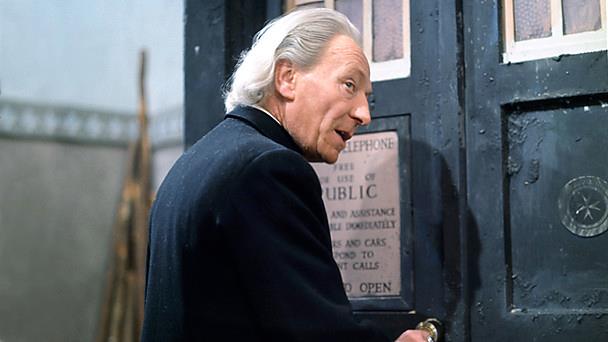 We are approaching the 50th anniversary of the longest running science fiction television series, Doctor Who. My daughter, Casey, got me hooked on the new Doctor Who back in 2007 and now, my entire family is hooked on Who. I decided to go back and find the original episodes of the very first Doctor Who (he has regenerated 11 times since then) in black and white on youtube. In the first episode from 1963, Barbara, a reluctant passenger on the TARDIS (the Doctor’s spaceship) is captured by cavemen when they travel back in time to early Earth. During a pivotal scene, two rival leaders of the cave people fight. Their battle is brutal as would be expected from cavemen. At the pivotal point, the winning caveman bashes the other one’s head in with a rock. A close up of Barbara fills the screen and she turns her head away from the ghastly sight.

She turns her head away. Why? Because what she is seeing is so horrific, so appalling it is beyond thought; beyond consideration. It brought to mind that many of the shows from the 1960s have key moments when someone is so horrified they cannot bear to look. They turn their face away. They deny the evidence of their own eyes!
Fast forward to to the present. When was the last time I saw someone turn their gaze away from something because it was too ghastly to consider? Rather, what I have observed in the present is the opposite. Characters stare wide eyed and enthralled by the horrific sights they see. It is as if they cannot tear their gaze away from what is before them. In fact, many of the characters in today’s shows act rather blasé or fascinated by what they see. It is as if the capacity to be appalled, shocked, horrified no longer exists. Have we become too desensitized to the macabre, the horrible, the dead?
I asked my son, Sean, (age 28) for his thoughts on growing up in a culture that can no longer be horrified. Here is his incredible response as he reflects on a growing unease he has been feeling for months:
I’ve been chasing down this unease for months, at least since Hutchmoot, but the roots go back for years, easily into my college experience. I hope it’s not as pretentious as it sounds to say that I’m sketching out my worldview, because that’s how I can best trace the steps that lead me to a response – not just to desensitization or to political bile, but to the world, our Lord and the call to discipleship.
So what, then, is the world’s great need?
I’ve seen two trends: one over the course of my adult life and one stretching further back over my 28 years here. Over the past ten years, the information infrastructure of the whole world has been transformed – practically rewritten. For the first time in history, people of similar interest or temperament can share information and connect with one another regardless of geographic, social or cultural boundaries. As information multiplies, information and communications technologies allow tribes to form around every interest imaginable. The shift is value-agnostic : it allows people to affirm and solidify one another’s views, good or terrible, mainstream or fringe.
The upshot is two-fold. First, formulated worldviews are more numerous and extensively-documented and communicated than at any other time in human history. The Meta-Narrative windshield has been smashed, and we are looking at the thousands of fractal worldviews scattered around, crash-proof enough to still be distinguishable in the mess. Second, as a result, people are more aware than ever of this mess. At least subconsciously, we all recognize this diversity and acknowledge a need for co-existence to survive.
Second, since I was a child, the dominant language of social competition, of the interplay of ideas, has grown increasingly violent, increasingly personal and increasingly polarized. Being confrontational, once a rare tactic deployed when all else had failed, is now standard political and argumentation style. We have abandoned deliberation in an arms race to do the most harm in the fewest number of words. This adversarial frame dictates that all arguments are fights, that every fight has (close to) two sides, and that one side must win by destroying its opposite.
It is not logic, but rather a perversion of it: what was once about disagreement and discovery of truth is now a border skirmish between worldviews, a war whose casualties are multiplied by our newfound globalized tribalism. Our civil discourse doesn’t resemble an agora so much as a lynching, where the mob that’s the biggest puts to death those whose identities are different. We have returned to the era of foreign wars, of colonies and dynasties and unchecked power and ambition. In the absence of a common language, our confused interchanges know only one solid verb: to kill. This limitation frames our interpersonal struggles as a zero-sum game, a war of survival: family against family, tribe against tribe; ‘her desire shall be for him but he shall rule over her.’
But Jesus’ blood can mend even this.
I’ll stop for now and leave all of us with one thought. When Jesus of Nazareth; God in man form hung upon the cross, bloodied and dying his Divine self looked out from the dimensions of heaven and beheld his Son. God was so appalled; so horrified; so shocked by what He beheld — the sins of all time; the sins and wrong doings of all mankind from Adam’s first bite of the fruit to the horror that will end it all — every wrong and bad and awful thing and He could not look upon it; could not SEE it; could not abide it and God turned his face away!
Now from the sixth hour there was darkness over all the land until the ninth hour. And about the ninth hour Jesus cried out with a loud voice, saying, “Eli, Eli, lema sabachthani?” that is, “My God, my God, why have you forsaken me?” Matthew 27:45-46

Tomorrow, I will show you Sean’s answer to this question of violence in our world. If you are interested in featuring me on a radio talk show, I would love to grant an interview. I am speaking on two topics, “Why are we so fascinated with the undead?” and “Are Violent Video Games leading to Violent Behavior?” Use the contact tab to drop me an email and we’ll set something up!
A Slow Fade . . . .
POW!
BAM!
SCHTOKK!

If you remember anything about 1960’s television, you remember the original Batman series. Bright, psychedelic colors. Comic book type speech balloons exploding during the scenes. And, of course, Robin with his turn of that famous phrase, “Holy (insert a danger), Batman”.
At the age of 10, I was a DC Comic fanatic. I loved Superman, Batman and Robin, Aquaman, the Flash, and Justice League of America. What I remember well about these comics was the simple stories and the triumph of good over evil and the lack of violent deaths. If death occurred, it was implied and took place off the page.
When I was 12, bored out of my skull in my parents’ home town of Saline on a long summer weekend, I entered the local drug store. They didn’t have drugs, but they had comics. I had read all of the DC Comics available but I had never read a Marvel comic. I talked about this experience in this post, but to summarize: in desperation, I bought a copy of Fantastic Four #66 . As I read the comic, I realized it was very, very different from DC Comics. There was the Thing, a deformed being who was in love with an ordinary woman. Rather than be repulsed by his appearance, this blind woman loved the Thing unconditionally! You mean someone could love even me, this little awkward fat, gestating nerd? I was also shocked when people died in the story. Not off the page, but right there in plain sight. Not particularly graphic, but they were dead and the writers were not afraid to show it. In fact, those brief and infrequent scenes of death were all the more shocking and moving because of their scarcity.

I was hooked! Here was meat where I had been sampling milk and cookies. Here was real angst I could relate to as an adolescent. I went back to the drug store and bought every Marvel comic they had and my fate was sealed. I never read another DC Comic again.
About ten years later, a friend asked me to come over and play Dungeons and Dragons. What is that, I asked? He outlined an interactive role playing game (printed out as a manual, not computerized!) featuring demons and wizards and witches and trolls and goblins. My alarms went off. Did I want to get involved with the occult? At this point in our culture, any such games smacked of Satanism and involvement with ideas that could allow the occult to enter into my life. I kindly refused.
My son was around 11 or so and he approached me about a card game called “Magic”. Together, we sat down and discussed what this card game involves. I saw a natural progression from D&D to Magic, an immersive game that substituted the manual for game cards; collectible cards. But, I realized that the ideas and concepts were very advanced and very mature — mainly for teenagers and adults. So, I told my son, “No” and together we found an alternative, role playing card games from Star Wars and Star Trek and Babylon 5. Sean was a bit disappointed in not playing Magic, but he excelled at the other games. In fact, we visited the 30th Annual Star Trek Convention in Pasadena in 1996 and Sean played a new version of the Star Trek game in a test phase. The developers told me he picked up about a dozen problems with the game playing and they were able to improve the game play before the complete release of the game.
Now, we move on to DOOM. I was not hesitant to introduce my kids to computers. Sean could play on my computer, a Commodore 128, by the time he was 2. He had his own computer by the time he was 5. I started buying him game consoles very early. I wanted him to be an early adopter of digital technology because I knew this was the world in which he would grow up. When he was 13 or 14 he wanted to buy DOOM for his computer. Once again, we sat down and reviewed the game and looked at some of the test screens. My answer was “No”. The graphics were so intensive; the first person shooter was so ruthless I didn’t think it was appropriate for his age. I promised him that by the time he was 16, I would let him play anything that was rated for his age. Instead, he and I played a Mac based game, Marathon. This game had a first person shooter perspective and I was reluctant to play because you could kill human beings and they would explode in gore. But, the game also had puzzles and mind games. I played it to the very end. Sean went on to play all three versions of the game.
I bring all of this up because I have seen a progression in our world. I’ve watched our sensitivity to the value of human life plummet as a society. It is reflected in our art. It started in comic books and movies and television shows as our culture deteriorated into postmodernism. I think the turning point was the Vietnam War. Prior to that period, our views of war and senseless death were sanitized. We did not have television coverage during the Korean War or World War II. But, the Vietnam War afforded the media an opportunity to show real war and death and carnage in its immediate, colorful, raw form.
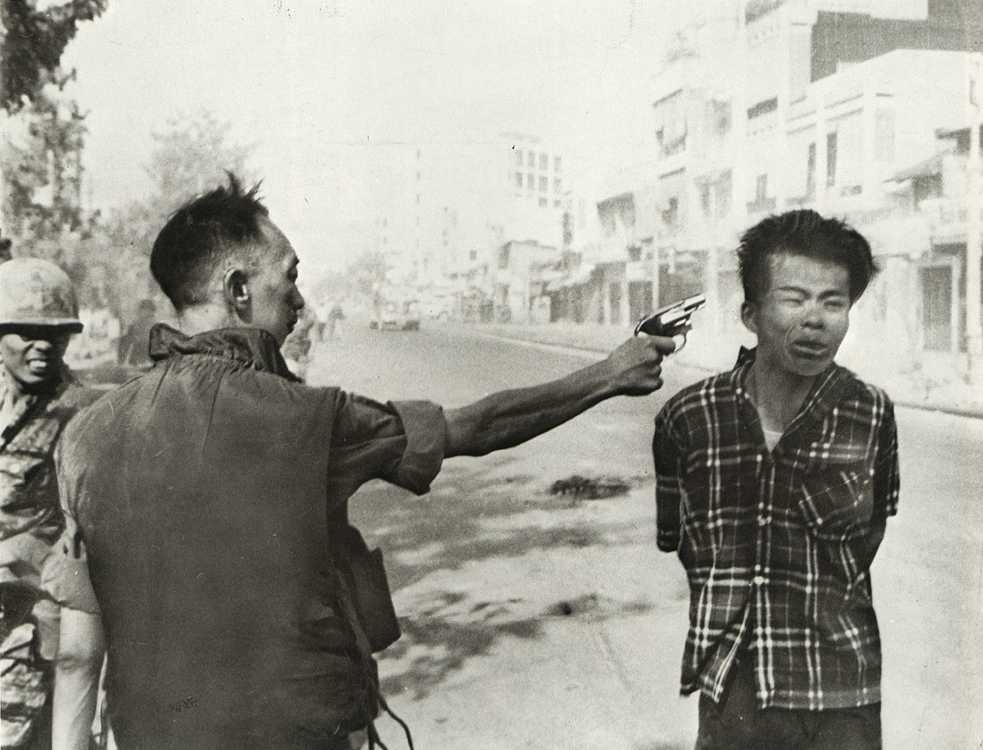
The media saw an opportunity for personal advancement; for sales; for money; for fame; for awards; and for advancement of anti-government agendas. Now, every day at dinner time, instead of family sitting around the dinner table discussing the ordinary events of the day they were bombarded with gory, bloody stories of this endless, pointless war. Death seeped into our culture, unfettered, unedited, immersive. The world shifted and changed in 1968 with the death of Martin Luther Kind, Jr. and Bobby Kennedy and the uprise of the war protests.
It has been downhill since then. Funny that the generation that embraced the sanctity of every individual human being led to the civil rights movement and the women’s equality movement also has turned that whole paradigm upside down. Now, there is very little regard for human life unless it is our own. We have become such a self centered, selfish society screaming for our needs to be met. We are so de-sensitized to death and destruction that there are those among us who actually praise the development of a video game such as “Playing Columbine” where you can assume the role of one of the killers in that horrific event and kill high school students with abandon. It’s just a game! It’s just art! It has no relationship to my behavior once I walk away from that game! Get over it!
No, it is not the after effect of such a game I worry about. It is the mindset that allowed it to be developed to begin with and the lack of discernment when one sits down to play it with the thought that there is nothing wrong here. I’m sorry, but after 57 years on this earth I am convinced that ideas have consequences. I am convinced that what we put into our minds and hearts will have an effect on our behavior. What is next? A Holocaust simulator? A game where we can imprison and torture Jewish civilians and become Dr. Mengele and experiment on them before we gas them and throw them into the ovens? Is that where we are headed?
Ravi Zacharias once said “The only thing worse than nostalgia is amnesia.” Are we forgetting what it means to be human?
No matter what spiritual values you may or may not have, there is great wisdom in what Jesus of Nazareth said about what we put into our minds and hearts:
Luke 6:45 The good person out of the good treasure of his heart produces good, and the evil person out of his evil treasure produces evil, for out of the abundance of the heart his mouth speaks.
Luke 12:34 For where your treasure is, there will your heart be also.
What do we treasure? What are we putting into our minds and hearts? I don’t care what studies do or do not show, common sense tells us that what we put into our minds and hearts becomes a part of what we are and how we act. It has always been that way and shall always be that way!
Tomorrow, I want to share some thoughts from my son on these issues.
A Balanced Perspective on Video Media Violence
I just ran across this blog post on kotaku detailing the studies done on video game violence and their effect on players. It gives, in my opinion a good balanced review of both sides of the issue. Check it out!
A Song All Dads MUST Listen To!
First, let me say I want to thank everyone having me on their radio shows this week. I now have 11 interviews!
In one interview that will air sometime tonight, I talked quite a bit about the relationship between father and children. Here is one of the most powerful music videos I’ve seen in a while from one of my favorite singers and authors, Andrew Peterson.
Now, one more thing. My son sent me another interesting link about video game violence:
http://www.polygon.com/2013/1/14/3875420/video-game-violence
The author makes a very valid point. While violent video games do cause changes in behavior, it is the responsibility of the player to use common sense and moderation. Ideas have consequences and it is not the idea that carries out the consequences, it is the person acting on those ideas. And, yes, there are lots of non violent video games that can involve the entire family. This situation reminds of me of Walt Disney. He would take his two daughters out on Sunday afternoon to the carnivals along the shore in Los Angeles. Back then, these carnivals were dirty and trashy with the lowest common denominator human being working there and the rides were half broken and would not allow a father to enjoy them with his children. All Walt could do was watch. But, he saw an opportunity to change that dynamic. He imagined an “amusement” park where things were clean, employees were clean cut, motivated and engaged; and where the attractions provided something for the entire family to enjoy together. He created Disneyland and the rest is history.
Maybe we parents need to consider doing this with our kids. Enjoy some positive, fun video games together as an alternative to the violent ones. Encourage them to participate with the entire family, even if it is for just a short time. The video gaming industry is beginning to get this idea and if we, as consumers, encourage these kind of experiences, maybe we can have a positive impact on the future of our children!
Do Violent Video Games Lead to Killing?
I was checking out at an Apple store in a large metropolitan city back in April of 2012. The young man of Asian descent was helping me to check out on my own iPhone. All he had to do was supervise my payment transaction on my own iPhone and then give me a bag.
“So, what do you do?” He asked.
“I’m a doctor but I’m here for a writing week. I am a published author.”
Uh, oh! He got THAT look in his eye; a sudden interest in what I had just said and I knew the inevitable comment was coming — wait for it, wait for it!
“I’m thinking about writing a book.” He said. I groaned inwardly. I was preparing my standard responses. I don’t have time to critique your manuscript. No, I can’t introduce you to my agent. No, I can’t send your manuscript to my publisher.
But, something happened. His voice changed and became quieter and was suddenly filled with emotion. He looked off into space as he said, “I want to write about love. Over the past five years, I’ve learned a lot about love. I’ve learned about the importance of life and people and, well, love. What it really means.”
There was a disconnect between what I was thinking he meant and how he was saying it. He wasn’t talking about a broken relationship. He was talking about Love. Deep, abiding, caring, unconditional love. Then, he look me square in the eye and his eyes carried a hint of moisture.
“Last week was my five year anniversary. I’m not supposed to be here. I was the only person left alive in a classroom after the Virginia Tech shooting. Someone fell on top of me and died or I wouldn’t be here. He thought I was already dead. Someone had to die to save me.”
If you’ve ever been in an Apple store you know it is crazy busy and totally nuts filled to capacity with customers and Apple “Genuises” but suddenly all of the sound was sucked out of that store and it was just me and this guy and his story. I was shaking as I took out a business card and handed it to him.
“I’ll do whatever I can to help you. I’ll look at your manuscript. I’ll send it to my agent. I’ll call my publisher. You MUST tell your story!”

2012 will be remembered for a lot of things, but the statistic that any year would not like to have is this. 140 people were killed or wounded in seven mass shootings in 2012, making it the bloodiest year for these types of incidents in modern U.S. history.
I will be involved in several interviews in the coming weeks on this phenomenon and its relationship to the presence of evil in our society and to answer the question: “Is there a relationship between violent content and violent behavior — in other words, can such things as violent video games bring about this kind of killing behavior?”
I don’t want to spell out my answer today. But, I asked my son, Sean, age 28 who has played video games almost his entire life what thoughts he had about this. With his permission, I want to post his answer.
Sean’s current status with video games:
“Violence doesn’t end violence – it extends it.” — Toby Whithouse
I’ve played video games most of my life. Some of my fondest memories from childhood involve gaming with friends, sharing secrets dug out of magazines, and writing my own stories and strategy guides. I still know my way around the first Zelda game instinctively. I have no memory of learning what comes naturally to me with games – playing them well is like riding a bike.
I love gaming. I love good stories told well in any medium, and I love the interactive experiences that only gaming can provide.
I hate what gaming has become. Like the Christian music industry in the 2000s, I hate that gaming has become an executive’s market, making lowest-denominator products for the easiest possible market. For Christian music, that involved positive, chipper soccer mom music; for games, that involved adolescent male empowerment fantasy. I am weary of gaming for the same reason I am weary of mainstream Christian music – gaming has stopped asking the hard questions. And for gaming, that means the default setting is realistic and brown and the default verb is “kill”.
There are many artists and writers who acknowledge the problem and are doing new things to address it, but as always, they are in the minority. And so gaming has become the realm of samey brown military games with troubling jingoistic or misogynistic undertones.
I am troubled that this shift also reflects something about our culture. When we lose touch with Christ our Peace, the Prince of Peace whose Kingdom comes in peace, we tend to elevate self above all else – entitlement (both to things unearned and to holding on tightly to what we are stewards of), pride, even patriotism – these can all take His place. And when what we love is not freely given to us, we default to violence as a way to protect what we have and take what we want.
A culture of self brings us out of balance with The Lord and with each other. His kingdom comes in peace, and anything that brings us out of balance with that peace lends towards entropy, violence and chaos. We have a longing for family, for home,for permanence in who we love and what we love to do, and when we elevate those things above the God who provides them, they only amplify (rather than relieve) our pain and anger.
The media / violence debate is as old as adolescence itself, and has exhibited a common pattern on media stretching from television and comics back to the pulp adventures of the 1920s and 1930s. Anecdotally, I think the anger and aggression encouraged by games tends to arise from games not meeting the fundamental needs we want them to meet. If a game makes me angry it is most likely anger at myself, frustration at my inability to entertain myself in partnership with the game.
More broadly I think video games in the 21st century are facing the struggles that comics faced in the 30s, 50s, and 80s. The medium has grown up (and its target audience is adults in many ways) but public perception still focuses on children. Entitled kids aren’t told no by their parents about Call of Duty (as I was once told no about Doom) and they get what they want. Parents don’t take the time to know what their kids are playing, or play with them and offer context on what they see and hear. (Our friends are good examples of doing this with books and TV too – it’s an attitude, an orientation, not a medium-specific special requirement).
As for adults who game, I have a hard time believing that gaming is any better or worse than watching TV several hours a day. People can play bad or dumb games like people can watch hours of crappy meaningless live TV. The spiritual problem transcends the medium.
Finally, to violence. I am at a loss at what to say about the shootings (though I think that the Sandy Hook kid do not play Mass Effect, at least), but most other game-related violence I’ve anecdotally heard of sound like domestic disputes or parent / child conflict that would have centered around a hundred other innate things if not games. When we don’t hold to Christ, the Giver of all good things, we jealously and violently defend what we love because we feel we have no choice, because we feel entitled.
That form of nihilism will eventually and inevitably lead towards our death.
Check out this link to another post about violence and video games. http://m.kotaku.com/5970039/after-sandy-hook-and-virginia-tech-im-done-with-violent-video-games
If you are interested in reading a thrilling, fictional book that deals with the impact of evil in our society today and how we can confront it, please check out my first book: “The 13 Demon: Altar of the Spiral Eye” and my second book, “The 12th Demon: Mark of the Wolf Dragon”. For more on depression, check out the book I co-authored with Mark Sutton, “Conquering Depression”.
Also, I will be giving almost a dozen radio talk show interviews this WEEK so check out the EVENTS tab!
Book Signing Tomorrow!!!!
 “Your book saved my life!”
When you get this kind of email, it is startling; amazing; humbling. Let me tell you about the book that has changed thousands of lives. It is my book. It is our book. It is your book.
In 1995 I went through a horrific depression and in the aftermath developed tools to help me keep depression at bay. These LifeFilters, as I called them, intrigued my pastor, Mark Sutton. Mark professed to me that he suffered from depression also. This was a shock. After all, if you have enough FAITH, then you should NEVER suffer from depression. Which is a lie from the pits of hell. In fact, the statement that set me free came from my counselor who said to always ask, “What is the lie?” And, who is the father of lies? Satan!
If you think that depression is a spiritual disease then you are WRONG! Depression, as Mark and I discuss in our book, “Conquering Depression” is a multifactorial illness. If you have enough faith, why do you wear your glasses? No! God gave us our minds so we could learn. And, as a physician called by God to medicine, my mind may be the answer to your prayer!
Mark asked me to help him write a book on depression and we did. It was published in 2001 by Broadman & Holman (Now, B&H Publishing). Over the past 12 years, this book has refused to die. And trust me, the publisher has tried time and time again to let the book fade away and have a peaceful death. This past summer, after a change in editorial management, B&H came to Mark and I and asked us to consider updating the book. Conquering Depression lives on!
So, here is the message in a nutshell. Depression is currently approaching epidemic proportions. It’s cause is multiple and our current culture is fostering a hopeless, helpless, depressed populace especially among young adults (see the latest issue of Relevant magazine). In order to conquer depression, Mark and I developed a 30 day plan, a chapter a day, along with the tools of the LifeFilters. Our approach is that depression is a physical, emotional, and spiritual disease. You have to use a comprehensive approach with a doctor, a counselor or psychologist, and a Christ centered community for spiritual support.
If you are suffering from anxiety or depression this book is for YOU! If you love someone who may be depressed, this book is for YOU! Come by tomorrow and let’s chat. I’ll be signing copies of this book and I’d love to meet you. This is a new year. The old year is gone as Eric Peters sings in his wonderful album “Birds of Relocation”. But, soon, our current hopeless, helpless, dark, nihilistic culture will depress you. When it does, have the tools you need to “Conquer Depression”!
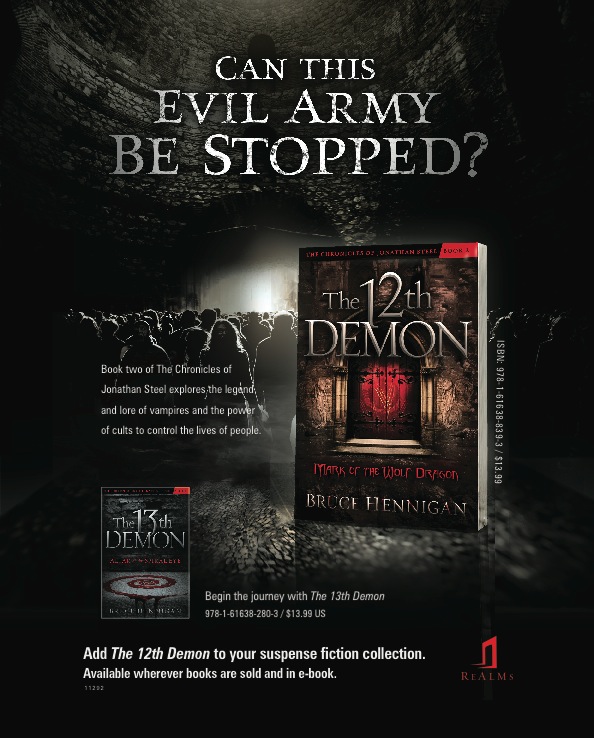 Okay, so in my last post, I told a very bleak and scary story. We live in a state of fear and there is a reason. In my two books in the “Chronicles of Jonathan Steel” I deal with this state of fear and its cause, EVIL. Want to read a good book that has an ultimately redemptive message? Want to see what evil is REALLY like? Want to know how you can have assurance that evil will not win the day?
Pick up a copy of “The 13th Demon: Altar of the Spiral Eye” and “The 12th Demon: Mark of the Wolf Dragon”. If you like Ted Dekker, Tosca Lee, Stephen King, or Peretti, you will like these books. They are written for men, women, and older teenagers.
Have these two books changed lives like the depression book? In fact, they have. I received an email from a man who read both books and then passed them on to his younger teenage brother who was dealing with doubt about his faith. After reading both books, the younger brother came to his older brother and they had a conversation about the young man’s faith. The books helped the younger brother strengthen his failing faith in Christ. In fact, both books are a good alternative to the Twilight Series or Vampire Diaries. If you want to hear what people are saying about these two books, checkout my tab for book reviews.
Tomorrow, January 5th, drop by the Shreveport LifeWay on Youree Drive between noon and two PM. I will be signing all three books and giving away FREE TEE SHIRTS. Even if you don’t buy a book, come by and support our local Christian book store! Come spend some of those Christmas dollars! I’ll see you there!
The Shape of Story; The Shape of Truth!
Let me tell you a story filled with horror and fright. This is a true story. It happened to me.
 I am a radiologist, a doctor who interprets Xrays, CAT scans, MRIs, etc. Years ago, in the old school days, Xrays were images exposed on regular film. Now, images are captured digitally and sent to a hires computer screen. To develop these films, each Radiology department had a dark room. On one side of the front wall of the darkroom was a huge Xray film developing unit the size of a short refrigerator. It went through the wall and the other side, enclosed in darkness, was where the exposed films were fed for development. These huge, hot, throbbing machines churned out spent silver and hot water. The result was a viscous, shiny black goo that was poured into a special drain cut in the floor of the darkroom.
I came to work one day at a radiology department (I will not say where — at that time I worked at over six different locations) to find the “light” room in disarray. The “light” room was where the technologists worked and was called that because the room had a door that led into the “dark” room. Go figure. It seemed that sometime during the night, the developing machine had malfunctioned. The floor was covered in black, icky goo glistening and burbling like some vast living alien being. Fortunately, there was a backup developer in surgery for running Xrays taken during surgery. The stench was unbelievable! It was as if a thousand dying vultures had plunged into the dark cave of the dark room and had putrified into a morass of black ichor.
To get into the dark room, there was a rotating door of black and brown panels. When the door was open, you could go in. If it was closed, someone was inside. And, since there was room for only two people in the darkroom, you didn’t want to go in. There was a deep throated rumble as the door rotated and exposed our “biorad” tech guy clad in a surgical mask, bouffant surgical cap and a yellow biohazard apron. He was gagging as he emerged into the light room and he leaned over the sink and retched. I looked back at the yawning black mouth of the darkroom door. I recognized this stench. I had been involved in my share of autopsies as a medical student. It was the stink of human decomposition.
“What did you find in there?” I asked the man.
His face was pale and sweaty as he pulled off his mask. “Something is wedged in the drain pipe. Something big.”
My heart raced and he placed the mask back over his face. “I’ve almost got it out.” He bravely stormed the doorway and cycled out of sight. I went to my office and began my day of reading films. An hour or so later, biorad guy knocked on my door. I knew he was there because the stench preceded him. He was carrying a large, black bucket.
“Dr. Hennigan, what do you think this is?” He sat the bucket at my feet.
My heart raced as I examined the shiny, black mass glistening in the bucket. The pebbly surface and contour matched only one thing. A liver.
“It looks . . . organic.” I managed to say. How had someone’s liver ended up in the drain pipe of a hospital dark room? Instantly, my imagination began to run wild. Someone had to have removed this liver from a living, or possibly, dead human being. Why had they done so? Was this heinous killer caught in the act and had to duck into our dark room and try and dispose of the liver? Why on earth would anyone do such a thing?
Biorad wiped his mouth with the back of his gloved hand. “What should I do with it? It looks like an organ.”
“Yes, it does.” I slowly rolled my desk chair back from the thing. “Why don’t you take it to the lab and get someone in pathology to look at it. It might be a specimen from . . .”
“Surgery?” Biorad said. “Maybe someone dropped it in the dark room and . . .” He stopped because he knew how stupid it sounded. But, the thing before us was beyond stupid; it was horrifically real.
“Pathology.” I nodded.
Biorad picked up the bucket and left my office. I tried to push the image and the smell from my memory without much success. I was relieved when my day was finally done and I could leave the lingering odor that filled the hallway with the memory of death.
I did not return to that hospital for several days. When I returned, the light room was pristine and the developer was humming along. The head of the department came to my office to discuss a procedure to be done on a patient and I stopped her before she could leave the room. “What ever happened with the thing we found in the drain?”
Her face paled and she smiled weakly. “I don’t know what you’re talking about.”
I blinked and laughed. “Last week. The dark room flooded. We found something in the drain. It looked like a liver.”
She shook her head and looked away. “There was nothing in the drain but some thickened silver halide.
I stood up and took her by the shoulders, turning her face toward me. “I know what I saw. I told our biorad guy to take it to pathology. Did he?”
She swallowed. “He never should have done that.”
“Why?”
“I can’t tell you. If I do, I’ll be fired automatically. Just drop it, Dr. Hennigan. Just drop it.” She pulled away from me and disappeared from my office.
A few months before, a serial killer had struck in our area. Just a year before that, a prominent physician had been accused of killing his wife. He always maintained someone broke into his house. I can’t prove it, but as I slumped into my chair I was convinced this mysterious killer had struck again. And, to escape negative publicity, this hospital in a small town at which I was moonlighting would never reveal the fact that someone under its care had died a horrific and painful death and a ghoulish fiend had taken that victim’s liver and instead of eating it with fave beans, had stuffed it into a drain in a lonely, dank dark room.
Story. It is how we communicate. This is a true story. I have not embellished it in any way. What I did was to give it context and setting. Against the backdrop of recent events, the story took on a menacing and horrific tone. No matter what my intent in telling this story, I had to convey information in a specific format. A beginning, a middle, and an end.
 The scientific method developed out of Augustine’s method for exegesis of scripture. He developed the method to provide a concrete and rational approach to the interpretation of scripture. Centuries later, Isaac Newton took the same set of principles and applied them to scientific inquiry. First, you have an idea; a notion; a suspicion on how something works. Next, you devise a way to test your idea through experimentation. Lastly, you take the data you have acquired and analyze it to determine one of two possible outcomes. Either the data supports your idea or it fails to support the idea. If it supports the “hypothesis” then a new “law” is in the making. If it does not, the scientist returns to the drawing board and revisits the original “idea” or hypothesis. In scientific inquiry, just as in story, there is a beginning (hypothesis), a middle (data acquisition), and an end (conclusion).
Story is everywhere. In fact, I would assert that story is the ONLY way as human beings we have to communicate. We are verbal beings, even when what we say is written or painted or sung or played upon an instrument. We take our innermost “ideas” and we transmit them in such a way that we communicate with others. To that, we must couch those ideas in the form of a story. Story is all around us. Story is how we communicate. Story is Life!
There are challenges to the Christian faith that consist of claims that the “story” of Jesus is borrowed from myths and legends of the day about other “gods”. Such claims may have some legitimacy. But, how can we convey the facts about an event without, in some way, using language and elements that have already been used in story after story after story since the dawn of mankind? As a writer, I can tell you that every story that can be told has been told. Most stories can be reduced to basic elements of at best two dozen basic stories. No matter what kind of story we choose to convey a truthful event, there can ALWAYS be claimed that we took elements of other stories to fabricate this story. Nothing is original! It has all happened in one form or another before. Just because it is a story, does not mean it is not truth!
What we do as human beings is to embellish the story; to strengthen the story; to enhance the story to give it context and gravitas and emotional heft. Here is an excerpt from one of my favorite essays of all time by Walter Wangerin, Jr. He tells the story of the “the shaper” the meaning of the ancient English word, scop, used for the poet of the day. In this essay, he talks about how the clan has had a battle in which one of its own has perished. The clan returns to its mead hall, tired and broken by the day’s events. And then, the storyteller, the “shaper” takes the day’s events and . . .

The battle had been bloody enough to make a red mud of the earth beneath their feet; and one of their number had died; and now they’ve returned to the mead hall, exhausted, hungry, aggrieved.
They eat in silence. They drink that oldest of human drinks, a wine made of fermented honey. Their sadness deepens to a maudlin despair….
And just then the singer strikes a chord on his harp.
Every listens.
The singer develops the chord into melody. A familiar melody, in fact. One everyone has heard since childhood, and therefore one that carries profound, unutterable associations: parental comfort, an assurance of the divine. The singer sings familiar verses, and all the people nod: there is the weight of meaning in these verses. They remember. They remember and re-experience them now.
But then the singer begins to weave new words into the familiar verses: the details of today’s grim battle; the name of the comrade who fell; the deeds he did in falling, all of which, fetching up in the experience of this song, find place within the precincts of the divine; all of which are no longer senseless, but do bear now the weight of genuine purpose and meaning. And the people nod. And the dead ascends into the Valhalla of heroes. It is well. Chaos is cosmos. Desolation is now heavy with purpose. The day has taken shape in the singer’s song–
–and ever thereafter, it is the spiritual, artistic shape which is remembered as the truth of that day, not the cold, undecipherable, purely empirical fact.
We take “purely empirical fact” and shape it into song; story; poetry; painting; music; art; and yes, scientific discovery. We give it life! It resonates within our souls; our hearts; our minds! And, here is the point I would like to make as I follow up on yesterday’s post about Ray Bradbury.
Humanity will always have to utilize Story to communicate; to give meaning and life to the events that swirl around us; to answer the “why” not just the “how” for those empirical facts. And, in order to use Story, we must use our imagination. And, in order to use our imagination, we must ALWAYS have the ability and the freedom and the capacity to seek after God. Remove God from the human awareness and you remove imagination. The supernatural is ESSENTIAL for the continuation of the human race. This was addressed years ago by a prominent atheist who said that whether we believe in God or not, we have to at least believe in a “noble lie” for humanity to continue to thrive.
The “noble lie” for me is the Truth, the Life, and the Way! And, His Story is the Greatest Story Ever Told!
 Don’t forget to come by the LifeWay in Shreveport this coming Saturday, January 5th from noon to 2 PM for my book signing. I will be signing “The 12th Demon: Mark of the Wolf Dragon”, “The 13th Demon: Altar of the Spiral Eye”, and “Conquering Depression: A 30 Day Plan to Finding Happiness”. Come and buy some books if none of these interest you. Come and share your Story! Free tee shirts!!!!
All That Is NOT SO must Go!
 In 2008 I had the once in a lifetime opportunity to meet my all time favorite writer, Ray Bradbury. If you have not read stories by this giant of science fiction and fantasy literature, then you have missed out on a life changing experience. Ray Bradbury passed away in 2012 and his loss was a tiny tremor in the tumult of this past year. For you see, as forward thinking and progressive as Mr. Bradbury was, he hesitated to embrace many forms of modern technology. He refused to fly. He would only travel by train or boat. He would not allow any of his works to be translated into electronic form. You will not find any of his stories as ebooks! Why? Go read Fahrenheit 451 and you might catch a glimmer of the reason. Stories, to Bradbury, belonged inside people! Story is Life!
As we enter 2013, I am depressed at the negative tone of many of my favorite blogs. Who can blame us? If you are a Christian, then 2012 was a year of blow after blow to the Christian lifestyle. And, I don’t need to spend time listing those developments here. Others have done it well. But, there is one concept I want to explore as we enter a new year.
In this past year, scientists have mounted a campaign against God. Not surprising. This happens with regularity. But, this past year the attack was imbedded in such books as “A Universe From Nothing” by Lawrence Krauss or Richard Dawkins’ atheist children’s book “The Magic of Reality”. And, that venerable icon of science for children, Bill Nye, the Science Guy attacked creationism in public and on internet based video. The year ended with the American Atheists’ huge billboard on Times Square asking people to “Dump the Myth”.
Back in the 1950‘s, Ray Bradbury wrote a series of short stories that resonate with today’s headlines. Now, remember, he was an advocate of science. He helped develop ideas for many of Walt Disney’s animated shorts about space travel. He was involved in the design of “Future World” at EPCOT. But, he had cautionary words for us about the danger of the supremacy of science as a philosophy. As a philosophy, this is known as scientism or materialism or naturalism. Nature is all that is. If we cannot sense it with our scientific machines, then it cannot exist. NOTHING in the supernatural realm can be even considered as possible.
 In “The Martian Chronicles”, Bradbury created a character who had escaped to Mars and built a house of “Usher” to resurrect the creations of imagination. It seemed that on Earth such imaginative works had been outlawed. Look at this passage from “Usher II” in the Martian Chronicles:
They passed a law. Oh, it started very small. In 1999 it was a grain of sand. They began by controlling books, cartoons, and then detective books and, of course, films, one way or another, one group or another, political bias, religious prejudice, union pressures; there was always a minority afraid of something, and a great majority afraid of the dark, afraid of the future, afraid of the past, afraid of the present, afraid of themselves and shadows of themselves.
Every man, they said, must face reality. Must face the Here and Now! Everything that was not so must go. All the beautiful literary lies and flights of fancy must be shot in mid-air! So they lined them up against a library wall one Sunday morning thirty years ago, they lined them up in 2006; they lined them up, . . . and shot them down, and burned the paper castles and fairy frogs and old kings and the people who lived happily every after . . . and Once Upon a Time became No More!
In another story from that book, “The Million Year Picnic”, a family has escaped the self destruction of Earth and has made it to Mars to rebuild a new life. Here is what a father told his children about Earth:
Life on Earth never settled down to doing anything very good. Science ran too far ahead of us too quickly, and the people got lost in a mechanical wilderness, like children making over pretty things, gadgets, helicopters, rockets, emphasizing the wrong items, emphasizing machines instead of how to run the machines.Wars got bigger and bigger and finally killed Earth.
But, the most powerful story, and more than likely a precursor to “Fahrenheit 451” was “The Exiles” from “The Illustrated Man”. In this story, the authors of science fiction, horror and fantasy have found exile on Mars from a world in which their works have been burned and now, a rocket from Earth approaches. In this scene, Edgar Allen Poe is waiting for the rocket men to land so he can defeat them.
They won’t be prepared for us, at least. They haven’t the imagination. Those clean young rocket men with their antiseptic bloomers and fish-bowl helmets, with their new religion. About their necks, on gold chains, scalpels. Upon their heads, a diadem of microscopes. In their holy fingers, steaming incense urns which in reality are only germicidal ovens for steaming out superstition. The names of Poe; Bierce, Hawthorne, Blackwood — blasphemy to their clean lips.”
How did this happen and how did Poe come to reside on Mars?
On Earth, a century ago, in the year 2020 they outlawed our books. Oh, what a horrible thing — to destroy our literary creations that way! It summoned us out of — what? Death? The Beyond? . . . the only saving thing we could do was wait out the century here on Mars, hoping Earth might overweight itself with these scientists and their doubtings; but now they’re coming to clean us out . . . “
And, lest you think that Bradbury was not aware of the war on Christmas look at this scene of a wasted, near dead Santa Claus:
They took him, a skeleton thought, and clothed him in centuries of pink flesh and snow beard and red velvet suit and black boot, made him reindeers, tinsel, holly. And, after centuries of manufacturing him they drowned him in a vat of Lysol, you might say.
What must it be like on Earth? . . . Without Christmas? . . . nothing but snow and wind and the lonely, factual people.
Ah, the power of Story. I will address this in upcoming posts. For now, we must stop and revel in the sheer power of Story to transform humanity. Bradbury did it with these short tales. Bradbury cautioned us that if we allow our imagination to die, then we will die as a people. And, imagination is built upon the foundation of the possibility of the supernatural. Eliminate the supernatural, and you MUST eliminate imagination; burn it out of the brain; cauterize it from the human thought patterns; outlaw it from public and private expression.
Don’t miss this. Bradbury talked of it and he was on the side of science. Science is a tool! It is NOT a way of life. And, if we allow Science to become a way of life, we will see the death of imagination; the death of superstition; the death of the supernatural; the death of Story; the death of God! There is no other path.
Adolf Hitler built his world upon the foundation of naturalism. And, he tried to purge the world of superstition in the ovens of Auschwitz. We cannot forget this. We must remember that to kill Story is to kill what makes us humans. And, one Man used Story to change the world. These stories were called parables.

So, this coming Sunday, January 5th, I will be signing copies of my three books at our local LifeWay in Shreveport, Louisiana from noon to 2 PM. Of course, I would like for you to come. I will be giving away tee shirts. But, here is my request. Go to a book store. Any book store this coming Saturday. Go and find a book that fuels your imagination. There are wonderful books for all ages and for men and women in the realm of Christian fiction at a LifeWay and if you come to my LifeWay, I can point you to many good Stories.
Go out this Saturday and let’s show the world that as followers of Christ, we recognize the importance the power of Story. This Saturday, wherever you are, go into a book store and buy a book and when you check out, look the person behind the counter in the eye and say, “Story Is Life”!
Run, Clever Boy, Run! And, Remember!
Jammy dodgers, fish fingers and custard, and bowtie pasta for Christmas?
Either you get it or you don’t.
It’s not a matter of arrogance on my part. It is a matter of appreciation of a well done, well written story.
(Spoilers, if you haven’t seen the Christmas Special. Skip the next sentence!)
The pivotal one word answer, and I saw it coming, was “pond”.
If you have no idea what I’m talking about, let me enlighten you. Way back in the late 1970’s, I caught a poorly constructed science fiction show on syndication called “Doctor Who”. The Doctor was a tall, bushy haired man with a long striped scarf and a beautiful companion named “Sarah Jane”. I have written in the past of my family’s encounter with the actress who portrayed Sarah Jane, Elizabeth Sladen, on a train from Cardiff, Wales back to London. This show had a strange appeal to me, but its effects were coarse and its story sometimes contrived. It was but a passing fancy.
A few years back, my daughter, Casey, asked me to watch a new show she had caught on SciFi channel. It was about this doctor and his companion. I rolled my eyes. Old news. Bad show. But, she assured me it was a new show; a revival of the old show. I finally watched the Christmas special featuring David Tennant as the “tenth” doctor. Within about ten minutes, I was mesmerized as alien Santas and spinning Christmas trees of death put all of those memories of a poorly executed show to an end. This was fascinating. And so, began my journey into the world of Doctor Who.
It took some doing, but this last year, I managed to get my son, Sean, and his wife, Jennifer interested in Doctor Who. Within a couple of months they were born again companions of Doctor Who! In fact, their fascination with the show put Casey and me to shame. Soon, Jennifer’s sister joined the ranks and we decided that this Christmas we would have a Doctor Who Christmas party and watch the much anticipated Doctor Who Christmas special.
It was grand fun! Casey’s best friend and, essentially her sister, Sarah, also a Who convert joined in. We decided to dress up as characters. Casey dressed up as the eleventh doctor, the “raggedy doctor” with the red bow tie. Sarah blew us all away showing up as River Song in her denim outfit and holster and revolver (only she ended up with a banana because we all know that “one should never come to a party without a banana”)! And, although I am considerably older and fatter than the original fourth doctor, Tom Baker, I dressed up as the fourth doctor complete with scarf, hat, awful wig and a bag of jelly bellies. I also had the sonic screwdriver of the fourth doctor, thank you.
Now, you may think this is insane. But, Sean, Jennifer, and I had this conversation the other day about the doctor. First, you must realize that Russell Davies, the man who brought back the show is an atheist. And, the most brilliant showrunner who replaced him, Stephen Moffett decries “the spiritual”. So, there is never a reference or a reverence in the show for God. The doctor is a Time Lord, bouncing around the universe in his TARDIS through space and time. But, what is amazing to us is that in spite of the writers of this show having disdain for God, the show is incredibly spiritual. Why? Because, without ever uttering the word, the Doctor is a savior. He saves mankind over and over and over. He values the triumphant power of love. He hates evil.
I find it fascinating that the writers, many of whom are atheists or agnostics, return time and time again to this theme of a savior. It is as if they cannot ever walk away from it. Every good story involves a savior. Every thought involves a transcendent power that rescues us from death and despair. And here is the truth: we cannot get away from the utter and complete realization that we MUST have a savior. No matter how hard the writers struggle to eliminate the divine, they keep showing us our need for a savior! Ah, there is that verse again: “God has put eternity in the hearts of all men.”
Go watch the new version of Doctor Who. You will experience moments of nihilism as the writers insert their worldview. But, watch as inevitably, the darkness gives way to light and the Doctor saves the world again and again. Even in our stark, nihilistic race away from God, we cannot escape the need for a Savior. In fact we RUN to Him!
Now, here are some pictures of our little party. Try your best to erase the image of the fat fourth doctor from you mind before the dawning of a new year! But, we enjoyed eating fish fingers and custard (the fingers were, in reality cookies); jammy dodgers; little Adipose babies; fried bowtie pasta (because as we learned last night AGAIN: bowties are cool!); and finally cookies decorated with little TARDIS images.And, so, a new annual tradition is born and we look forward to next year’s Doctor Who Christmas Party. As Clara would say, “Run, clever boy, run. And, remember!”
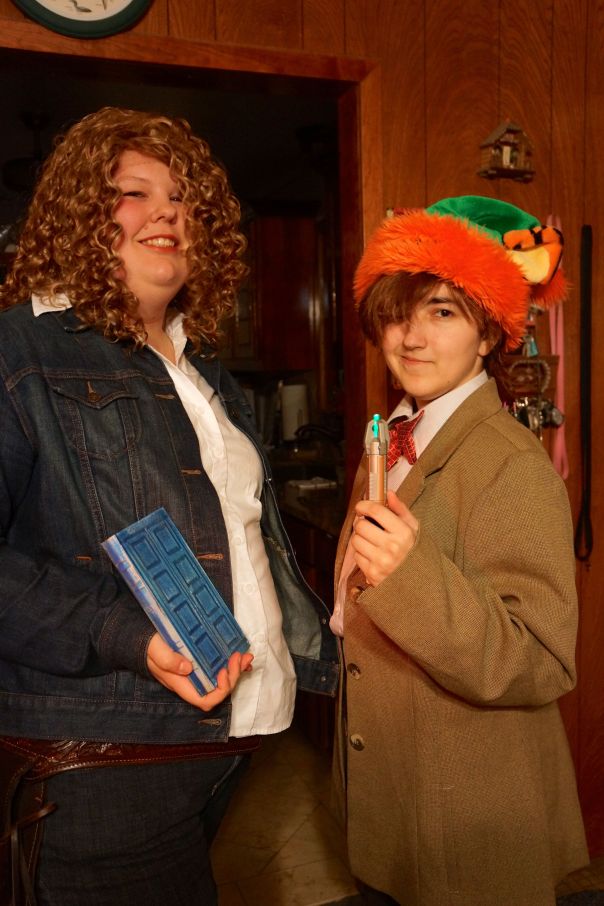
River Song and the Eleventh Doctor channeling a Pooh Santa Hat.
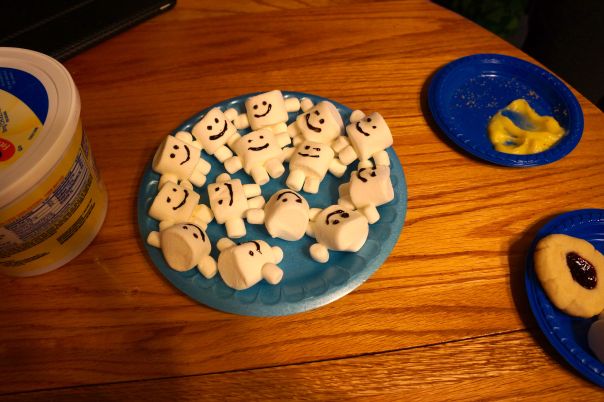
So cute you could eat them! Adipose Babies!

The deadliest weapon of all against a Dalek — Jammie Dodgers!

The perfect pick me up for a recently regenerated Time Lord — Custard and Fish Fingers

Always bring a banana to a party!
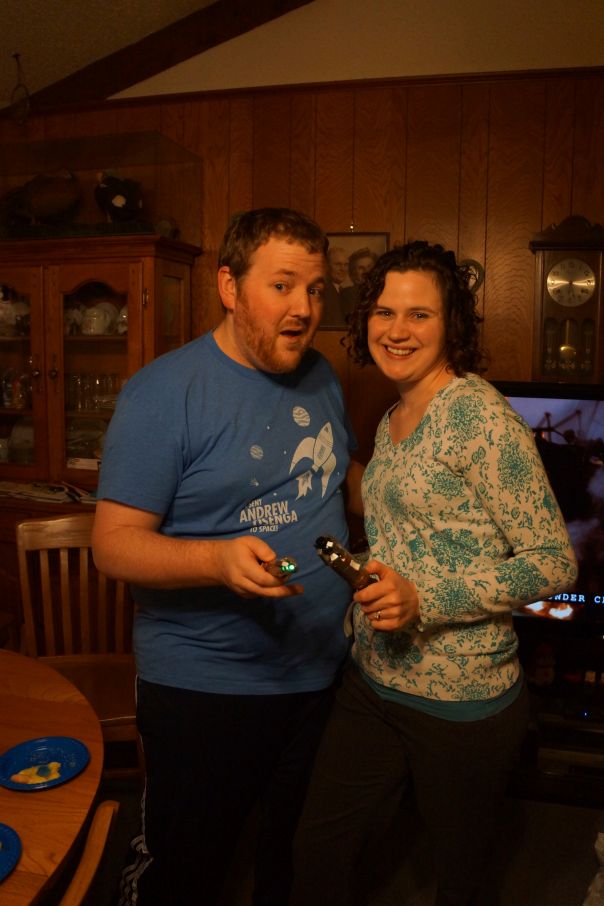
Sean and Jennifer try out their sonic screwdrivers. Yes, he was the Lodger!

One Snowman remained!

Lisa and Jennifer enjoy an Adipose Baby!
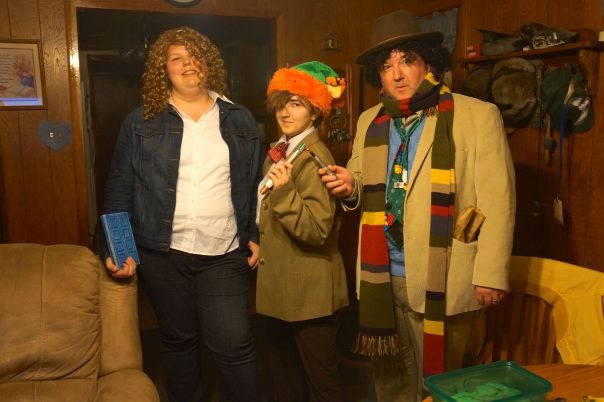
River, Eleven, and Four
Starflower — A Book Review
 It is a sad confession on my part to reveal that I have never read any of Anne Elizabeth Stengl’s “Tales of the Goldstone Wood”. And, now, I am reviewing a book that takes places thousands of years before those four books. I have missed out on a rich, immersive experience by not reading the first four books. I shall soon remedy that situation because “Starflower”, the newest entry into this “canon” of books is excellent. It is a moving fantasy far deeper than most fantasy; deep with character development; deep with thematic lessons; deep with a rich, lush tapestry of a world against which the action unfolds.
I will only be doing a one day book review because I have plans for finishing up my blog entries about the teachings of Jesus of Nazareth that transcend any religious devotion. I want to finish this by Christmas so I will be giving one day only to this review. And, all I can say is if you love Narnia; if you miss Middle Earth; if you enjoyed such stories as Alice in Wonderland, then you MUST read this book. Anne Elisabeth Stengl has created a setting in which rivers and trees come to life; a world in which animals talk and faeries can take on human or animal form. I haven’t encountered such a rich environment since I went back and rediscovered George MacDonald’s fantasy worlds. Those stories, by the way, were deeply inspiring to C. S. Lewis and he attributes MacDonald’s influence on his desire to create Narnia. The world of “Starflower” reaches those levels of fantastic believability
The Characters
The story begins with Hri Sora. Once a dragon and now stripped of her wings by the Dark Father, she cannot remember all of her former life. She can only remember a burning lust for revenge.
Eanrin is a bard, the prince of poets, an immortal faerie and part cat. I know it sounds strange but just like a cat, he is also haughty and arrogant until he meets the character of Starflower. He finds his inner strength.
Starflower is the maid and is cursed. Her trials and travails are what endeared her to me. Made strong in her weaknesses by a love and a selflessness that even her cursed tongue cannot hold back.
The Story
The story begins with Hri Sora vowing to carry out a nefarious plan for the Dark Father in order to regain her dragon status. Hri Sora makes a deal with her father to bring back a special treasure. In order to do that, she must kidnap the Queen’s sousing who knows what the treasure looks like.
Eanrin goes after the kidnapped love of his life, Lady Gleamdren and in the process encounters Starflower. He comes across Starflower after she has drunk from the enchanted river. He feels sorry for her and agrees to take her to a witch owing him a favor and soon the girl is wakened from her deep sleep. Starflower is under a curse and cannot speak. He takes her with him as he pursues Hri Sora and, or course, we learn that there is a connection to the dragon witch! You’ll have to read the book and immerse yourself in this wonderful tale. Be prepared to be transported to a land of magic and enchantment! The story is fast paced and filled with moments of exhilaration and excitement. The world inhabited by the story is very complex and real; frankly refreshing and exciting.
I highly recommend the book to anyone who enjoy fairy tales and fantasy and I can’t wait to go and read the other four books!
In conjunction with the CSFF blogtour I received a copy of ” Starflower”.
*Book link – http://www.amazon.com/Starflower-Tales-Goldstone-Elisabeth-Stengl/dp/0764210262/
Author Website – http://anneelisabethstengl.blogspot.com/
Author Facebook page – http://www.facebook.com/pages/Anne-Elisabeth-Stengl/120543861335559
Participants’ links: Be sure and check out these other reviews!
Gillian Adams
Nikole Hahn
Janeen Ippolito
Carol Keen
Emileigh Latham
Shannon McDermott
Meagan @ Blooming with Books
Rebecca LuElla Miller
Anna Mittower
Rachel Starr Thomson
Robert Treskillard
Steve Trower
Dona Watson
Shane Werlinger
Phyllis Wheeler
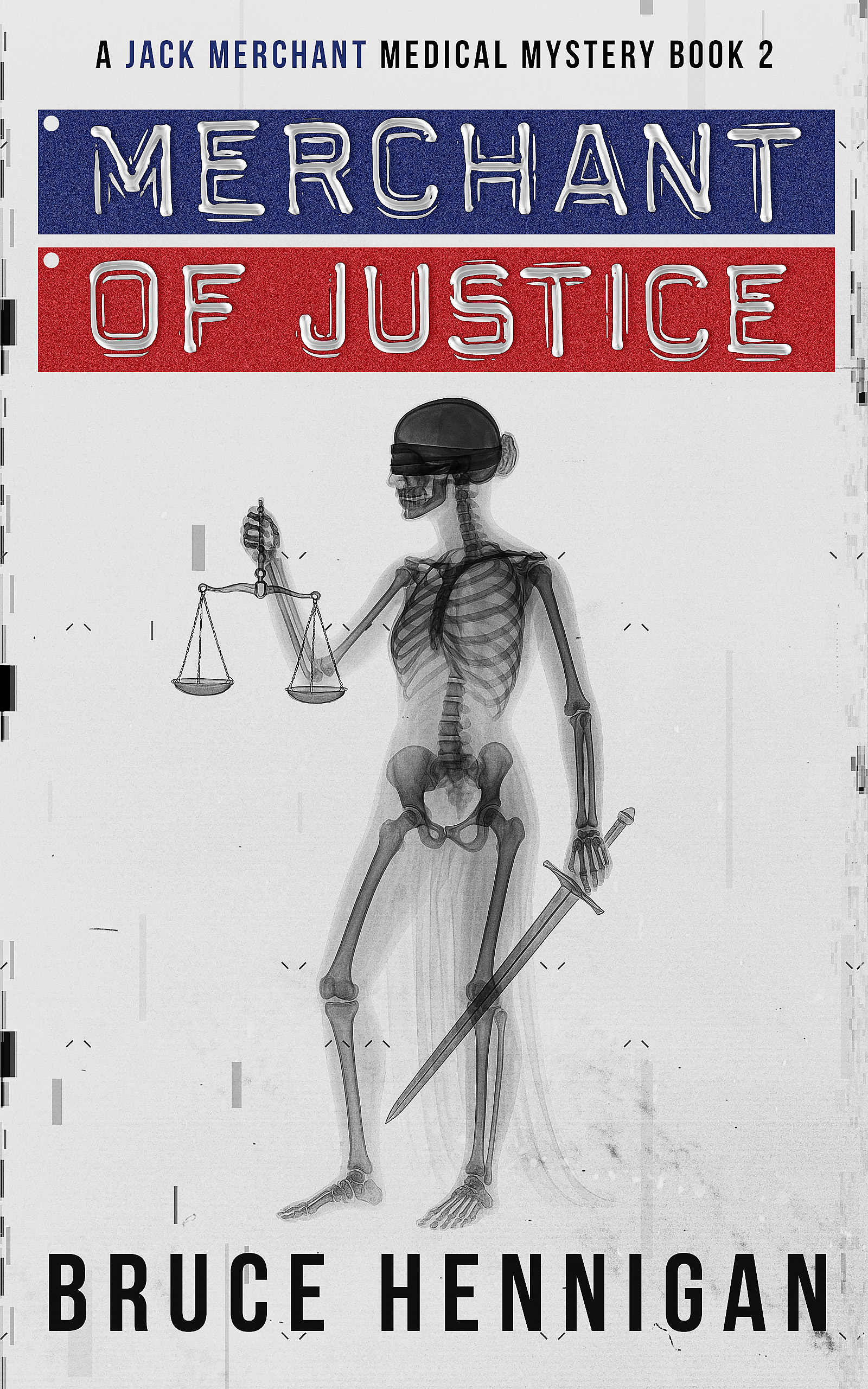

 Bruce Hennigan
You must be logged in to post a comment.