Blog Archives
He’s Dead Jim!
“I’m a doctor, not a mechanic!”
That particular bit of universal wisdom has come true for me time after time. When I open the hood of a car, I see large, dark, greasy shapes. My wife, on the other hand, looking over my shoulder as I interpret an MRI sees the same thing — large, dark, greasy shapes. One man’s Rorschach is another man’s blueprint for disease detection.
 Dr. Leonard “Bones” McCoy was the originator of that quote. Throughout his appearances on the original “Star Trek” and subsequent animated series and movies, Bones was well known for his curmudgeonly manner. But, what Bones never lost was his “humanity”. Time after time, Bones would butt heads with Mr. Spock in the classic emotion versus logic debate.
For a young boy fascinated with the prospect of a shining, interstellar future, I was attracted more to Bones than any of the three men comprising the triad of Kirk, Spock, and McCoy. More than anything, I was impressed with Bones’ unflinching devotion to his patients regardless of political or personal restraint. His patients, even when they were aliens, were human and Bones preserved their humanity.
When I felt God’s call to become a doctor, I pictured myself with the bold idealism of Dr. McCoy. I found myself throwing myself in front of the bureaucratic buses for the sake of my patients. It was his devotion to do whatever it takes to heal his patient that still inspires me today, 33 years after I graduated from medical school. Star Trek did that for me.
I guess that is why it so saddens me to read Mike Duran’s latest blog regarding Gene Roddenberry’s atheism. This was no mystery to me. The atheistic and naturalistic worldview was the dominant force behind Star Trek: The Next Generation and the sequels, DS9 and Star Trek: Voyager. For a few years, the head writer of Voyager was an outspoken atheist and her worldview saturated many of the stories of Voyager.
Interestingly enough, Roddenberry’s “Bible” on how to write for the show demanded that the future of mankind was so rosy, so Edenistic, so perfect that the writers of the show had to remove any conflict that could arise among the crew of the Enterprise. Is it any wonder the show did not do well until the Borg arrived? Is it any wonder that the greatest villain Roddenberry created was the omniscient, omnipotent, immortal Q? Here is Roddenberry’s concept of God. Capricious. Mercurial. Peevish. Delighting in tormenting mankind. Judgmental and harsh. And totally without mercy or love.
On another note, Bill Nye, the Science guy recently released a video in which he pleads with parents NOT to teach their children any form of creationism. He, along with Dawkins and Harris and the late Hitchens maintain that belief in the supernatural is dangerous to mankind. It is destroying us. And, they maintain that to teach children about the supernatural is tantamount to child abuse. Christians are religious pedophiles!
What is fascinating about this entire discussion is the totally disregard for sound, rational evidence for design in the universe. They dismiss this wholeheartedly as merely “the appearance of design”. What are we squabbling about? Semantics. Marilyn Robinson in her excellent book, “Absence of Mind”, has taken exception to this conclusion. She maintains that our appreciation of “supernature” or possible forces, worlds, beings that cannot be confined to our “natural” realm are absolutely essential to humanity. Without a concept of the supernatural, there would be no imagination. We would only consider what our senses can detect. Such imagination spurs art, literature, music, sculpture, innovation, and even scientific discoveries.
 I was watching an episode of Doctor Who just the other night in preparation for the new season. In this episode, love literally conquered all, defeating the nefarious plans of the metal “Cybermen” to remove emotions from a father’s brain. The father’s love for his son triumphed over the purely mechanistic, scientific machinations of the Cybermen. Afterwards, the Doctor was trying to deconstruct the man’s conclusion that love had won the day. He was trying to explain away the “love” phenomenon as merely brain chemistry and our “genes” trying to preserve themselves and then he stopped. He realized he was getting nowhere with us puny, immature humans. So, he agreed. Love had won the day.
And, here is the conundrum. The evidence is there. Rational discourse can be had. There is abundant scientific, historical, and philosophical evidence in favor of the existence of a transcendent intelligence behind the universe. But, to believe in such requires us to recognize the presence of a purpose; a plan for this universe. Such purpose implies that as humans we are a part of that plan; that we play a role. If we play a role in the “story” then this implies there isn’t true freedom to be and do what we want. We are subservient to the “story”. Mankind resists such a scenario. In our madlong rush to be totally free of authority, we throw the evidence in the wastebasket. We play the “God of the gaps” card and say that any “supernatural” explanation cannot be accepted.
Time and again, when I have asked such individuals why they will not consider this profound evidence for the existence of an intelligence, the reasons always boil down to personal preference. “I do not want to have to submit myself to such authority. I want to be free.” What is troubling is how such personal preference can end up producing an intolerant position among materialists. Their strongest accusation against Christians, for instance, is our intolerance. And yet, they take the high position of science and only science and are themselves intolerant of all other viewpoints.
 Roddenberry eventually had to compromise his vision in order for the sequels to Star Trek to be successful. The bottom line: money! Rather than throw Star Trek under the bus for the purpose of sticking to a higher set of materialistic values, Star Trek changed its “Bible” to allow conflict to exist. The future, it turns out, is not so rosy after all. Q is fallible. Man always falls to his lowest instincts. Evil rears its ugly head time and time again. Hmmm! Is this an indictment of religion or is it the brute reality that mankind has yet to rise above his fallen self? No matter how advanced our knowledge, our civilization, our technology we still kill and maim and have anger and jealousy and suffer from unbridled pride. We still have our way. We still live by “survival of the fittest” although this really means “survival of the richest or the most powerful or the most intelligent”. And, we fall time and time again as mankind.
Here is one of my favorite quotes:
“When it comes to the origin of life there are only two possibilities: Creation or spontaneous generation. There is no third way. Spontaneous generation was disproved one hundred years ago, but that leads us to only one other conclusion, that of supernatural creation. We cannot accept that on philosophical grounds; therefore, we choose to believe the impossible: That life arose spontaneously by chance!” — George Waldt
Notice the reluctance to accept the evidence is based on very subjective, personal “philosophical” grounds. History teaches us that when a civilization loses it moral and ethical base; when a civilization abandons transcendent values; when a civilization glorifies unbridled “freedom to do whatever we want” that civilization fails miserably. Without transcendent values, we are mere animals.
And, it is troubling that instead of acknowledging the incredible contribution of such institutions as Christianity, the detractors focus on the failings. And, those failings have NOTHING to do with the tenets of such a worldview. These failings, instead, point to the universal inability of man to rise above his destructive selfish impulses. And, here is the reluctant realization. Those impulses are a direct outgrowth of naturalistic philosophy. Where this is no love, there is hate. Where there is no compassion, there is oppression. Where there is no sense of the divine, there is a sense of ultimate depravity and hopelessness. We need God. We need the divine. No matter how technologically advanced we may become, we will cease to be humans if we cease to love.
In 1991 L. D. Rue spoke of the need to replace the outdated and delusional concept of God with a “Noble Lie”. The Noble Lie “is one that deceives us, tricks us, and compels us beyond self-interest, beyond ego, beyond family, nation, [and] race.” “Without such lies, we cannot live.” He acknowledged that at least the idea of a transcendent origin of values and worth was absolutely essential for us to continue to function as humanity.
My suggestion to individuals such as Roddenberry (who has passed away), Bill Nye, Richard Dawkins, etc. is to focus on man’s tendency to abuse ANY system of belief (and there are many beyond religion) and stop making God the focus of their attacks. The problem is NOT with God. The problem is with MAN!!!!
Can we not agree to disagree with civility? Can we not acknowledge the contributions of adherence to a worldview that has resulted in much altruism, good works, and, yes, scientific advance? Can those who adhere to a purely materialistic view not treat others with common decency and respect? This is my plea. Rail against God all you want. But, realize, that no amount of scientific argument, no amount of philosophical argument, no amount of rage against the abuse of systems will kill God. Accept that we will always believe in our spiritual side and this belief is absolutely essential to the future of mankind.
Instead, let us all speak out against the abuse of any type of system where human value is reduced to that of brute animals. Let us acknowledge the important of such immaterial virtues such as love, mercy, compassion, and self sacrifice. Let us agree that theology and science can co-exist as important disciplines with the potential to improve our human condition.
In most Communist countries in the 20th Century the underlying worldview was based on atheism and Darwinism. These societies devalued human life in favor of the state. Only the fittest were allowed to survive. If we stop and consider the quality of life of these individuals who lived under Stalin and Chairman Mao it would be insane to think such a life was of value or advanced humanity. In fact, over 100,000,000 people died in the 20th century alone at the hands of these systems.
One only needs to use common sense to see there has to be a balance between the natural and the supernatural. Man is a spiritual creature. No amount of scientific dogma can eliminate the basic human need for love, even if it is just biochemical in origin. Our place in the universe will depend on our imagination; our inspiration; our quest for something bigger and grander than ourselves. Belief in God accomplishes this. Where we fail is in taking that belief and abusing it for personal gain. This is what must stop. The abuse.
 Whether you believe in a Noble Lie or the Way, the Truth, and the Life we must learn to work together and stop vilifying each other. We must join together to fight against the insanity of the abuse of any belief system. Can we not do this? After all, Spock and McCoy often had heated, angry arguments and yet, the men were like brothers. In fact, in one of the most successful of the Star Trek movies it was Spock’s “katra” or soul that was saved by placing it in McCoy’s mind. The two truly became one. I don’t see why rational, reasonable discourse can’t replace the strident, hateful condemnation that typifies Roddenberry’s “Bible” and the best selling books by the “new atheists”.
As Ravi Zacharias said, “Religion begins with man. Theology begins with God.” And, unfortunately, man will always screw things up!
I may be wrong, of course, because I’m a doctor, not a philosopher!
Hanging on the Wall
“Welcome to my humble spaceship.”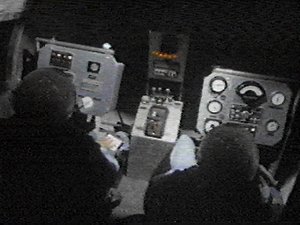
My friend, Phillip looked at me and his mouth fell open. “Your what?”
I had built the spaceship myself. The viewscreen was composed of two old glass windows with the panes still intact. The console was a mixture of broken radios, the insides of a huge stereo, and the guts of an old washing machine. I had placed some twinkling Christmas lights behind the console to make it look like it actually worked. The “captain’s chair” was a bucket seat from an old car and the sides and roof of the control room were made of old doors and rusted tin shingles. To my friend, it was a barely organized pile of junk. To me, it was my spaceship and I was the captain!
 We never played in the spaceship. Instead, we went back to my bedroom and talked about girls and baseball and girls and pizza and girls. We were in the seventh grade and Star Trek was in its second year on television. Phillip and I were best friends for the next few years. We went to junior high school, high school, college, and medical school together. When it came time to decide what type of doctor to be, Phillip just assumed I would follow in his shadow. He just knew I would become a cardiologist and move to a far away state to do my internship and fellowship. But, something had happened along the way. I had fallen in love and my girlfriend, now my wife, would be 1000 miles away if I went with my friend. So, I made a decision. Phillip didn’t understand. He said something that clearly separated our individual concepts of how each of us would “change” the world.
“You owe society a debt. You need to pay back to society for your education.” He would say.
Funny, but I seemed to recall I owed the bank a ton of money in educational loans. “Society” hadn’t paid my way through college and medical school. I grew up on the farm and only now do I realize we were poor. I stayed behind and became a radiologist. Phillip went on to become a cardiologist. We were at opposite ends of the medical “social” station. Radiologists are at the bottom of the food chain. Cardiologists rule the world.
This all came to mind today as my wife and I went to one of our local malls so I could find some dress pants on sale. You see, I’ve lost almost thirty pounds since January and I have two book signings next weekend so I need to look my best. As we walked down this long hallway filled with those fancy, air brushed photographs of all the local politicians and business leaders and social movers and shakers that this mall was known for, I stopped when I realized the latest picture, the photograph of “The Outstanding Business Leader” of 2011 was none other than my friend Phillip. My wife went on shopping and I just stood there looking up at my friend.
Curiously, I wasn’t jealous. I didn’t feel like a failure. Phillip deserved this recognition and I know him well enough to realize he probably received the honors reluctantly. He is, and always has been, a humble man. And, his work with local schools and statewide educational reform had been effective. He had fulfilled his dream of changing the world by paying back his “debt” to society.
So, what had I done? Had I performed anything quite so impressive as my friend? Would I one day get the call that I had been chosen to grace this hallowed hall with my portrait? I doubt it.
As I stood there, I realized that God had taught me powerful and painful lessons over the years. Time and time again, I found myself like George Bailey in “It’s a Wonderful Life” dreaming of going places and doing famous things only to have some little crisis intervene that kept me rooted right where I was.
I thought of the man who got up and ran out of the church after seeing one of my plays because he thought it was about him. I had never met the man, but that night, he met Jesus and it changed his life. I think of my friend R. whose decadent and playboy lifestyle had ended one Sunday night when he reluctantly sat through my play, “Crosstalk” and it changed his life forever. He met Jesus and in the years that followed led literally hundreds to Christ.
I think of the woman who wrote a passionate email to Mark Sutton and to me about our book, “Conquering Depression” and how she had the pills in her purse and was ready to die when she asked God to show her a book that would help. She didn’t take the pills, she met Jesus.
I think of Benny who just passed away yesterday of liver cancer standing behind me as I showed him the CAT scan of the cancer in his liver. I think of how I offered to pray for him and how one of his fellow Xray technicians took him under her wing and made sure he met Jesus before he passed away. Veronica showed me his certificate of baptism just one week before he died.
All of these seemingly small and insignificant events swirled around me as I looked at that portrait. I had not become a cardiologist. I had not followed my friend to the ends of the earth. But, I had followed my Savior. And, He had taken that strange and fertile imagination that could turn a washing machine agitator into a warp engine and He had used it to touch and change lives of people I will never know this side of heaven.
 Do I brag? How can I? It is not my work that I now see in my mind. It is the work of God, the great unfolding passion of his Story; the inclusion of man and woman and child in the script He has written that began with the creation of the universe and passed through a fertile garden past a devious serpent and through the wilderness to a ram in the bush and the blood on a doorpost and a prophet surrounded by lions to a manger filled with peaceful animals and a glowing star. The lines of that script lead down the dusty road to a caravan where a twelve year old is missing; to a baptism of water and a dove; to the Adversary craving for worship. Down, down the long hallways of memory past ousted demons and living, breathing corpses renewed with life; past loaves and fishes to a lowly donkey carrying the King of Kings and a hushed, darkened room filled with ominous shadows while the Creator washes a dirty foot. It leads through the other garden filled with sweat and blood to the bloodied fists of the soldiers and the fresh flesh clinging to the cat of nine tails to the drops of blood trailed along the road by the splintered wood of a cross. It leads to a cross standing tall and defiant against the sins of all mankind; the sins of all time and space; an anchor point in eternity where God and Flesh and Life and Death and Redemption and Love all converged in a holy singularity that would rip the very fabric of life asunder as it conquered death.
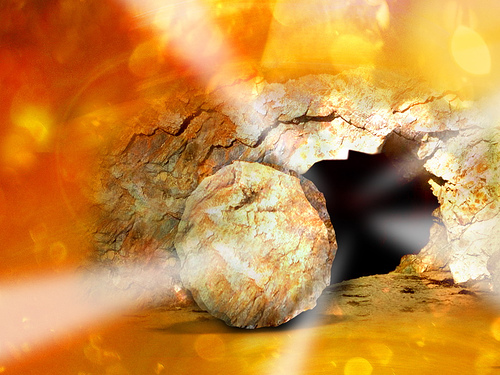
The script is still unfolding in the light that is cast by the empty tomb. It is still moving all around us. And, although I do not have my portrait on a wall of fame, my name is written in the only Book that counts, the afterword, the director’s notes, the epilogue to the Story of God.
Of Caterpillars and Death: “Oh, my!”

Steel looked away. “I feel like I’ve only lived for two years, Claire. I can’t remember most of my life. I’m not ready to die.”
He felt her hand on his cheek. “Silly, I don’t want to die, either. I said I’m not afraid to die. Imagine you’re a caterpillar.”
Steel raised an eyebrow. “A caterpillar?”
“Just go with it, Jonathan. Your whole life is spent crawling along a leaf and eating. That’s all you do. You have no appreciation of where the leaf is. You have no idea of how far you are from the ground if you were to fall. You never see the bird that swoops down to devour you. Your appreciation of the universe is limited. And then, one day you feel this horrible sensation of dread. You feel a change coming. You’re going to die. You dread it. You fear it. You go on eating and crawling pretending it’s not going to happen. It happens. You spin yourself into a cocoon of death and know no more.” Claire’s eyes were wide with emotion. The night air grew still and close, thick with humidity. Time seemed to slow.
“And, then Jonathan, you awaken. Your body stirs and you realize you’re no longer dead. Your cocoon falls away and you spread out huge, luminous wings. You crawl away from your death shroud and you take to the air! You’re no longer a caterpillar. You’re a butterfly! You fly through trees and fields of flowers. You see the sun and the stars. An entire universe you never could have imagined is yours to appreciate. And suddenly, you spy a caterpillar crawling along its leaf. You watch your former self and you wonder how you could have ever wanted to stay like that.”
“That is death, Jonathan. We’re fat, clumsy caterpillars waiting for the day of metamorphosis. We fear the cocoon. But, when we emerge on the other side, we’ll look back from God’s eternal perspective and wonder how we could ever have wanted to stay like this.”
I’ve been overwhelmed at the response to this one passage in “The 13th Demon: Altar of the Spiral Eye”. Some say it is “profound”. Others say it is “comforting”. But, why?
Just yesterday, we learned from a very moving testimonial to the life of Steve Jobs by his sister that his last words were “Oh wow. Oh wow. Oh wow.” What did he see? Did he emerge from a cocoon and see his new form as a “butterfly” free from the confines of this earthly shape? Or, did he see the Creator in all of His splendor, majesty, and grace? No one can say for sure. But, he did see something.
This weekend, I also watched “The Captains”, a documentary by William Shatner interviewing all five actors who have played a captain of a starship in the Star Trek franchise. The most odd person was Avery Brooks who spoke in lilting metaphors and piano riffs and made very little sense whatsoever. The most concrete was Shatner himself, taking every opportunity to tell his own story of his life and how it was affected by his stent as “Captain Kirk”. But, what was most disturbing, most troubling was the answers he elicited from those he interviewed about God and what happens after death. Most answered, “I don’t know.” And, Shatner’s answer was his final lines as Captain Kirk in the ill fated “Generations” Star Trek movie that bridged the gap between the classic Star Trek universe and the Next Generation universe. As Captain Kirk lay dying his final words were, much like Steve Jobs’, “Oh, my!” I guess Shatner was expressing his desire that he hoped something was out there and whatever it is, he will be surprised.
Recently, the Discover channel premiered a show “Curiosity” and the opening episode answered the question, “Did God make the universe?” The physicists and cosmologists on the show were emphatic. There is no God. We don’t need God. The universe made itself. Even Stephen Hawking proclaimed there is no God and heaven is a “fairy tale”.
How then to put all of this together? I would say that each and every person listed above is nothing but a fat, clumsy caterpillar. Of course from our limited perspective, we can say there is no God; no transcendence; no afterlife. After all, what is our greatest desire? As a caterpillar it is to eat more leaves. In fact, give me a rain forest of leaves without predators and all of eternity to eat leaves! Wouldn’t that be the best existence? And, to defend such a Choice, for it is ultimately a choice; a worldview; a personal decision what to believe; yes to defend such a Choice we must say there is no butterfly! There is nothing beyond the cocoon. That makes all of THIS more important; more desirous; more under MY control. For the butterfly lies beyond my control in another dimension of reality that many would called the realm of “fairy tales”.
 Steve Jobs triumphed the adage, “Think Different”. It is time for us to think different; think beyond the leaves and the clumsy state of existence and realize there is something beyond us; something that brought all of THIS into existence and something that has prepared an existence as fantastic and unimaginable as a butterfly is for a caterpillar. We are destined for that far country where we will fall at the feet of our Savior and say “Oh wow! Oh wow! Oh wow!”


You must be logged in to post a comment.