Category Archives: Apologetics
The Fulcrum

In the past few days, I’ve been involved with interviews that propose the question “Do Violent Video Games Make Teenagers Violent”. I’ve been preparing for this question for months as I research data on depression among young adults for the update of “Conquering Depression”. That book was released in February, 2001 and the world is SO much different now. My co-author, Mark Sutton, and I started talking about this update in May, 2012 when I became more aware of the prevalence of depression on an increasing basis in our culture. In a previous post, I talked about my shock to discover that in an artistic conference with 90% of people under 30 almost everyone admitted to having depression!
So far, I have been stunned by what I’ve learned just through the radio interviews. Young adults today see nothing wrong with playing violent video games in which they kill innocent people. They vehemently deny that violent video games or violent media produce changes in their behavior. And yet, the studies show just the opposite. Here is my analysis. There is a subgroup of teenagers and young adults, proportion unknown, who have the capacity to play these games and not allow them to effect their worldview. These kids all seem to have sound values, involved parents, high self esteem, and the ability to separate fantasy from reality. BUT, there is another segment of teenagers and young adults who are drawn to these games; who spend hours and hours immersed in these games; and who are unable to separate the fantasy from reality completely. It’s called the “Tetris Effect” and occurs when these gamers see elements of their game show up in their real world.
The problem and solution, as I have mentioned in my interviews is three fold.
1 — Violent video games and the video game industry continue to make these games. Violence and sex sells. But, they have also stepped up to the plate and put at least some type of rating on the games and a description of the content.
2 — Retailers are asking for IDs on teenagers to make sure they aren’t purchasing a game meant for over 17. I’m not sure how many of these retailers are doing this.
3 — And, finally, parents are not engaged in what their teenagers are playing. They have no idea about the rating system, the description and content of the games, and that they can put a parental block on game consoles.
Perhaps we need to dig deeper to understand this problem. It is a cultural problem; a society that has abandoned values we once held high. Yesterday, I showed my readers an answer from my son on his take on the current state of this problem. But, he also gave me a solution. It is striking; stunning; and for me as a father, ultimately satisfying in a way no father can even begin to imagine. I was involved in my son’s choices throughout his childhood. My wife and I told our children over and over to make the right choices and we provided spiritual and practical guidance on how to do that. We allowed them limited freedom but strong boundaries. We emphasized that THEY had to learn discernment so they could make the wise choices on their own. I think my son has done so. Here is the remainder of his response to how to deal with a society that is incredibly violent:
Let’s start with the Lord. I believe that Jesus is the Messiah, the Christ, the Savior of the world. He is the Center of the universe, the Fulcrum of creation, the Mass towards which all created things eventually bend. He is the True Great Intelligence, the Author of the Story we inhabit and inherit. He is beyond and above all created things (even time), yet He orchestrated our mechanics so that we are a part of His full work. He is the True Doctor – fire and ice, humor and majesty, grace and justice. He is the missing piece that resolves all of our mess into a beautiful whole. He is in all and through all, pulling all creation towards redemption. He is the true Word, the unbroken Orthodox Logos passed from Adam, Noah and Abraham through Jesus and His church to this present day. He is the Power, through the cross, to restore creation and heal wounds and deliver sinners from hell. His is all glory and dominion.
We, His church, are heirs to (and stewards of) that dominion. Filled with His love and emboldened by His Spirit, we are His explorers and heralds. We are His captive train, full proof of His sure and complete work of redemption, and a promissory note of that work’s fulfillment and true expression. We are not just beggars with bread – we are vagabonds and explorers who have been to the lost city and have seen its hidden riches. We are maps and signposts to a good Kingdom. We are evidence that the stories are true.
That Spirit of freedom, of equality, of deliverance, is the root of my passion, the theme of my song.
# Yesterday’s entry was here.
Jesus answers violence with Himself, a man of peace whose Kingdom is of peace. We are His body and temple, His bride and His family; therefore, we are peace as well. We show that peace by our love. Revile us? We love. Strike us? Love. Hate us and wish our destruction? Love and more love. God is the center of the universe, and His heartbeat is love, in mercy and in justice. His is the judgment, so filled with His Spirit and trusting in His promises, we love.
We love actively. When we love our enemies, we act in peace to both acknowledge their worth and call out the oppression in their actions. When we love one another, we do so honestly, in full faith and trust. We also do so in openness and diversity, undoing the trendy perversion of tolerance by trusting the Holy Spirit to build the community He wants, the Body He desires, rather than the same-painted tribes of our comfort or preference.
We love comprehensively. We must show that in the face of man’s deprivation or God’s plenty, our community is one of love. Jesus’ tribe is different: a God without a land, a Temple in our hearts. We must meet extortion with generosity, war with peace, hate with love.
We can only do this from a place of victory. If Jesus is not King, then we must fight to protect what we have and who we are because we might lose. We would “build the kingdom using the devil’s tools” because the are the only tools we have. We are pagans and fools, old gods in a new land with no one to worship us but ourselves.
Or.
If God is King, if Jesus is the true Caesar, the final Lord of Lords and the Center, then what do we have to lose? Who do we have to fear? If we give Him the space, He will perfect our love, overtake our dreams and ambitions with His own, and utterly, fully cast out all of our fear. We can live generously, love freely and walk wisely because He is true and His Way is true. If the stories are true, if the treasure is real, then with love and peace we can sell all we have to buy the field and the pearl. In so doing, we model Christ – King of peace and love and wisdom and justice – who gave His all to deliver us from sin and redeem all of creation. When they see His love in us, they can choose Him or reject Him, but they cannot break away from His grasp.
This is what I struggle in my unbelief to take hold of every day. This is the rest towards which I trudge and march and dance in hopes of one day fully entering. This is the redemption, the Truth on its way to set me free. This is the good news in which I stake my all, and for which I would give all I have away. This is what I wish and pray for every struggling brother, for every doubt, and this is the truth I pray against the enemy’s deception.
If you would like to discuss these issues with me in an interview, drop me an email via the CONTACT tab and I would love to accommodate you.
Follow Up on Interview with Dr. Stan Monteith
I had a wonderful time talking to Dr. Stan Monteith on Radio Liberty. Those of you who may have caught the interview heard me mention some books. I thought I would give you the title of these books.

Consciousness Beyond Life: The Science of Near-Death Experience by Pim Van Lommel
This book is a very scientific exploration of the phenomenon of Near Death Experiences and raises the idea that our consciousness attaches to our physical brain like a radio wave is received by a radio. Turn off the radio and the wave continues. Turn off the brain, and our consciousness continues. Interesting, very scientific discussion.

The Demise of Guys by Philip G. Zimbardo and Nikita Duncan
This book from a secular point of view is a thought provoking and frightening look at the trend among young men in our society. The death of intimacy and the adoption of virtual relationships, video gaming, and pornography is explored. And, the implication for our society is discussed. Very insightful.

Hostage to the Devil by Malachi Martin
A fascinating account of demon possession by Malachi Martin. This book features true accounts of demon possessions and reads like a novel. You will find it riveting and frightening, but ultimately redemptive. In the Jonathan Steel Chronicles, my character, Cephas Lawrence, was inspired by Malachi Martin.
Finally, an excellent beginning book on the design behind the reality of the universe from a Christian perspective:

Why the Universe is the Way it is by Hugh Ross
I want to thank Dr. Stan for having me on the show. It was a great, wide ranging discussion of many topics of concern for our changing culture.
NOTE: BOOK SIGNING!
I will be signing copies of “The 12th Demon”, “The 13th Demon”, and “Conquering Depression” on Saturday, January 5th at our local LifeWay in Shreveport from noon to 2 PM. Check out the “EVENTS” tab for details. I would love for as many of you to come as possible to help me thank our local LifeWay for allowing me to have a book signing. Free T Shirts!!!!
More Flowers for Algernon
 My thanks to Micah, my Hutchmoot Secret Santa for an awesome book. “The Science Fiction Hall of Fame” really took me back to my teenage years. Many of the stories I recall reading way back then in other anthologies as “classic science fiction”. It was a real treasure to read some of them again. My favorite so far, “Flowers for Algernon” by Daniel Keyes. This story of a mentally challenged man who is given an operation that triples his I.Q. only to lose it again was one of the most moving and touching stories I ever read. I just read it again and it is as moving and timeless today as when it was published in 1959.
Charlie’s struggle with growing awareness of the world around him as his intelligence grew reminded me of my own growing awareness of the brokenness of the world around me as I aged. It is a story of the loss of innocence. Like Charlie, I cherished the laughter from other kids over my lack of co-ordination growing up. I even played to that clumsiness, capitalizing on it to gain recognition. When I was a junior in high school, I transformed this slapstick schtick into a dramatic role in a play. Because of the popularity of that role, I won the election for student council president for my senior year.
After I felt a call to be a doctor, I was alarmed when my own mother began telling others that she didn’t think I could be a doctor because I might “drop somebody’s brain during surgery. He trips over his own feet.” I realized, I had become what others saw in me. I had fulfilled my own worst nightmare. We become what people see in us. How many times have we said “I will never be like that!” when seeing traits in our parents that are undesirable only to find ourselves shaking an angry finger at our own children and wondering “How did I get my father’s finger?”
Charlie, in “Flowers of Algernon” has a moment when he sees a mentally challenged boy break dishes at a cafe. He watches in horror as people laugh and make fun of the boy and the boy smiles right back, unaware he is being ridiculed. For Charlie, the horror of that moment comes when he realizes he laughed, too!
In this time of year when we celebrate the birth of Jesus of Nazareth we see both good and bad discussions of the Nativity. The “war on Christmas” always arises and the arguments are strident and shrill. The inevitable atheist attacks on Christianity reach their highest point such as the billboard in Times Square that says “Dump the Myth” with a picture of the crucified Jesus. And yet, they say there is “no agenda”.
Every human being is born with an innate knowledge of God. Even science has discovered that the human brain is “hard wired” to believe in God. We have to teach our children to be atheists. Richard Dawkins has written an book in the last year aimed at children to tell them that belief in God is wrong and that believing in science and evolution is the elegant and beautiful thing to do. If there is no God, then why hasn’t He disappeared from our collective consciousness over the past two thousand years? We have tried and tried to remove God from our thinking; from our culture; from our world. And yet, God keeps resurfacing; showing up over and over in spite of our efforts to move to a more civilized, non superstitious, evolved level.
Could it be that like the mentally challenged Charlie, we are unaware of the effect God has on our lives until we see Him clearly? Like the boy breaking the dishes, we keep having these moments of clarity and paradigm shifting when we see through our human veil the divine. In that moment, instead of laughing, some of us are horrified; alarmed; afraid of the existence of God. What does that mean for our lives? What will we become if we accept that there is a God? We will no longer be free to be our own god; to form our own morality; to answer only to our own needs. Science answers the “how” but cannot answer the “why”. Science gave Charlie a huge increase in his intelligence but at the price of his innocence. Science might have made Charlie smart, but it was his experience with others that made Charlie wise. Ah, there is the rub. Science makes us smart. God makes us wise.
Charlie was not bitter when his mind returned once again to the state of shattered innocence. The one thing he recalled was true meaning of friendship and the significance of love. In order to spare his friends the pain of seeing him in his fallen state, his love for them drove him to leave his work and his friends and find a new life.
 In my final installment of the teachings of Jesus it is fitting that his most memorable sermon should be mentioned:
“Blessed are the poor in spirit, for theirs is the kingdom of heaven.
“Blessed are those who mourn, for they shall be comforted.
“Blessed are the meek, for they shall inherit the earth.
“Blessed are those who hunger and thirst for righteousness, for they shall be satisfied.
“Blessed are the merciful, for they shall receive mercy.
“Blessed are the pure in heart, for they shall see God.
“Blessed are the peacemakers, for they shall be called sons of God.
“Blessed are those who are persecuted for righteousness’ sake, for theirs is the kingdom of heaven.
“Blessed are you when others revile you and persecute you and utter all kinds of evil against you falsely on my account. Rejoice and be glad, for your reward is great in heaven, for so they persecuted the prophets who were before you.
We are not blessed if we are simple minded like Charlie before his operation. We are blessed because we have seen God; we have come to know our fallen state. God’s presence in our lives has shown us the emptiness of selfishness; of arrogance; of pride. I have been God and I did not like it at all. My mother’s words about my incoordination were a cold wash of shame, but they served to remind me I am not perfect. And, only God can be perfect. I must look outside myself for God’s standard and His love to find meaning for my life. As long as I go along within my own strength, being my own god, I will stumble and fall and fail and laugh and be laughed at. But humility, meekness, mercy, peace are the gifts of living against the standard of God and not in its place.
This holiday season, see those around you. Do not laugh; do not ridicule; do not be arrogant and prideful and godlike. Rather, see your own weaknesses and revel in them; rely on God to supplant those weaknesses with new strengths that will give you an eternal perspective on the world around you.
And, then, put away the things of the past and place some flowers on the grave of Algernon. Move on in God’s strength and make the coming years and all the years after that truly Blessed!
Evil Crouches at Your Door!
 Let’s call him Ben. Ben was small, frail, about 4 years old. He had tousled blonde hair and pale blue eyes and translucent skin with dark blue veins visible just under the surface. In the brief time I took care of Ben, he never said a word. He never uttered a sound. I was a junior medical student charged with caring for Ben on the pediatric wards. His parents were stiff and silent on what had happened to Ben. They just found him in his bed still, quiet, and motionless save for the occasional blinking of his eyes and the rise and fall of his chest.
It was the late 1970’s and a new machine called a CAT scan was available at another hospital in our city. I traveled with Ben in the ambulance to a huge, brightly lit room. Against the far wall was a monstrosity of a machine with U shaped arms that spun and slid like some 1930’s science fiction machination. Ben was so tiny in the center of this huge machine. It would take 30 minutes to image his brain but there would be no problem with Ben holding still. Ben did not move. Today, that same scan would take 2 seconds.
As I watched the images slowly appear on a monitor, the radiologist sat beside me and sighed. He pointed to the white rim of Ben’s skull. He touched the dusty screen over a white blob in the center of Ben’s brain. Blood. Fractures. I was sick to my stomach.
Later after bringing in the police, the parents admitted to placing Ben’s head in the window sill and repeatedly closing the window on his head to get him to stop crying. Ben died in my arms, unloved, rejected, but not alone.
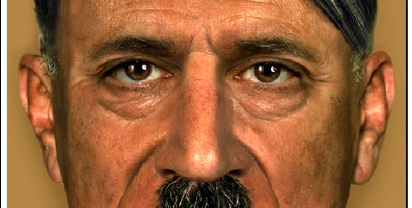
I have looked evil in the face. Evil is real. It is not a quirk of the synapses. It is not a chemical imbalance. It is not an environmentally produced “disorder”. It is an entity. I saw it lurking behind the feigned tears of Ben’s parents. I saw it in the manic face of a young girl I am convinced was possessed by that evil. I saw it in the relentless stare of a patient who vowed to kill me and eat my liver. I felt its caress on a lonely night in a bed and breakfast in Austin, Texas when I was trying to finish my book about the influence of these evil forces on our world.
I saw it last week. I saw it many times this past year. Last night, my best friend Mark Riser gave me a book for Christmas on theology. I randomly opened it and read a paragraph. It was not a random sampling it turns out. Basically the section was on evil and there was a thought placed there for me to ponder. Maybe our culture is more fascinated with evil than ever in order to pull our attention to the big acts of evil so we do not notice the insidious, quiet, tiny touches of evil as it infiltrates our lives.
The big evil last week was the killing of over two dozen innocent people including children. But that “big evil” came at the expense of dozens of tiny caresses of evil. “He was a quiet, thoughtful person.” “He was so nice.” “I can’t imagine why he did this.” You hear these kind of statements all the time when such a tragedy occurs.
Jay Strack, a motivational speaker back in the mid 1990’s once said when he went scuba diving, it wasn’t the sharks he feared. Rather, it was the multitude of minnows that can nibble you to death. We focus on the “big evil” and miss the accumulating influence of a thousand tiny evils that poke and prod and erode and puncture so much so that one day we find ourselves being bled to death; our resolve, our compassion, our mercy gone and we snap. The big evil takes us and we smash a tiny boy’s head in the window sill or rip a sink out of the wall or take up a gun and kill.
Don’t miss this. Each of us is totally and completely capable of carrying out the kind of “mindless, senseless” violence we saw last week. Don’t think for a moment that you or I are above it. We aren’t. We are imperfect, broken souls on a journey toward forgiveness; love; completion; release. Why are we such broken creatures? Why can we not pull ourselves up out of the muck; above these base emotions and actions?
Jesus of Nazareth had many things to say about evil and here are just three:
“Make a tree good and its fruit will be good, or make a tree bad and its fruit will be bad, for a tree is recognized by its fruit. You brood of vipers, how can you who are evil say anything good? For out of the overflow of the heart the mouth speaks. The good man brings good things out of the good stored up in him, and the evil man brings evil things out of the evil stored up in him.
But the things that come out of the mouth come from the heart, and these make a man ‘unclean.’ For out of the heart come evil thoughts, murder, adultery, sexual immorality, theft, false testimony, slander. These are what make a man ‘unclean’; but eating with unwashed hands does not make him ‘unclean.’”
This is the verdict: Light has come into the world, but men loved darkness instead of light because their deeds were evil. Everyone who does evil hates the light, and will not come into the light for fear that his deeds will be exposed.
Jesus seems to be saying that evil originates in our hearts and minds. WE are the source of evil! How is this possible? If evil is real then how can it also be in us and yet not come from us? Ah, this is the mystery of all time. Our scientific culture wants to assert that we are but highly evolved animals; that we have no true spiritual side; that we do not have a thing called the soul. Such talk is of the supernatural and the supernatural does not exist. It is but a figment of our imagination.
But, Jesus seems to be saying that there is something within us that quickens at the sight of art and beauty; that resonates to the sound of music; that seeks and connects with that most abstract of things, love. And, because we are broken; ruined by this disconnect with the divine; we allow evil to take the place of good; to let darkness rule instead of light. There are only two choices — dark or light — good or evil. One will prevail in our hearts and mind and will rule the day. It is simple, Jesus taught. How then do we push the evil into the dark, powerless corners of our live so that good prevails? One more word from the teachings of Jesus of Nazareth:
“When an evil spirit comes out of a man, it goes through arid places seeking rest and does not find it. Then it says, ‘I will return to the house I left.’ When it arrives, it finds the house unoccupied, swept clean and put in order.”
Ah, we can fight the urges; suppress the evil impulses; push the destructive thoughts away but if we DO NOT have something positive to fill the void, then the evil will return more powerful and more controlling than ever. Look at history. Those who started down the path of evil; those who allowed the minnows to nibble away at their conscience; slowly, inexorably drowned in the sea of evil and became hardened; solidified by evil. For them, there is little hope of return to good; to return to sanity; to return to a world filled with light. Think of the Nazi holocaust, how insidiously a nation desiring to merely rebuild from the ashes of World War I became an engine of worldwide destruction and the killing machine of the Holocaust. Think of Stalin, ruler of Russia desiring to rebuild his country after the devastation of World War II deciding to quietly eliminate a few political enemies for the good of the state. Estimates are that he probably had between 50 and 100 million of his own people executed! There are dozens of such stories just from the twentieth century alone. And, no sane person would ever disagree that Adolph Hitler was evil.
I have no answer for why the events of last week took place. But, our actions should be to reach out in love, compassion, mercy and prayer to the families of the victims and the perpetrator. And, in our response we have once again turned to God. Where was God in the midst of this tragedy? Right where we left Him, out in the darkness; away in the shadows; escorted out of the picture by our culture for we do not need Him in our world of materialism, naturalism, and the promise of answers to all our quandaries from science.

What we cannot solve with our equations and our theories is the mystery of the human heart and the human soul. Jesus solved that problem. He taught that the heart must change and can only change through a realization that He is the Light. This season whether you believe in God or not; whether you worship the baby born in a manager or believe it is all a myth; seek to fill your heart with the Light of the Love that Jesus showed to us. And, when you do, you will find peace and goodwill toward all men.
We’ll Follow the Old Man Because We Love Him!
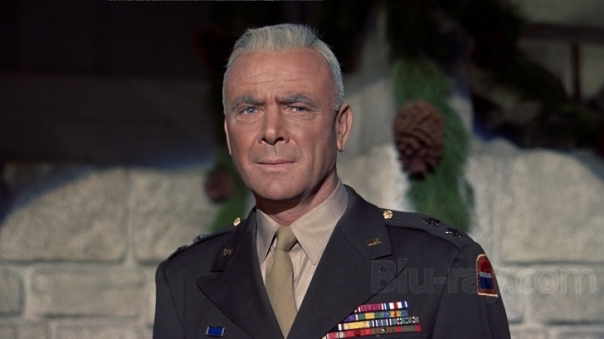 Every Christmas I make sure and watch one of my favorite movies of all time, White Christmas. Yes, I love the song. Yes, I love the romantic angle. Yes, I love the story of loyalty to old friends. But the real reason this movie touches me is because of the relationship between General Waverly and his men. When the film opens, a tired, war weary group of men are trying to celebrate Christmas Eve on the German front. General Waverly is being sent back to the states. The men sing a song to “the old man”.
We’ll follow the old man wherever he wants to go
Long as he wants to go opposite to the foe
We’ll stay with the old man wherever he wants to stay
Long as he stays away from the battle’s fray
Because we love him, we love him
Especially when he keeps us on the ball
And we’ll tell the kiddies we answered duty’s call
With the grandest son of a soldier of them all!
It is hard for us to understand this kind of devotion in today’s jaded, cynical world. A group of men so tightly devoted to each other they would tell their leader they “love” him? Unthinkable!
Why did they love General Waverly so? What characteristics of his leadership inspired this kind of devotion? A key to understanding the answer to this question can be found in the following dialogue. Bob Wallace, played by Bing Crosby and Phil Davis, played by Danny Kaye have arrived at the General’s inn in Vermont and watch as the man once a commander is now cleaning kitchen floors. This is what they said:
Bob Wallace: We ate, and then he ate. We slept, then he slept.
Phil Davis: Yeah, then he woke up and nobody slept for forty-eight hours.
 One of my favorite photographs shows Walt Disney walking through Snow White’s castle in a very early Disneyland. Walt was famous for his “management by walking around” philosophy. He would pop up unannounced and ride the rides; watch the shows; listen to the musicians. Yes, he was a stickler for quality but more than anything, he wanted to be a part of his creation. He would wander the hallways of the animation studio after the animators left for the day and dig through their trash to find new ideas. He really believed in his animators. And, his expectations were very tight and rigid, but inside he cared about his employees; he loved them. There were many times he would take an employee who was in trouble and pay his salary while he dried out in what we would call today “rehab”. In fact, when his animators joined the union, Walt was devastated. He considered them a part of his family and the decision to join the union was akin to saying they didn’t appreciate his tender care.
I’ve been writing blogs the past few days about the teachings of Jesus of Nazareth. I’m trying to focus on his teachings and put aside, for now, his claims to be the Messiah. His teachings are universal and transcend anyone’s religion. And, in the history of mankind no one has changed the world than this one man and his 12 followers. What did Jesus do that inspired these simple men to go out and literally turn the world upside down?
Many books have been written about Jesus’ “leadership” style but I believe it comes down to a simple act that typified Jesus’ approach to assuring these men would indeed change the world.
It is the night of his betrayal and Jesus and his disciples are gathered in a room to celebrate the feast of unleavened bread prior to the Passover. It is a somber and moving dinner filled with meaning and remembrance of the passing over the children of Israel by the angel of death while they were slaves in Eqypt. Imagine the men talking among themselves; eager to take their place at the right hand of this new king who would soon overthrow the tyranny of the Romans. They are excited; filled with hubris and arrogance; over confident after Jesus’ reception by the people of Jerusalem. Suddenly, the door to the other room opens. Standing in the doorway is Jesus. He has taken off his robe and wrapped a towel around his bare waist. His chest glistens with sweat and his eyes are filled with a haunting passion. He holds a wooden bowl filled with tepid water. As the disciples watch in utter amazement, this man; this king; this ruler of all of mankind kneels before the first of his disciples and begins to wash the man’s nasty, dirty feet.
Shocked and stunned they whisper among themselves as their leader takes their feet, dipping them into the warm water and washes away the dirt. Their king is kneeling before THEM! The world has turned upside down.
This stunning development was just the beginning of a huge paradigm shift for these men. Later, anticipating a board room meeting in which each man would receive his marching orders and his assignment in the new hierarchy Jesus shocks them again with these words:
“As the Father has loved me, so have I loved you. Now remain in my love. If you keep my commands, you will remain in my love, just as I have kept my Father’s commands and remain in his love. I have told you this so that my joy may be in you and that your joy may be complete. My command is this: Love each other as I have loved you.
Stop here for a moment and really hear those words. Jesus is talking about love? Not conquest or battle strategy or corporate intrigue. He has become a servant to his men and now he speaks of love! How has he loved these men? Listen to his next words:
Greater love has no one than this: to lay down one’s life for one’s friends. You are my friends if you do what I command. I no longer call you servants, because a servant does not know his master’s business. Instead, I have called you friends, for everything that I learned from my Father I have made known to you. You did not choose me, but I chose you and appointed you so that you might go and bear fruit—fruit that will last—and so that whatever you ask in my name the Father will give you. This is my command: Love each other.
There is an awful lot love mentioned in this section. The word here is a Greek word, agape meaning “the love of God or Christ for humankind. In the New Testament, it refers to the covenant love of God for humans, as well as the human reciprocal love for God; the term necessarily extends to the love of one’s fellow man. Many have thought that this word represents divine, unconditional, self-sacrificing, active, volitional, and thoughtful love.”
In fact, the original Greek word, agapao, has taken on this meaning through its use by Jesus of Nazareth and his followers. There are some interesting words in the above definition such as “the love of one’s fellow man” and “unconditional, self-sacrificing”. I could go on but lets stop right here for now. Let’s look at what Jesus of Nazareth is telling us about his concept of being a “king” or a “leader”. Simply, put Jesus of Nazareth is teaching us:
You cannot be an effective leader until you know how to follow.
You cannot ask someone to serve you until you know what it is like to serve someone.
Loyalty is freely given and cannot be demanded.
The truest form of “friendship” is based on “agape” love.
Jesus of Nazareth redefined love as unconditional and self-sacrificial love for his fellow man; his friends.
As this season approaches, no matter what your worldview; no matter if you believe in God or not; these simple teachings of Jesus of Nazareth carry profound implications for us today. If we are to be the kind of leader that changes the world; the kind of leader that results in “love” from our “followers”; the kind of leader that inspires the kind of creativity and self sacrifice we see in the above two modern examples then we must first understand that the highest place to lead from is often at the feet of those we serve!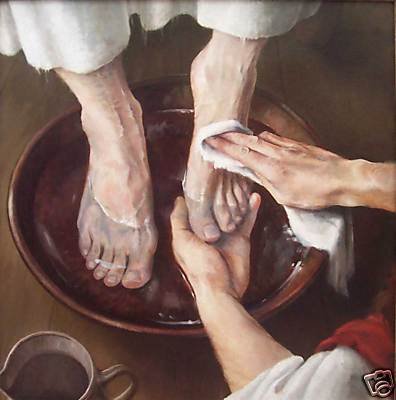
Turn the Other . . . What?!?!?
I was asked to talk to an irate patient. I went to the patient’s hospital room and tried to soothe his ruffled feathers. After all, I am regarded as a very calm person under pressure; a peacemaker. The man claimed we had been experimenting on him during his recent diagnostic test in the department of radiology. I calmly explained the procedure he had undergone and thought I had succeeded in calming the man down. Then, he cut his eyes in my direction, let loose with a long string of vile curse words and called me a liar.
Something popped behind my eyes and anger took over. I wadded up his complaint sheet, threw it at his face where it bounced off of his shocked and surprised eyes and then told him I hoped he died the next day during his surgery. I was in a daze after that and found myself sitting at my desk down in radiology wondering “what just happened?”. As you can imagine, so did the administrators who had sent me to the man’s room to calm him down and answer his admittedly baseless complaints. Instead, I had told the man I hoped he died! Where did that come from? Why had I reacted in that way? How did I allow this man to push all of my buttons?
It is no mystery to anyone that we live in a very angry, frustrated culture. Road rage is at all time highs. Revenge is encouraged and there are revenge “sites” on the internet. Our entertainment glorifies blowing someone away. We’ve taken Dirty Harry’s advice to heart and we hope that someone will “Make my day!” so we can unload onto them. Rage and fury and revenge are the emotions of the day. They fuel the hate and violence in the Middle East. They have spread across the globe in wave after wave of destruction and death. Where did we go wrong?
I want to explore the simple teachings of a rather simple man, a carpenter, a philosopher, a teacher who changed the world. Put aside the trappings of deity and savior we associate with Christ for the moment. Let’s look at his words. Words spoken by a simple man to simple, struggling people. The populace of first century Palestine were not too different from today. They were under repression by a very effective, cruel Roman government. Their king was a vile man with perverted tastes in pleasure and a ready tendency to lop off the head of anyone who displeased him. Their local leaders were strict, legalistic religious leaders who were devoid of compassion, mercy, and love. They were being taxed into poverty; crucified for speaking out against the government; sold into slavery at a whim. In short, these people were ANGRY.
So, why would Jesus of Nazareth, regarded by the people of this era as a future king and conqueror, tell these angry people thirsting for vengeance that the best response to an attack on their person was to “turn the other cheek”? What? Be a coward? Bow to the repressive and abusive leaders around them? Worse, don’t fight back, even in self defense?
This teaching, more than any other by Christ, has been discussed and explored down through the centuries. In fact, it has been claimed that a follower of the teachings of Christ must be a coward if they are true to those teachings. But, I believe, this is a very poor understanding of the teachings of Jesus of Nazareth. I may be a simple man with no deep background in theology or Christian doctrine but I believe there is a deeper, more profound thought here than just turning tail and running.
As a physician I am aware of a condition known as the “fight or flight” response. When we are threatened physically or mentally, our body goes into flight or fight mode. Adrenaline kicks in, the heart races, the lungs bring in more oxygen, blood is shunted from the skin and gut to the brain preparing us to either stand and fight, or to run away. This physical reaction is totally beyond our ability to prevent. But, it is not beyond our ability to control our “response” to this physical “reaction”.
The remarks of Jesus of Nazareth must be taken in context. Not only does he tell us to “turn the other cheek” when we are struck on the cheek, he tells us to go the extra mile, to carry the extra burden. When taken in its total context, there is a deeper meaning here. I believe what Jesus is telling us is to deny our simple, easy “reaction” to fight and to pursue a thoughtful, considered “response”. In other words, don’t fly off the handle! Stop the adrenaline surging and the purely animal instinct to fight or to flee and think. After all, we are human beings. We have considerable options in the thinking category over animals. Why not use a thoughtful response? Why not do the unexpected? Like, turn the other cheek? Or, offer to carry the soldier’s burden for another mile?
When we take this initiative, we have taken CONTROL of the situation. We are now in the driver’s seat, not the offender. This will throw the offender off his/her game. It might even stop them in their tracks and cause them to rise up out of their primal anger to the higher levels of cognitive thinking. A measured response is far better than an instinctual reaction. Now, I’m not talking about life threatening situations. I’m not talking about self defense. And, I don’t believe Jesus was talking about this either. He was talking about the day to day interaction we have with ordinary people we encounter along life’s path. A measured response gives some degree of respect and a glint of wiggle room to the offender. Often, the problem with the offender is a deep seated problem that is unrelated to the anger that person is showing you. Maybe they need someone to stop them in their tracks and make them consider another option. Maybe they need someone to stop them from reacting and encourage them to respond.
I might be wrong here but there is another verse not uttered by Jesus of Nazareth that is profoundly true,
“A gentle answer turns away wrath, but a harsh word stirs up anger.”
Proverbs 15 verse 1. I might be wrong, but in this season of gift giving and peace to all men, why shouldn’t we heed the words of Jesus of Nazareth and turn the other cheek; go the extra mile; repay anger with a gentle word; do the unexpected.
So, what happened to my patient? His son appeared in my office about an hour after that exchange. By then, I had been interviewed by a couple of administrative reps about MY behavior. The son smiled at me and said, “Thank you for standing up to my father. He has run over everyone he meets because he is afraid that he will not wake up from his surgery tomorrow. But, he told me to tell you that he was going to survive just to prove you wrong. So, I know this sounds strange, but you actually helped him by showing him how he was acting towards others. I want to thank you.”
Who would have thought? But, as positive as this may have turned out, I was the one who suffered. I was the one who felt horrible for losing my temper. It may have worked out for the best, but this is the exception, not the rule. Anger seldom has positive outcomes (except when Jesus needed to drive the thieves out of the temple).
Jesus said:
“You have heard that it was said, ‘Eye for eye, and tooth for tooth.’ But I tell you, do not resist an evil person. If anyone slaps you on the right cheek, turn to them the other cheek also. And if anyone wants to sue you and take your shirt, hand over your coat as well. If anyone forces you to go one mile, go with them two miles. Give to the one who asks you, and do not turn away from the one who wants to borrow from you. You have heard that it was said, ‘Love your neighbor and hate your enemy.’ But I tell you, love your enemies and pray for those who persecute you.”
Here is what I learned from the teachings of Jesus of Nazareth:
RUR — Resist the Urge to React. Rather, take time to THINK and then RESPOND.
Control — By avoiding a blind reaction, you can take some measure of control of the situation (maybe not completely but at least your side of the situation).
Empathy — An expression of anger often is an indicator of a deeper problem and you might just happen to be in the wrong place at the wrong time. Looking for the pain behind the anger might help you to understand why this person is so angry.
Love Your Enemy — Here is the HARD thing to do. But, in this teaching we see the necessity of looking at the other person as an individual with a worldview and a motive that we might understand if we were in their situation. It is hard to love someone you loathe; someone who is lashing out at you. But, an attempt to at least understand their point of view and then trying to find a way to respect that person as a PERSON might help defuse the situation. In other words, sometimes we have to do the HARD thing because it is the RIGHT thing!
I’m a Doctor, Not a Philosopher!
Doctor McCoy made this profound statement to his friend, the logical Vulcan, Mr. Spock during the original Star Trek episode. I have always had a hard time understanding philosophy. And so, this statement made me sit up and take notice:
“Christianity is not a religion. It’s a philosophy!”
I was somewhat surprised to hear Bill O’Reilly make this statement Wednesday night in his conversation with an atheist. The atheist, as expected, protested vigorously that Christianity IS a religion. Bill countered with a valid argument. Being a part of Catholicism or being a Methodist is “religion” based on the “philosophy” of Christianity.
So, which is it? Is Christianity a religion or a philosophy? Here are 5 definitions of the word “philosophy”:
Examination of basic concepts: the branch of knowledge or academic study devoted to the systematic examination of basic concepts such as truth, existence, reality, causality, and freedom.
School of thought: a particular system of thought or doctrine.
Guiding or underlying principles: a set of basic principles or concepts underlying a particular sphere of knowledge.
Set of beliefs or aims: a precept, or set of precepts, beliefs, principles, or aims, underlying somebody’s practice or conduct.
Calm resignation: restraint, resignation, or calmness and rationality in somebody’s behavior or response to events.
Look at the fourth definition. Maybe Bill has a point. Christianity is a set of beliefs or aims underlying the practice or conduct of a person who follows the teaching of Jesus Christ. Ravi Zacharias, well known speaker and apologist makes the statements:
Religion begins with man. Theology beings with God.
Ah, here is a valid point. Religion is man’s attempt to organize the philosophy of Christianity into a system of everyday “practice”. Religion defines the “rules and regulations” of the “practice” of Christianity as an outward manifestation of its tenets and beliefs. Religion, then, is a way of living out or bringing the inward belief system of Christianity into everyday practice.
And, here is the problem. By inserting “man” into the process; by putting “man” in between the teachings of Christ and the everyday human behaviors based on those beliefs, there will be an inevitable watering down, and sometimes down right perversion of those tenets and beliefs. Man is an imperfect creature and based on our history, we can really screw up even the most perfect system of beliefs.
And, in defense of Bill’s atheist guest, complaints about “religion” can be valid. It is the ABUSE of Christianity, as well as other “philosophies” down through the ages that have led to charges that those “religions” are dangerous. The new atheists claim that all “religion” is inherently dangerous and should be outlawed. They claim that teaching children “religious” concepts is equal to child abuse. There may be some valid points here. After all, if a child is taught to hate anyone thinking differently from them and tells them it is glorious to strap a bomb to their chest and kill dozens of people, then I would whole heartily agree that “religious teachings” can be dangerous when they veer away from the underlying pure “philosophy” of that man made religion.
However, the potential danger of religion does not take away from the peaceful “philosophy” of Christianity. After all, Jesus of Nazareth never asked his disciples to kill or maim or hate or carry out revenge. He rebuked Peter when the man cut off a guard’s ear in the Garden of Gethsemane.
I would like for us to consider the possibility Christianity may be the most valid thought system and belief system in the history of humanity. I would like to explore the teachings of Jesus of Nazareth. Over the next few days, as we near the celebration of the birth of Jesus, I would like to look at the “philosophy” Jesus taught to his followers. Was it dangerous? Was it controversial? Is it dangerous today? Should Christianity as a philosophy be labeled as dangerous by today’s culture? Are we justified in outlawing any expression of the celebration of “Christmas” at this time of year?
Come back in the next few days as I explore the pure teachings of the man, Jesus of Nazareth. In deference to those who are atheists or agnostics I will discuss the teachings of Jesus from his strictly human point of view. I think that we will find that no matter what we may now believe about Jesus Christ in our individual “religions” that his teachings are universal and can become the foundation of the best way we as humans can conduct ourselves in this day and age of fear, anger, hate, hopelessness and coming darkness.
Book Signings Are NOT About the Books!
 Why do authors hold book signings? To sell books, right?
I’ve held at least a couple of dozen book signings over the years. I can think of at least three of these events where I sold almost 50 books. But, the others? Well, at one signing I didn’t sell a single book. In fact, not a single person even stopped at my table. Most of my book signings result in selling less than a dozen books. So, why continue to work so hard to have a book signing?
It’s the people. You can’t meet people face to face on Amazon or Barnes & Noble websites. You can’t reach out and touch someone through their Kindle or Nook. But, you can look someone in the eye over a book signing table. And, most importantly, you can hear their STORY.
This is what life is all about — sharing our stories; writing our stories; continuing the Story that God has written for our lives. And, there is one story that always plays out at my book signings. It goes like this:
A man in his mid forties walks up to the table. Before him are my first two fiction books, “The 13th Demon” and the newest, “The 12th Demon”. Sitting to my side is my co-author, Mark Sutton and in front of him is a pile of our book, “Conquering Depression”.
The man pauses in front of me and picks up “The 12th Demon”. But, his gaze averts slightly to the pile of depression books. Why? Because that book is the real object of his quest. However, a man cannot admit his is depressed. Certainly not a stranger and certainly not even to himself. But, that book is tantalizingly just out of reach. Maybe if he shows interest in the fiction SOMETHING will happen and he might get his hands on the depression book. There is a deep seated discomfort with his life; a gnawing desire to face the beast head on and kill it; but to do so is to admit weakness, failure, the inability to FIX it! And so, he peruses the fiction book instead and asks me the inevitable question.
“I have a (son, daughter, nephew, grandson, granddaughter) who likes scary books. Would they like your book?”
“If they like books by Ted Dekker or Frank Peretti they will like my book. It’s about vampires so if they like the Twilight series, they’ll like my books. And, don’t worry about the subject. There is a redemptive message in the book. It does have a Christian point of view.”
The man looks at me and I sense a profound sadness. “That may be a problem. You see he/she has renounced their faith. He/She’s an atheist now.”
Ah, here is the question. Here is the heart of this man’s sorrow. It is most difficult to lose a child to death. But, to lose a child to atheism? That is a lingering death that drives the knife into the heart day after day. How do you deal with this? How do you love someone when they no longer share that faith connection with you? Is it possible?
I tap my second book. “One of my minor characters in this book wrestles with just that issue. She has become an assassin but early in life professed Christianity. She has wandered far away from her faith. In fact, she can no longer consider the possibility that God exists because if He does, how will she ever be forgiven for her heinous acts of violence and murder? Is it possible to move beyond God’s forgiveness?
He just looks at me and his gaze drifts for a second to the depression books. “I don’t know . . .”
I am an apologist; someone trained in the defense of the truthfulness of the Christian faith. My discipline utilizes historical, scientific, and philosophical evidence as fuel for logical “arguments” in support of Christianity. But, I have learned the hard way that when someone loses their faith, rational discourse; reasonable debates; objective evidence will fall on deaf ears. It is because evidence is not the issue in question. Most people who fall away from their faith do so because they have been hurt or angered or disillusioned by well intentioned “Christians”. This hurt comes from someone in a position of authority or respect. Bottom line is the person is hurt; a heart felt need. NOT a head need!
I ask the man a simple question: “What happened between the two of you?”
He looks at me as if I have read his mind. What then unfolds is a tale of woe and pain. As with previous such encounters the story is one of a nasty divorce between the person’s parents or an abusive parent or a figure of trust who violated that trust. Bottom line: people will always let us down. Always!
I reach for a depression book. “Listen, you are depressed. This book is what you need. You can buy my books for your nephew/niece/son/daughter. My fiction books will give them something to think about. But, until the two of you repair your relationship, he/she will continue to be distant from their faith. Love him/her. Simple and clean. Show him mercy. Show him forgiveness. Show him the love of Jesus. That will bring him back. Then, one day, if he has questions that need hard factual answers, contact me and I’ll give you some resources. But, for now, he needs your love. In fact, both of you need love.”
I tap the second book again. “In this book the assassin’s anger and violent nature can be traced back to her father. This will provide an angle from which you can find common ground with him.”
He bought all three books. But, what he walked away with was not something to read. It was something to think and pray about. And, a little dose of hope.
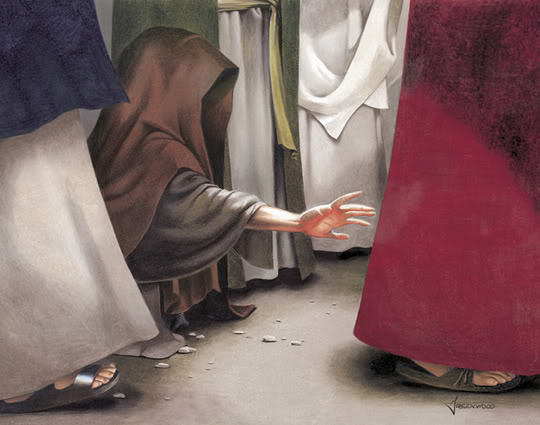 I had listened to a sermon at First Baptist Church Orlando the night before. In that sermon, the pastor talked about Jesus being surrounded by a rambunctious crowd when Jarius came to him requesting Jesus heal his daughter. Jesus was headed for Jarius’ house when something happened. He was interrupted. He felt the power go out from him and stopped to ask his disciples “Who touched me?”
Can you imagine the disciples looking around at the milling crowd. I’m sure they wanted to say, “You’ve got to be kidding, Master. This is worse than Disney World on the 4th of July! You want us to tell you who touched you? Look around! Pick someone at random!”
Or something like that! Of course, Jesus didn’t ask them because he wanted an answer. He asked them to see if they were paying attention to the lowly, broken woman who had been shunned by society — bleeding and “dirty” and forbidden from touching ANYONE. Jesus wanted to know if the disciples had NOTICED. They had not. They only saw the powerful and wealthy Jarius. But, Jesus noticed the unnoticeable; the man or woman wandering up to the table in desperate search for answers to their pain; for healing; for the gently touch of a caring conversation or the kind brush of a hand on their shoulder. Jesus noticed this woman and praised her for her faith.
I will never forget this unique perspective on that account from John. I had never seen the woman as an interruption; a divine appointment unforeseen by anyone except God. THIS is why I continue to hold book signings. There will always be one person whose day I hope God will interrupt with a moment of hope and caring. And, I can only pray I will be there with the caring message God wants me to share. It’s not about the books. It’s about the PERSON!
Hutchmoot Day 2 — Part 2 — Looking for Light
What brought you to Hutchmoot?
What do you do?
Two questions every attendee asks at Hutchmoot, even if you know the face and can’t quite remember the name and the details associated with that name. And, this year, there were 86 more of us to meet than before.
My son, Sean, tried to succinctly convey his job. By the third day, he had it down to a finely tuned summary. You see, while completing his masters degree in media studies, he became an intern at Texas Impact. In Austin, this organization is a political action advocate for inter-faith issues. They monitor issues coming before the Texas legislature (meets every other year) and then posts those issues pertinent to faith based living on their website. They follow various religious traditions and their efforts to change culture through their influence on local government. Maybe. I think I got that right. Bottom line is that Sean works on the website and social media and video editing and video capture and is now the main tech guy for Texas Impact. I have watched him grow and mature as he has dealt with the unhealthy interface between politics and religion. And, it is very unhealthy.
Coming to Hutchmoot, Sean had a couple of goals. Spend time with his Dad (woohoo!) and to see what God had to say to him. You see, Sean is an excellent writer and storyteller and is insanely creative. But, he doesn’t write books or stories. He writes notes and composes his thoughts into the most incredible conversations I have ever had with ANYONE. Sometimes, I wished had recorded one of our conversations and had it transposed so I could remember all the cool stuff he said. Yeah, my Sean is one cool dude and I am so proud of him.
But, Sean is not without his struggles. He and his wife, Jennifer, are struggling with some personal issues related to his church in Austin. I can’t go into details. These issues are substantial and deep and very, very important to them. But, God spoke to Sean in so many ways at Hutchmoot. And, he heard something totally different from what God said to me. Imagine that? I think this is the singular most important thing to understand about Hutchmoot. It is not only where we come to meet other Hutchmootians in one of the grandest and coolest koinonias in the universe. It is also where we come to meet with God. God speaks in the midst of this incredible gathering — uniquely and individually to each one of us. And, he spoke to Sean in ways only Sean can share with you.
But, there is one last event on Friday I must mention. There were many smaller moments through the lunch and afternoon. One encounter was with a former employee of one of my current publishers who confirmed what an incredible team is now in place compared to a few years back. Again, I can’t go into details but it was another “chance” encounter that God led me to in order to reassure me that my updated book on depression should take front and center attention RIGHT NOW!
Friday night. Sean and I followed the new iOS6 map app on my iPhone 4Gs and it worked perfectly, thank you very much! We pulled onto Lipscomb University campus and I was stunned. I did not know this place existed. As we walked across the campus from the parking garage I felt the cool wind on my face and there was God again, speaking, whispering in his quiet manner, surrounding both of us with His undeniable Presence. I wanted to go back to college again! I wanted to start afresh, anew at this campus filled with soaring red brick edifices and bustling, smiling students and a fresh appreciation of the importance of LEARNING in such a God centered environment.
We went into the auditorium to await this night’s debut of Andrew Peterson’s “Light for the Lost Boy” concert. As Sean and I waited we continued a conversation about a mutual acquaintance who had lost his faith. I don’t mean had doubts. I’m talking about moving from Theism to Atheism. How did this happen? How could someone who has been a professed Christ follower for most of their life walk away from God?

Folks, it is a simple and short journey from our doubts to forgetting the One who created us. How quickly we forget our blessings! How quickly we turn our backs on God! I know. It happened to me. I will talk about my crisis of faith in a future post. But, my heart was so burdened for our friend. What could either of us say? What could we do to convince him how wrong he was for just tossing away his faith in God? Now, I am an apologist. I’ve studied Christian apologetics now for 14 years. Apologetics was an answer to my crisis and it has given me a rock solid faith. Or has it? Hadn’t I just gone into a dark depression over this book deal? How quickly had I forgotten God? Pretty darn quick!
My point is that providing logical arguments and sound evidence is not the answer to those who leave our faith. The leaving is one of questions and doubts that are deeply imbedded in our quest for Eden. It is born of utter deep pain. While at a book signing for my first book, “The 13th Demon” at a book store in Austin, Texas a middle age woman asked if the book was appropriate for her teenager grandson. “He’s lost his faith. He is now an atheist. What can I do?” Now, my internal apologist wanted to take over but instead I sensed the pain. I asked her what her grandson’s life was like. What was his relationship to his father like? What came out was a sorrowful story of a broken relationship. You see, we look at God many times through the lens of our parents. We stack them up against God and when they let us down, we transfer that disappointment to God. As with this woman’s grandson, I feared the loss of faith with our friend was at the expense of a very important broken relationship. More on this later when I post about Phil Vischer, the creator of Veggie Tales.
 If you have not listened to Andrew Peterson’s new album, you have missed out on one of the truly great works of music and lyrics in the past ten years. Yes, it is that incredible. You must listen while reading the lyrics until they are firmly seared into your mind. Andrew kicked off the concert introducing Caleb, the band composed of two of Steven Curtis Chapman’s sons (He was in the audience about two rows behind us). Then, he came back from a break and began the concert. If you have ever had the joy of sitting through “Behold the Lamb of God” Christmas concert you are well aware of Andrew’s ability to carry a concept from start to finish. Where BTLOG takes us from Genesis to the Resurrection, “Light for the Lost Boy” carries us from birth to death; from innocence to disappointment; from lostness to grace; from the Big Question Mark to the Big Exclamation Mark. As the songs unfolded before us, I wept, I smiled, I hugged my son, I laughed, and I exulted in the utter sheer joy of being in God’s presence.
For, Andrew encapsulated my entire journey of faith in those songs. My lostness in the woods wandering but sensing a hidden companion. As a child, I wandered the pasture and woods of our 62 acres listening to the stillness, the quiet, the thunder. I remember one startling moment after my dog, Rusty died when at the age of 10 I climbed the “tall tree” in our front yard higher and higher struggling through the branches, tearing my skin, bumping my head until I reached the giddy top of the tree swaying and dancing in the evening breeze and I wedged myself into those small top branches and gazed out over a sea of trembling, weaving green tree tops stirred by the hand of God and I felt Him there, felt His presence wrapping me up in love and understanding and saying, “My son, I feel your loss; I know what it is like; you lost a pet; I lost a Son.” I was there in that tree in that moment in that concert and God stirred within me the memory of His presence. It was shortly after that incident in my life that I surrendered all to Christ. There were many journeys to the top of the “Tall Tree” in later years. Many moments with God at the top of my world before my innocence and trust in this world died and I realized it is irrevocably broken and bruised. No Eden. No Garden. Just this — living on the edge of Theism and Atheism.
And, hearing those songs, some of which were written by Andrew for his children was especially wonderful for me to hear with my son sitting beside. He has always chided me for a statement I made in his early years, “Son, you’ve never lived until you’ve climbed a tree” something he has never done. After the concert in that wonderful walk across Lipscomb campus I shared with him the story of the tall tree. And, I saw dawning within his mind a new understanding of his father. “Dad, you have lots of stories. You need to write them down.”
Indeed!
He’s Dead Jim!
“I’m a doctor, not a mechanic!”
That particular bit of universal wisdom has come true for me time after time. When I open the hood of a car, I see large, dark, greasy shapes. My wife, on the other hand, looking over my shoulder as I interpret an MRI sees the same thing — large, dark, greasy shapes. One man’s Rorschach is another man’s blueprint for disease detection.
 Dr. Leonard “Bones” McCoy was the originator of that quote. Throughout his appearances on the original “Star Trek” and subsequent animated series and movies, Bones was well known for his curmudgeonly manner. But, what Bones never lost was his “humanity”. Time after time, Bones would butt heads with Mr. Spock in the classic emotion versus logic debate.
For a young boy fascinated with the prospect of a shining, interstellar future, I was attracted more to Bones than any of the three men comprising the triad of Kirk, Spock, and McCoy. More than anything, I was impressed with Bones’ unflinching devotion to his patients regardless of political or personal restraint. His patients, even when they were aliens, were human and Bones preserved their humanity.
When I felt God’s call to become a doctor, I pictured myself with the bold idealism of Dr. McCoy. I found myself throwing myself in front of the bureaucratic buses for the sake of my patients. It was his devotion to do whatever it takes to heal his patient that still inspires me today, 33 years after I graduated from medical school. Star Trek did that for me.
I guess that is why it so saddens me to read Mike Duran’s latest blog regarding Gene Roddenberry’s atheism. This was no mystery to me. The atheistic and naturalistic worldview was the dominant force behind Star Trek: The Next Generation and the sequels, DS9 and Star Trek: Voyager. For a few years, the head writer of Voyager was an outspoken atheist and her worldview saturated many of the stories of Voyager.
Interestingly enough, Roddenberry’s “Bible” on how to write for the show demanded that the future of mankind was so rosy, so Edenistic, so perfect that the writers of the show had to remove any conflict that could arise among the crew of the Enterprise. Is it any wonder the show did not do well until the Borg arrived? Is it any wonder that the greatest villain Roddenberry created was the omniscient, omnipotent, immortal Q? Here is Roddenberry’s concept of God. Capricious. Mercurial. Peevish. Delighting in tormenting mankind. Judgmental and harsh. And totally without mercy or love.
On another note, Bill Nye, the Science guy recently released a video in which he pleads with parents NOT to teach their children any form of creationism. He, along with Dawkins and Harris and the late Hitchens maintain that belief in the supernatural is dangerous to mankind. It is destroying us. And, they maintain that to teach children about the supernatural is tantamount to child abuse. Christians are religious pedophiles!
What is fascinating about this entire discussion is the totally disregard for sound, rational evidence for design in the universe. They dismiss this wholeheartedly as merely “the appearance of design”. What are we squabbling about? Semantics. Marilyn Robinson in her excellent book, “Absence of Mind”, has taken exception to this conclusion. She maintains that our appreciation of “supernature” or possible forces, worlds, beings that cannot be confined to our “natural” realm are absolutely essential to humanity. Without a concept of the supernatural, there would be no imagination. We would only consider what our senses can detect. Such imagination spurs art, literature, music, sculpture, innovation, and even scientific discoveries.
 I was watching an episode of Doctor Who just the other night in preparation for the new season. In this episode, love literally conquered all, defeating the nefarious plans of the metal “Cybermen” to remove emotions from a father’s brain. The father’s love for his son triumphed over the purely mechanistic, scientific machinations of the Cybermen. Afterwards, the Doctor was trying to deconstruct the man’s conclusion that love had won the day. He was trying to explain away the “love” phenomenon as merely brain chemistry and our “genes” trying to preserve themselves and then he stopped. He realized he was getting nowhere with us puny, immature humans. So, he agreed. Love had won the day.
And, here is the conundrum. The evidence is there. Rational discourse can be had. There is abundant scientific, historical, and philosophical evidence in favor of the existence of a transcendent intelligence behind the universe. But, to believe in such requires us to recognize the presence of a purpose; a plan for this universe. Such purpose implies that as humans we are a part of that plan; that we play a role. If we play a role in the “story” then this implies there isn’t true freedom to be and do what we want. We are subservient to the “story”. Mankind resists such a scenario. In our madlong rush to be totally free of authority, we throw the evidence in the wastebasket. We play the “God of the gaps” card and say that any “supernatural” explanation cannot be accepted.
Time and again, when I have asked such individuals why they will not consider this profound evidence for the existence of an intelligence, the reasons always boil down to personal preference. “I do not want to have to submit myself to such authority. I want to be free.” What is troubling is how such personal preference can end up producing an intolerant position among materialists. Their strongest accusation against Christians, for instance, is our intolerance. And yet, they take the high position of science and only science and are themselves intolerant of all other viewpoints.
 Roddenberry eventually had to compromise his vision in order for the sequels to Star Trek to be successful. The bottom line: money! Rather than throw Star Trek under the bus for the purpose of sticking to a higher set of materialistic values, Star Trek changed its “Bible” to allow conflict to exist. The future, it turns out, is not so rosy after all. Q is fallible. Man always falls to his lowest instincts. Evil rears its ugly head time and time again. Hmmm! Is this an indictment of religion or is it the brute reality that mankind has yet to rise above his fallen self? No matter how advanced our knowledge, our civilization, our technology we still kill and maim and have anger and jealousy and suffer from unbridled pride. We still have our way. We still live by “survival of the fittest” although this really means “survival of the richest or the most powerful or the most intelligent”. And, we fall time and time again as mankind.
Here is one of my favorite quotes:
“When it comes to the origin of life there are only two possibilities: Creation or spontaneous generation. There is no third way. Spontaneous generation was disproved one hundred years ago, but that leads us to only one other conclusion, that of supernatural creation. We cannot accept that on philosophical grounds; therefore, we choose to believe the impossible: That life arose spontaneously by chance!” — George Waldt
Notice the reluctance to accept the evidence is based on very subjective, personal “philosophical” grounds. History teaches us that when a civilization loses it moral and ethical base; when a civilization abandons transcendent values; when a civilization glorifies unbridled “freedom to do whatever we want” that civilization fails miserably. Without transcendent values, we are mere animals.
And, it is troubling that instead of acknowledging the incredible contribution of such institutions as Christianity, the detractors focus on the failings. And, those failings have NOTHING to do with the tenets of such a worldview. These failings, instead, point to the universal inability of man to rise above his destructive selfish impulses. And, here is the reluctant realization. Those impulses are a direct outgrowth of naturalistic philosophy. Where this is no love, there is hate. Where there is no compassion, there is oppression. Where there is no sense of the divine, there is a sense of ultimate depravity and hopelessness. We need God. We need the divine. No matter how technologically advanced we may become, we will cease to be humans if we cease to love.
In 1991 L. D. Rue spoke of the need to replace the outdated and delusional concept of God with a “Noble Lie”. The Noble Lie “is one that deceives us, tricks us, and compels us beyond self-interest, beyond ego, beyond family, nation, [and] race.” “Without such lies, we cannot live.” He acknowledged that at least the idea of a transcendent origin of values and worth was absolutely essential for us to continue to function as humanity.
My suggestion to individuals such as Roddenberry (who has passed away), Bill Nye, Richard Dawkins, etc. is to focus on man’s tendency to abuse ANY system of belief (and there are many beyond religion) and stop making God the focus of their attacks. The problem is NOT with God. The problem is with MAN!!!!
Can we not agree to disagree with civility? Can we not acknowledge the contributions of adherence to a worldview that has resulted in much altruism, good works, and, yes, scientific advance? Can those who adhere to a purely materialistic view not treat others with common decency and respect? This is my plea. Rail against God all you want. But, realize, that no amount of scientific argument, no amount of philosophical argument, no amount of rage against the abuse of systems will kill God. Accept that we will always believe in our spiritual side and this belief is absolutely essential to the future of mankind.
Instead, let us all speak out against the abuse of any type of system where human value is reduced to that of brute animals. Let us acknowledge the important of such immaterial virtues such as love, mercy, compassion, and self sacrifice. Let us agree that theology and science can co-exist as important disciplines with the potential to improve our human condition.
In most Communist countries in the 20th Century the underlying worldview was based on atheism and Darwinism. These societies devalued human life in favor of the state. Only the fittest were allowed to survive. If we stop and consider the quality of life of these individuals who lived under Stalin and Chairman Mao it would be insane to think such a life was of value or advanced humanity. In fact, over 100,000,000 people died in the 20th century alone at the hands of these systems.
One only needs to use common sense to see there has to be a balance between the natural and the supernatural. Man is a spiritual creature. No amount of scientific dogma can eliminate the basic human need for love, even if it is just biochemical in origin. Our place in the universe will depend on our imagination; our inspiration; our quest for something bigger and grander than ourselves. Belief in God accomplishes this. Where we fail is in taking that belief and abusing it for personal gain. This is what must stop. The abuse.
 Whether you believe in a Noble Lie or the Way, the Truth, and the Life we must learn to work together and stop vilifying each other. We must join together to fight against the insanity of the abuse of any belief system. Can we not do this? After all, Spock and McCoy often had heated, angry arguments and yet, the men were like brothers. In fact, in one of the most successful of the Star Trek movies it was Spock’s “katra” or soul that was saved by placing it in McCoy’s mind. The two truly became one. I don’t see why rational, reasonable discourse can’t replace the strident, hateful condemnation that typifies Roddenberry’s “Bible” and the best selling books by the “new atheists”.
As Ravi Zacharias said, “Religion begins with man. Theology begins with God.” And, unfortunately, man will always screw things up!
I may be wrong, of course, because I’m a doctor, not a philosopher!
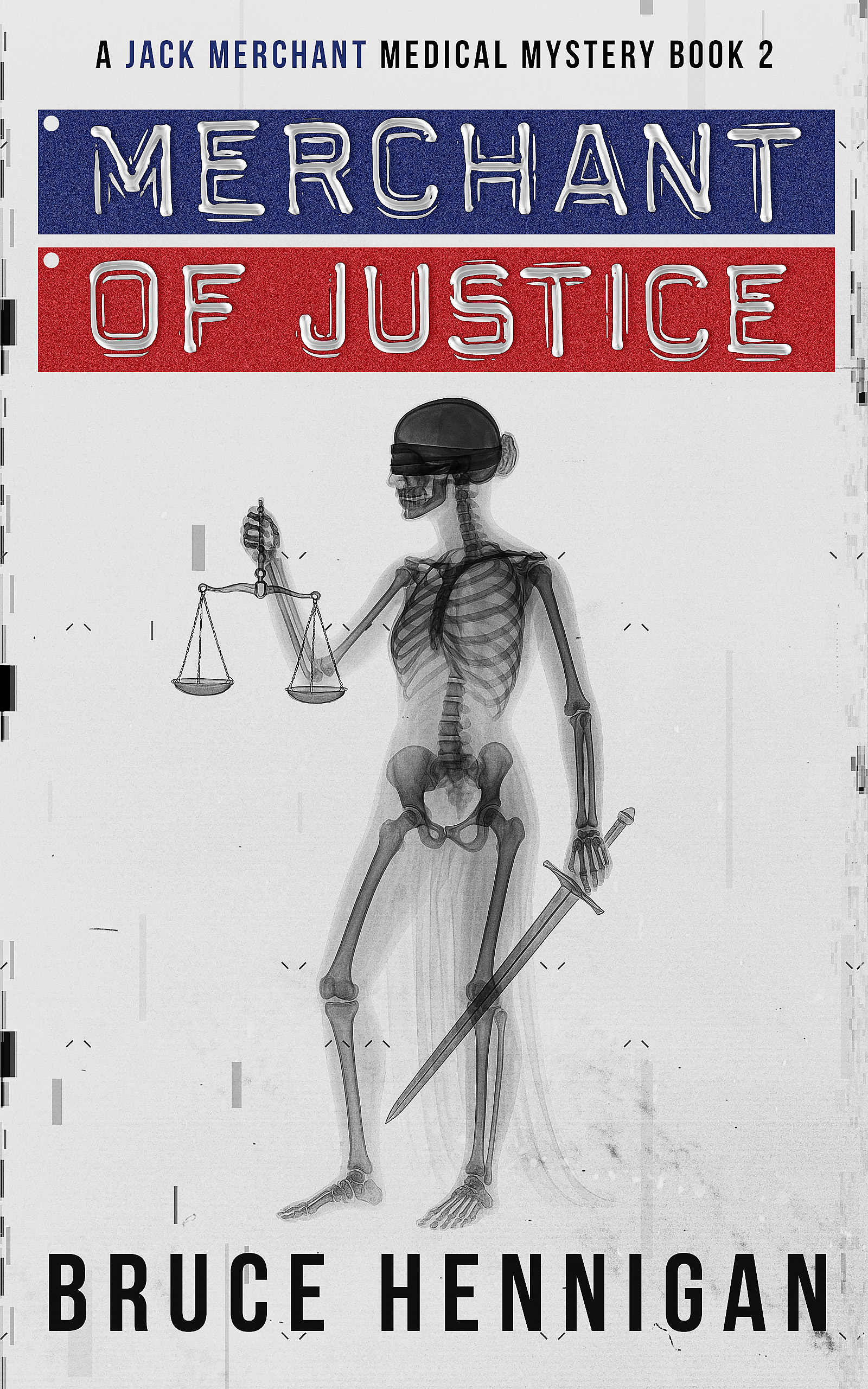

 Bruce Hennigan
You must be logged in to post a comment.