Blog Archives
Our Darkness, His Light
I noticed the decrease in the noise coming from outside our airplane. We were about 45 minutes into a 2 hour flight. It was far too early for the airplane to be slowing down for its descent. Along with the change in sound level, I noticed a queasiness in my stomach. I glanced out the window at the cloud level beneath us. Perhaps it was just turbulence. We were supposed to fly over a cold front moving through Alabama toward our departure city, Atlanta. I continued to read my book and noticed the persistence of the queasiness. I am prone to motion sickness and after ten or fifteen minutes I decided there was something not quite right about the motion of our airplane. I glanced across the aisle at my wife. She was asleep as usual. I could never sleep on a flight. I don’t like flying at all. I never have.
“When it’s your time to go, it doesn’t matter if you are in an airplane or not.” I’ve been told. But what if it’s the pilot’s “time to go”? My father passed away in October, 2012 at the age of 98 and he steadfastly refused to fly. Why? Because in the event of a crash he didn’t want “to wake up dead.” Hmmm!

The intercom crackled and this is what the pilot said. “Well, we are on descent for a landing in Birmingham.” Our destination was Shreveport, Louisiana — not Birmingham! “Just to let you know we have lost one of our two engines and we cannot get it restarted. There is no need for alarm because we can fly perfectly well with only one engine. But, we are making an unscheduled landing in Birmingham for safety’s sake and to check out the engine. We’ll be on the ground in ten minutes.”
On the ground in ten minutes. Not necessarily the best choice of words! My heart skipped a few beats and I reached across the aisle and grabbed my wife’s hand. She was wide awake now having heard the entire message. We looked at each other wordlessly. What can you say? We could very well die. If the other engine failed, we became a flying brick — very little chance of gliding to a safe landing. So, we prayed. It was all I could think to do.
Curiously, I was not panicky. I should have been. I was a bit nervous, but that sickening feeling of impending doom never settled in. There was nothing I could do. I was at the mercy of the pilots and their skill level. The flight attendant merely smiled at us. It was a forced smile hiding her own nervousness. As she bustled down the aisle to make sure we were all belted in, the smile never broke. She had made a connection with my wife who is always gregarious and reaching out to other people to know more about them. She put a hand on my wife’s shoulder. “I knew something happened a few minutes ago. But, we are going to be fine.”
We landed without difficulty just like any ordinary landing except for the firetrucks racing down the runway keeping pace with our airplane. We all applauded at the landing and then fell silent at the sight of men clad in silver hazmat suits waiting at the gate. We pulled up to the exit ramp and the flight attendant immediately opened the door. But, the jetway stayed retracted.
“We will sit right here for a few minutes.” The pilot assured us over the intercom. “While the mechanics check out the engine. We’ll let you know in a few moments whether you will be deplaned or if we can get the engine fixed and take off again.”
Take off again? No way! I wanted OFF that airplane. It only took about 5 minutes and the jetway pulled up to the doorway. In the meantime, the flight attendant said over the intercom, “Don’t be alarmed at the fire trucks and the fire men. This is standard procedure whenever there is a engine, uh, engine, uh, malfunction.” The unspoken word was ‘fire’. She kept her cool and never uttered it.
We left the airplane and hurried into the Birmingham terminal. I glanced out the window at our aircraft. The right engine looked perfectly normal — no smoke or fire. My wife and I settled into some seats to await our fate.
Here is where things got very interesting. I am a people watcher. I love to see how people respond in unusual situations. What transpired over the next 4 hours did not disappoint me. The lady sitting next to me settled in beside my wife and they instantly struck up a conversation. I wandered down to the restroom to relieve myself and wash my face.
It took about an hour but the decision was made that a new airplane was being flown from Atlanta to take us on to Shreveport. We landed at 130 PM and we were told the airplane would land about 320 PM. A short, dumpy man sitting next to me began to mumble. “They are liars. Consummate liars. All of them. Don’t believe a word they say. If they are breathing they’re lying!” These comments returned every time there was an announcement. Mr. Grumpy continued to spew forth his vile pessimism endlessly for four hours. Over and over, he called everyone in earshot a liar. As time passed, he added curse words to his mantra. He called up the airline on his cell phone while announcements were being made overhead to chew out some hapless airline employee on the other end of the line. I finally had to get up and walk away.
Eventually we had a departure time of 4 o’clock and my wife and I and her new friend walked down the terminal to find some lunch. We settled down for an hour and my wife and her friend soon exchanged life stories.
Here is my first observation.
Women have an unlimited capacity for bonding together, even between total strangers. My wife and Vicky took only about 5 minutes to establish a level of friendly intimacy it would take a man and his friend to discover in a life time. Meanwhile, the men in the waiting room were either cursing or talking to their business destination about being late, or in one case, talking to a wife to make sure their life insurance was up to date. Business as usual for us, guys. No mawkish emotionalizing on our part UNLESS it was to ream out the airline for delaying our arrival at our destination. Men, we could learn a thing or two from our wives.
After returning to the gate area, I was amazed as I watched three men come to the desk and request some kind of refund or remuneration for the inconvenience of our our delay. Each time, the person was told that giving out cash or vouchers was not the policy of the airline when there was an equipment malfunction. All of these men went away angry and soon our waiting area was host to “twelve angry men”. However, Mr. Grumpy still took the prize. Our new airplane landed at 4 o’clock and we had a new departure time of 4:20 PM. We would be arriving in Shreveport about 5:30 PM four hours later than our scheduled arrival time. I went to the restroom and while standing at the urinal noticed that Mr. Grumpy had arrived at the urinal next to mine. He was still complaining and cursing as he emptied his bladder. I felt sorry for his body parts — they could not walk away from his complaining. But, at least he had one inseparable friend he could complain to who would never talk back!
Here is my second observation.
My wife and I were on a flight from Atlanta to Shreveport when one of the two engines malfunctioned. We could have died. But, the two pilots managed to land us safely in Birmingham. Our inconvenience ended up being a four hour delay. I would say that is more than adequate payment in exchange for our lives! Instead of being grateful we were alive, some of us were demanding money in exchange for inconvenience and others were calling the people who saved our lives “liars” and other names I shall not repeat in mixed company. I leaned over to my wife and said, “Instead of complaining we should all be grateful we arrived safely without incident and we have a flight home on the same day!” Funny how things can change if you have the right attitude!
We loaded up on the new airplane and settled into the same seats. My wife’s new friend sat beside me and asked if I had heard the complaints of “Mr. Grumpy”. Seemed everyone had. He was way back behind us safely belted into his seat and I felt sorry for those who were around him for the duration of our flight home. We had a new crew and the same flight attendant. Just before boarding, I had watched the senior pilot take his bags and walk down the terminal. I wanted to run up to him and thank him for landing us safely. In retrospect, I should have. Instead, all he heard were strident voices of complaining and cursing. The man saved our lives!

After we took off, the flight attendant was delivering drinks and paused to speak to my wife. She told us they had put her on another flight but without a flight attendant, we would not have been able to fly home, even with a new crew. She insisted on finishing out our flight to make us feel more comfortable. She shared all of this with my wife. My wife thanked her for smiling and trying her best to make us feel safe. It was then the flight attendant delivered the bomb shell. She told us she had been flying with the two pilots on our original flight for a long time. And, then she told my wife that those two pilots had just completed training the day before on a flight simulator in, guess what emergency? You got it! They had just trained in the emergent scenario of landing an airplane with only one engine! My wife glanced at me and I got all weepy and wiggly inside. God was in control! This wasn’t a random series of events at all. She smiled at the flight attendant and said “That was God.” The flight attendant nodded. “Yes, I agree.”
Here is my third observation.
And, here my foundational beliefs do bias my conclusions. I recently posted on Speculative Faith and I was not received kindly by some of the commenters. One commenter said that we place too much emphasis on sharing the Truth with a capital T as Christians. That sometimes creating something of beauty is just that. Just go with it! Another commenter said my devotion to defending the truthfulness of the Christian faith was tantamount to being a “talking head”. Hmmm. Maybe all this God talk is overdoing it. Why don’t we just sit back and enjoy the ride?
Let me state unequivocally that everything I believe, everything I cling to, every rational shred of intellect, every emotional feeling of pain or love comes from my absolutely unshakable conviction that there is a God who brought this universe into existence and has designed it and built it for His glory and that He has invited us to be a part of a grand and wondrous Story that is unfolding from the very beginning of time and space until the end of it all. And that God, the triune God of the Bible, can be known, can become a companion that dwells in our laughter and in our light and is always there in our darkest moments even when we choose to be Mr. Grumpy or seek some type of material compensation to salve our tortured souls. It is a sad commentary on our central pride and arrogance that it takes a terrible crisis to make us stop and examine what is real and what is truly meaningful in our lives and that is not hubris or things — rather it is people and souls and time spent in the glow of God’s created beings — our companions on this journey toward forever — that will last beyond this universe into eternity. And, when we arrive at that conclusion and we finally see dimly with God’s eyes this terrible and wonderful Plan that is unfolding around us then we find true joy and true peace. For ultimately God will show us always that He and He alone is in control. He is God and I am not. I’ve seen His job and I don’t want it! Like our stalwart pilot who walked away lonely but triumphant his ears filled with jeers and curses — God endures our grumpiness and our demands for the material and our arrogance and our ego and loves us still and continues to deliver us from the enemy. His amazing love is truly unconditional!

Someone once said that faith is walking to the edge of your circle of light and taking one more step into the darkness. I disagree. Faith is knowing that beyond the failing light of our lives there is more than living and dying in the darkness — for God is there also waiting for us with an open hand to take us safely through the darkness into the ultimate Light of His love and glory. And that step we take, that hand we reach out can only happen because we have seen the evidence of His power and His plan and His love. Faith is acting upon that knowledge and being willing to put aside our own selfish point of view and see the world, the universe, eternity from God’s perspective. When we do we realize that our darkness is His light!
Unto Caesar . . .
Today, I invite you to read a guest post by my son, Sean Hennigan regarding the relationship between Christians and, well, government.

“You place your vote, misplace your hope in men
Who will let you down with empty dreams
And broken promises
It’s hard to keep from giving up
It’s easier to just fold up your arms” – Derek Webb
For some people of faith, last week was a week full of bitter disappointments. They see a moral arc of their universe bending towards corruption and ruin. They hear wars and rumors of wars on the borders of everything they hold dear. They feel threatened, neglected, discounted.
They feel like the world that created and sustained an environment amenable to the presence of God is passing on, and they worry that the world coming has little room for Him, much less His people.
They fear the consequences of a world that rejects their Savior so fully.
I don’t think they’re wrong to be concerned, because salt and light has always been challenging to the systems of the word and men have always rejected light for their love of darkness. To the people of Jesus, these things are not new. They rejected Him andthey will turn away from us, too.
However, I believe that the above is only part of the story.
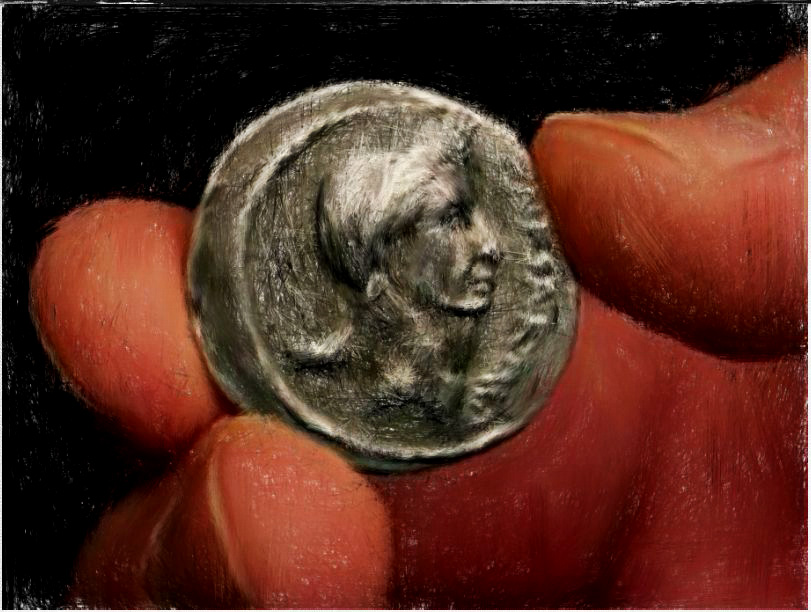 Christianity has always operated in an uneasy truce with the empires that govern the world around them. Throughout history, the people of God have lived as strangers and sojourners among the kingdoms of the mighty men of old, and to varying degrees found peace and coexistence with them. Very rarely have they been a kingdom of their own, and the times of kingdoms were marred with infighting and born of a desire to be like the other nations surrounding them. The kings frequently struggled to preserve their reigns, and the most prosperous kings in Israel’s history were judged by God for doing evil in His sight. God eventually led them into exile, a defeat of such magnitude that it forced His chosen to be a people again, set apart and strange. His subversion extended even to their well-meaning messianic dreams, which embellished God’s deliverance into a military conquest and return to the kingdoms of old. When God finally fulfilled the kingdom restoration they dreamed of, He hung their mighty ruler to die on an empire’s cross. The victory of God was not over His people’s temporal enemies but their final enemy: death itself. God’s messiah changed the calculus governing the affairs of men, their rules for authority and kingship and power. Jesus inaugurated a kingdom of open peoplehood, a culmination of the promise that God would be King over His people, and they would grow to gather from and convey blessing to the whole world.
There is an uncomfortable truth at the heart of God’s story that we must reckon with now: we long for kings when we believe that God’s headship is not enough.
The American church of the last 100 years has often flirted with political power. America itself has always been a land of immense promise in our imagination, a place where the divine right of the old kingdoms was democratized, where divine blessing manifested not as enforced rule but as a popular consensus. In the 20th century, full of technology and war and the energy of the Great Awakenings, the church was a place of common cultural grounding, a shared quasi-nationalistic identity. Religious belief was a guiding consensus element of national identity, expected of men of influence and injected by government fiat into currency, classroom and national pledge. Jesus became the border guard of our kingdom, separating us from the Axis and the godless Communists and the Muslim powers of the East.
In the last 35 years, the American church has become particularly aware of its power as a voting block. People of faith have gathered to voice their opinions on a number of social and political issues that have been reshaping the cultural and political landscape of the country. We especially oppose the pluralism inherent in the shift in national consensus identity from Judeo-Christian Enlightened Man to inclusive, post-religious Enlightened One. We have become a potent voting bloc and a fervent and well funded special interest group in American political life.
I believe that is wrong.
What I fear is that in the course of our political engagement we have started seeking kings so we can be like the other nations. For every David we find (if we find him at all) we are plagued with ten Sauls, men disingenuously consulting ghosts and forging bad pacts to win victories in conventional terms, hoping to be retroactively blessed because they pursued it in the name of God’s kingdom. We align ourselves with political leaders who claim to be like us, but who all too often exploit our fear and discomfort to accrue power to themselves and to pursue their own political ends.
We do it because we believe that we have no choice. We do it because we are convinced that if we don’t follow the rules of presiding empires then we will be cast aside or persecuted. We want to protect what we love and store up the rich blessing that God provides and we see no other way to do it but through a king.
The trouble with Jesus is that His kingdom, a kingdom of people, transcends nationhood and call us to radical love and sacrifice. God’s Messiah is the fulfillment of Saul and Solomon and Caesar — the God-king whose kingdom is one of wholeness and unity and everlasting peace. He speaks of purchased fields and mustard trees and unfair wages and forgiveness, and He does not idly assent to defend the political fortunes of particular nation-states. His kingdom and people overcome by story and blood, not might or power, as He patiently asserts His reign over the world. When the end comes, He will conquer with a sword in His mouth, it His powerful right hand, and He will judge the nations alongside and through His people.
What temporary power we might hold to enforce our faith through political action is tempting because we believe that we will exercise it fairly. We see our political will as a rare blessing from God to legislate His kingdom into the world, not as a political enshrining of His redemption but as its agent of enforcement. While the government plays a role in protecting from evil and promoting justice and general welfare, we hope it to go further to enforce the particular ethics of our peoplehood on others. We hope that governmental enforcement of the outcomes of our transformation will somehow lead people, in reverse, to their Cause.
We become convinced that we must act because our way of life will be dismissed otherwise. And in defense of conscience and of kingdom, we relive the sins of Saul and David and all the kings who trusted in their own power above the Lord’s, even when they thought they were acting in service of His work. We count our armies and ask Him to bless that work while He beckons us to be His people and desires to be our King. He jealously guards His loving dominion over us, and He shares that dominion and worthiness of worship with no one but His Son.
At our best, at our most true, we are a peculiar people in the world, people who have no home apart from the one we create together with Him and with each other. He works through us to preserve and shape our communities and our culture through radical, sacrificial love. His kingdom work transcends social morays and political boundaries. He is not limited by the boundaries of our expectation and He does not take kindly to the notion that there are places He cannot go. His Spirit wind blows where it pleases and He does need us to take Him there by force.
Ultimately, we are His and He is our king. Ours is the task of loving and serving and living out — His is the finished-but-still-finishing work of His kingdom’s rule. The kingdoms of this world are becoming the kingdoms of our God and King, and we are His children when we like Sarah call Him lord and do not fear anything that is alarming. We persevere through love not into violence and scarcity but into abundance, rest and victorious peace.
When Jesus walked the earth, He resisted the temptation of Satan and of the crowds and even of His disciples to fulfill the militaristic, messianic Kingdom dreams of His day. As His servants-turned-friends, we should expect no less a temptation, and no less a calling, for ourselves.
“One day you’ll wake and the curse will break
And even you won’t be the same.
Your hope is not wasted on a day when everything will change.”
Did You Check Your Brain at the Door?
“The Bible Says It! I Believe it! That Settles it!”
I grew up underneath this narrow umbrella as a Southern Baptist in a small town. My father was a bivocational music minister so I was at the church literally ever time the doors were open. I grew up immersed in the stories of the church.
But, there was an unspoken rule that permeated my every encounter with God and the Bible. Don’t question the Bible! Don’t think! Just accept everything by faith! My understanding of “faith” was basically blind belief. I was supposed to accept what the Bible says because it can’t be proven. No wonder my colleagues in science laugh at the Bible! It is nothing but a bunch of fairy tales. Might as well base your life on Grimm’s fairy tales or Walt Disney’s animated shorts from the 1930’s. True, there are some morals to be learned, but to think the stories were real? Come on!

Modern day Christians have no one to blame but ourselves. We built this castle of stupidity and now we defend it with great fervor and animation. Let me tell you a story.
It is 1925 and the town of Dayton, Tennessee has fallen on hard times. Economy is bad. Really bad. One of the town officials notices an ad in the paper placed by the ACLU. The ad offers to pay for any trial that challenges the “Butler Act” forbidding the teaching of evolution in high school. The official sees the opportunity to bring fame and fortune to Dayton. Problem is, they have to find a teacher who has violated the law and have that teacher arrested.
The local high school biology teacher refuses. But a man by the name of John Scopes has been filling in as a substitute teacher and agrees to admit he taught evolution during one of his brief stents as substitute teacher. So, he is arrested while playing tennis and taken into custody.
Enter H. L. Mencken. This famous American writer and reporter worked for a paper in Baltimore and saw an opportunity to promote his ideas regarding the superstitious nature of religion. An avid follower of Friedrich Nietzsche, he was an avid non-believer. He asked the famous lawyer, Clarence Darrow to take on the case because of his low popularity after representing the kidnappers of the Lindberg baby. Mencken had a very narrow agenda. He wanted to prove that anyone who doubted evolution, and by inference, science in favor of a superstitious belief in God was “anti-intellectual”. Thus was born and reinforced the idea that all Christians are ignorant, superstitious, uneducated individuals. This stereotype has been perpetuated in the movies, television shows, books, and in the media. And, frankly, we haven’t done much to dispel this impression!

The New Testament concept of faith is based on the Greek word pistus. It’s meaning: to trust in something for which we have seen the evidence. Evidence! That means we have to think and analyze the evidence. Faith is NOT blind belief. Does the Bible imply that we should never think on these things? NO!
The heavens declare the glory of God. Therefore, LOOK, ANALYZE, MEDITATE on God’s creation! We see this command over and over in the Bible. We are told to “meditate” on the Word of God. That means to read, think about, and analyze God’s word in order to apply it to our lives. Jesus, in fact gave us the greatest command regarding the mind:
And he answered, “You shall love the Lord your God with all your heart and with all your soul and with all your strength and with all your MIND, and your neighbor as yourself.” Luke 26:27
In fact, Jesus set the example of how to think and analyze the thoughts and actions of his enemies before responding with deeply thought out philosophical “arguments”.
I bring this up because I ran across and excellent post about Christian “anti-intellectualism” and I recommend the reader read and savor each quote:
http://thegospelcoalition.org/blogs/justintaylor/2013/03/11/5-theses-on-anti-intellectualism/
So, go pick up your brain and take it with you everywhere you go and show the world that Christians can think and have the only worldview based on real events, real people, and sound history, science, and philosophy. That is the only way we can begin to change today’s culture!
Book Signings Are NOT About the Books!
 Why do authors hold book signings? To sell books, right?
I’ve held at least a couple of dozen book signings over the years. I can think of at least three of these events where I sold almost 50 books. But, the others? Well, at one signing I didn’t sell a single book. In fact, not a single person even stopped at my table. Most of my book signings result in selling less than a dozen books. So, why continue to work so hard to have a book signing?
It’s the people. You can’t meet people face to face on Amazon or Barnes & Noble websites. You can’t reach out and touch someone through their Kindle or Nook. But, you can look someone in the eye over a book signing table. And, most importantly, you can hear their STORY.
This is what life is all about — sharing our stories; writing our stories; continuing the Story that God has written for our lives. And, there is one story that always plays out at my book signings. It goes like this:
A man in his mid forties walks up to the table. Before him are my first two fiction books, “The 13th Demon” and the newest, “The 12th Demon”. Sitting to my side is my co-author, Mark Sutton and in front of him is a pile of our book, “Conquering Depression”.
The man pauses in front of me and picks up “The 12th Demon”. But, his gaze averts slightly to the pile of depression books. Why? Because that book is the real object of his quest. However, a man cannot admit his is depressed. Certainly not a stranger and certainly not even to himself. But, that book is tantalizingly just out of reach. Maybe if he shows interest in the fiction SOMETHING will happen and he might get his hands on the depression book. There is a deep seated discomfort with his life; a gnawing desire to face the beast head on and kill it; but to do so is to admit weakness, failure, the inability to FIX it! And so, he peruses the fiction book instead and asks me the inevitable question.
“I have a (son, daughter, nephew, grandson, granddaughter) who likes scary books. Would they like your book?”
“If they like books by Ted Dekker or Frank Peretti they will like my book. It’s about vampires so if they like the Twilight series, they’ll like my books. And, don’t worry about the subject. There is a redemptive message in the book. It does have a Christian point of view.”
The man looks at me and I sense a profound sadness. “That may be a problem. You see he/she has renounced their faith. He/She’s an atheist now.”
Ah, here is the question. Here is the heart of this man’s sorrow. It is most difficult to lose a child to death. But, to lose a child to atheism? That is a lingering death that drives the knife into the heart day after day. How do you deal with this? How do you love someone when they no longer share that faith connection with you? Is it possible?
I tap my second book. “One of my minor characters in this book wrestles with just that issue. She has become an assassin but early in life professed Christianity. She has wandered far away from her faith. In fact, she can no longer consider the possibility that God exists because if He does, how will she ever be forgiven for her heinous acts of violence and murder? Is it possible to move beyond God’s forgiveness?
He just looks at me and his gaze drifts for a second to the depression books. “I don’t know . . .”
I am an apologist; someone trained in the defense of the truthfulness of the Christian faith. My discipline utilizes historical, scientific, and philosophical evidence as fuel for logical “arguments” in support of Christianity. But, I have learned the hard way that when someone loses their faith, rational discourse; reasonable debates; objective evidence will fall on deaf ears. It is because evidence is not the issue in question. Most people who fall away from their faith do so because they have been hurt or angered or disillusioned by well intentioned “Christians”. This hurt comes from someone in a position of authority or respect. Bottom line is the person is hurt; a heart felt need. NOT a head need!
I ask the man a simple question: “What happened between the two of you?”
He looks at me as if I have read his mind. What then unfolds is a tale of woe and pain. As with previous such encounters the story is one of a nasty divorce between the person’s parents or an abusive parent or a figure of trust who violated that trust. Bottom line: people will always let us down. Always!
I reach for a depression book. “Listen, you are depressed. This book is what you need. You can buy my books for your nephew/niece/son/daughter. My fiction books will give them something to think about. But, until the two of you repair your relationship, he/she will continue to be distant from their faith. Love him/her. Simple and clean. Show him mercy. Show him forgiveness. Show him the love of Jesus. That will bring him back. Then, one day, if he has questions that need hard factual answers, contact me and I’ll give you some resources. But, for now, he needs your love. In fact, both of you need love.”
I tap the second book again. “In this book the assassin’s anger and violent nature can be traced back to her father. This will provide an angle from which you can find common ground with him.”
He bought all three books. But, what he walked away with was not something to read. It was something to think and pray about. And, a little dose of hope.
 I had listened to a sermon at First Baptist Church Orlando the night before. In that sermon, the pastor talked about Jesus being surrounded by a rambunctious crowd when Jarius came to him requesting Jesus heal his daughter. Jesus was headed for Jarius’ house when something happened. He was interrupted. He felt the power go out from him and stopped to ask his disciples “Who touched me?”
Can you imagine the disciples looking around at the milling crowd. I’m sure they wanted to say, “You’ve got to be kidding, Master. This is worse than Disney World on the 4th of July! You want us to tell you who touched you? Look around! Pick someone at random!”
Or something like that! Of course, Jesus didn’t ask them because he wanted an answer. He asked them to see if they were paying attention to the lowly, broken woman who had been shunned by society — bleeding and “dirty” and forbidden from touching ANYONE. Jesus wanted to know if the disciples had NOTICED. They had not. They only saw the powerful and wealthy Jarius. But, Jesus noticed the unnoticeable; the man or woman wandering up to the table in desperate search for answers to their pain; for healing; for the gently touch of a caring conversation or the kind brush of a hand on their shoulder. Jesus noticed this woman and praised her for her faith.
I will never forget this unique perspective on that account from John. I had never seen the woman as an interruption; a divine appointment unforeseen by anyone except God. THIS is why I continue to hold book signings. There will always be one person whose day I hope God will interrupt with a moment of hope and caring. And, I can only pray I will be there with the caring message God wants me to share. It’s not about the books. It’s about the PERSON!
Christmas Movie #1: Miracle on 34th Street
 And now, for some fun. Over the next few days, I am going to talk about three of my favorite Christmas movies. Movie #1: The 1947 classic, “Miracle on 34th Street”. I’m not talking about the later version shot in the 1990’s but the original starring a very young Natalie Wood and Maureen O’Hara.
Here’s the premise. It’s Thanksgiving Day and Doris Walker is the organizer for Macy’s Thanksgiving Day parade when she discovers the Santa hired for the parade is drunk. Out of nowhere, a man resembling Santa arrives to tell her of this tragedy and she asks him to take the place of the drunk Santa. This man proves so convincing, she hires him as Macy’s official Santa for the store. The man, calling himself Kris Kringle, delights children and surprises a mother when he tells her she can find a fire engine at a rival store. The mother tells Doris’ boss, Mr. Shellhammer of what a wonderful “gimmick” to let Santa steer mothers to wherever they can find the best bargain. Mr. Macy sees it as a fantastic development and wants Kris to continue to be the store’s Santa, only Mrs. Walker has fired him when she realizes he claims to be the real Santa Claus.
Wrapped into this story is Doris’ young daughter, Susan. Doris has told Susan all of her life there are no fairy tales and she has to believe in the harshness of reality. This comes out of Doris’ disappointing marriage to Susan’s father that ended in divorce. A next door neighbor, Fred Gailey warms up to Susan and takes her to see the new Santa. Susan is skeptical, of course but is shocked when Kris speaks to a Dutch orphan who cannot speak English and ends up singing a Christmas song with her in her native tongue.
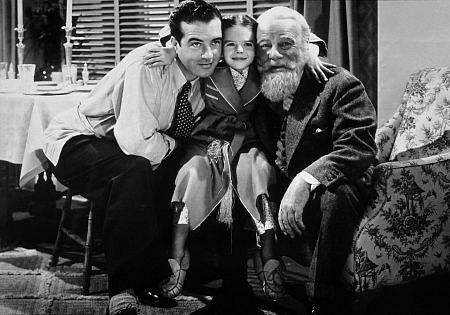 But, there is a negative development, of course. For Kris to stay on, he has to be evaluated by the store’s neurotic psychologist, Mr. Sawyer. Mr. Sawyer thinks Kris is dangerous and after he fires a young man who works as a janitor because he dresses as Santa Claus for an orphanage, Kris is outraged and pops Sawyer on the head with his cane. Sawyer has him arrested and committed and now, there is no Santa for Christmas. Mr. Gailey, the attorney, takes on Kris’ case and because of this, gets fired from his firm. I won’t tell you how he manages to get Kris off or how Kris proves to Susan he is very, very real.
This movie is a delight and explores so many themes that resonate with our society today. Here they are:
1 — Christmas has been hijacked by commercialism. If it were not for the power of the almighty buck, I believe our government would have already passed laws to make it illegal to use the word “Christmas” in public since it carries a heavy religious meaning. In many ways, Christians should be thankful we are such a greedy society. Stores that used to put up “Happy Holidays” are now threatened with boycotts and have returned to using “Merry Christmas”. The only reason? Money! Here is what Alfred, the young janitor had to say about this:
“There’s a lot of bad ‘isms’ floating around but commercialism is the worst. Make a buck. Make a buck. That’s all they say.”
 2 — Imagination is essential to the minds of children and adults. The recent death of the atheist Christopher Hitchens points out the great progress the “new atheists” have made in eroding the power of imaginative thinking. By depicting belief in God as a delusion, the new atheists have unwittingly destroyed the very thing that has allowed us to come up with art, music, and inventions that have sparked human progress: imagination. If we do away with any supernatural thinking, we do away with imagination! And without imagination, we are no better than animals, which is what these new atheists claim we are anyway. What this movie so eloquently shows is the struggle between harsh reality and playful fantasy. There is room in our minds for imagination and imagination is what separates us from the animal. Here is what Doris Walker had to say about how she wants her daughter to be raised:
“By filling their heads with fairy tales they grow up considering life a fantasy instead of reality.”
3 — Maybe our politicians are not so sane after all. I won’t comment on this very much but there is one brilliant quote from Mr. Shellhammer in talking about how “crazy” Kris Kringle is:
“Maybe he’s just a little crazy, like painters or composers or some of those men in Washington.”
4 — Christmas is more about the birth of the Savior in the manger than it is about shopping and partying and gift giving. But, somehow, Jesus gets lost in the shuffle. Here is what Kris Kringle had to say:
“Christmas and I are getting lost in the shuffle. Christmas isn’t just a day. It’s a frame of mind and that’s what has been changing.”
More truer words were never spoken. But there is hope. As Doris finally realizes:
“Faith is believing in something when common sense tells you not to.”
Watch “Miracle on 34th Street” and think on these things. Let it fill you with a sense of the divine; an appreciation for love and concern this time of year. Let it remind you and me that Christmas is about the Christ child who came for all of us; to bring us peace and love and mercy.



You must be logged in to post a comment.