Blog Archives
The Fulcrum

In the past few days, I’ve been involved with interviews that propose the question “Do Violent Video Games Make Teenagers Violent”. I’ve been preparing for this question for months as I research data on depression among young adults for the update of “Conquering Depression”. That book was released in February, 2001 and the world is SO much different now. My co-author, Mark Sutton, and I started talking about this update in May, 2012 when I became more aware of the prevalence of depression on an increasing basis in our culture. In a previous post, I talked about my shock to discover that in an artistic conference with 90% of people under 30 almost everyone admitted to having depression!
So far, I have been stunned by what I’ve learned just through the radio interviews. Young adults today see nothing wrong with playing violent video games in which they kill innocent people. They vehemently deny that violent video games or violent media produce changes in their behavior. And yet, the studies show just the opposite. Here is my analysis. There is a subgroup of teenagers and young adults, proportion unknown, who have the capacity to play these games and not allow them to effect their worldview. These kids all seem to have sound values, involved parents, high self esteem, and the ability to separate fantasy from reality. BUT, there is another segment of teenagers and young adults who are drawn to these games; who spend hours and hours immersed in these games; and who are unable to separate the fantasy from reality completely. It’s called the “Tetris Effect” and occurs when these gamers see elements of their game show up in their real world.
The problem and solution, as I have mentioned in my interviews is three fold.
1 — Violent video games and the video game industry continue to make these games. Violence and sex sells. But, they have also stepped up to the plate and put at least some type of rating on the games and a description of the content.
2 — Retailers are asking for IDs on teenagers to make sure they aren’t purchasing a game meant for over 17. I’m not sure how many of these retailers are doing this.
3 — And, finally, parents are not engaged in what their teenagers are playing. They have no idea about the rating system, the description and content of the games, and that they can put a parental block on game consoles.
Perhaps we need to dig deeper to understand this problem. It is a cultural problem; a society that has abandoned values we once held high. Yesterday, I showed my readers an answer from my son on his take on the current state of this problem. But, he also gave me a solution. It is striking; stunning; and for me as a father, ultimately satisfying in a way no father can even begin to imagine. I was involved in my son’s choices throughout his childhood. My wife and I told our children over and over to make the right choices and we provided spiritual and practical guidance on how to do that. We allowed them limited freedom but strong boundaries. We emphasized that THEY had to learn discernment so they could make the wise choices on their own. I think my son has done so. Here is the remainder of his response to how to deal with a society that is incredibly violent:
Let’s start with the Lord. I believe that Jesus is the Messiah, the Christ, the Savior of the world. He is the Center of the universe, the Fulcrum of creation, the Mass towards which all created things eventually bend. He is the True Great Intelligence, the Author of the Story we inhabit and inherit. He is beyond and above all created things (even time), yet He orchestrated our mechanics so that we are a part of His full work. He is the True Doctor – fire and ice, humor and majesty, grace and justice. He is the missing piece that resolves all of our mess into a beautiful whole. He is in all and through all, pulling all creation towards redemption. He is the true Word, the unbroken Orthodox Logos passed from Adam, Noah and Abraham through Jesus and His church to this present day. He is the Power, through the cross, to restore creation and heal wounds and deliver sinners from hell. His is all glory and dominion.
We, His church, are heirs to (and stewards of) that dominion. Filled with His love and emboldened by His Spirit, we are His explorers and heralds. We are His captive train, full proof of His sure and complete work of redemption, and a promissory note of that work’s fulfillment and true expression. We are not just beggars with bread – we are vagabonds and explorers who have been to the lost city and have seen its hidden riches. We are maps and signposts to a good Kingdom. We are evidence that the stories are true.
That Spirit of freedom, of equality, of deliverance, is the root of my passion, the theme of my song.
# Yesterday’s entry was here.
Jesus answers violence with Himself, a man of peace whose Kingdom is of peace. We are His body and temple, His bride and His family; therefore, we are peace as well. We show that peace by our love. Revile us? We love. Strike us? Love. Hate us and wish our destruction? Love and more love. God is the center of the universe, and His heartbeat is love, in mercy and in justice. His is the judgment, so filled with His Spirit and trusting in His promises, we love.
We love actively. When we love our enemies, we act in peace to both acknowledge their worth and call out the oppression in their actions. When we love one another, we do so honestly, in full faith and trust. We also do so in openness and diversity, undoing the trendy perversion of tolerance by trusting the Holy Spirit to build the community He wants, the Body He desires, rather than the same-painted tribes of our comfort or preference.
We love comprehensively. We must show that in the face of man’s deprivation or God’s plenty, our community is one of love. Jesus’ tribe is different: a God without a land, a Temple in our hearts. We must meet extortion with generosity, war with peace, hate with love.
We can only do this from a place of victory. If Jesus is not King, then we must fight to protect what we have and who we are because we might lose. We would “build the kingdom using the devil’s tools” because the are the only tools we have. We are pagans and fools, old gods in a new land with no one to worship us but ourselves.
Or.
If God is King, if Jesus is the true Caesar, the final Lord of Lords and the Center, then what do we have to lose? Who do we have to fear? If we give Him the space, He will perfect our love, overtake our dreams and ambitions with His own, and utterly, fully cast out all of our fear. We can live generously, love freely and walk wisely because He is true and His Way is true. If the stories are true, if the treasure is real, then with love and peace we can sell all we have to buy the field and the pearl. In so doing, we model Christ – King of peace and love and wisdom and justice – who gave His all to deliver us from sin and redeem all of creation. When they see His love in us, they can choose Him or reject Him, but they cannot break away from His grasp.
This is what I struggle in my unbelief to take hold of every day. This is the rest towards which I trudge and march and dance in hopes of one day fully entering. This is the redemption, the Truth on its way to set me free. This is the good news in which I stake my all, and for which I would give all I have away. This is what I wish and pray for every struggling brother, for every doubt, and this is the truth I pray against the enemy’s deception.
If you would like to discuss these issues with me in an interview, drop me an email via the CONTACT tab and I would love to accommodate you.
Are We All Equal?
There were only two women in my medical school class of 100 students. Back in the late seventies, women doctors were few and far between. It was a time of women’s “liberation”. Frankly, I didn’t get why women were not treated “equally”. My mother and father had set an example for me. My mother was a working woman back in the 1950’s and 1960’s right up to her retirement as a school bus driver in the mid 1970’s. My father shared the job of cooking and cleaning. Every Saturday morning, he swept the entire house of all the dirt and dust of the prior week. I never heard him say anything about “women’s work”. Both of my sisters were career women even after they married and had children. I guess I was fortunate that my parents taught me that we are all equal in the eyes of God no matter what our gender, religion, race, or stature in life.
That particular belief did not come from a political point of view. It came from our devotion to the teachings of Christ. As I mentioned two posts ago, I want to look at the teachings of Jesus of Nazareth in this Christmas season and focus on those teachings without focusing on the religious claims about Jesus. I maintain that Jesus of Nazareth taught us powerful lessons that transcend culture and religion; lessons that even an atheist or agnostic can live with. In fact, Jesus taught us powerful lessons that everyone should apply to our lives.
Stop for a moment and consider the status of women in first century Palestine. Among the Roman culture, women were considered objects of sexual conquest and were often the center of many pagan religious practices. In the Jewish culture of Jesus of Nazareth, women were very low in status. They were little better than possessions. A man could divorce a women just be stating it was so. Women who had serious illnesses were considered “unclean” and “untouchable”. If a women was caught in the act of adultery, she could be stoned — forget about the man’s transgressions! The testimony of a woman was useless and never to be taken as truthful.
However, we see an entirely different attitude toward women in four encounters Jesus had with a woman of his time. Each encounter is a teaching moment for us all to understand.
First, Jesus met a woman at a well. This woman had been married many times and was considered an adulterer. She came to the well in the heat of the day hoping no one would be there to make fun of her. She was also a Samaritan, considered lower than low; the most undesirable of the undesirables by any good Jew of the day. She met Jesus of Nazareth that day. He did the unthinkable and SPOKE to her! He told her all about herself. He told her that the water she drank from this well was temporary but that she should seek the water of spiritual fulfillment.
Here, Jesus illustrates one of the first of many very powerful lessons that all people are of equal value and of equal worth.
Second, Jesus was dining with a religious leader of the day. A woman appears suddenly at the door. She ignores the ridicule and chiding of the religious leaders and comes to Jesus. She produces a vial of expensive fragrance, pours it on Jesus’ feet and his head and washes his feet with her tears and her hair. While the rest of the men present ridicule the woman’s actions, Jesus accepts them as a gift and says that wherever and whenever his teachings are told down through the ages, this woman’s devotion will be remembered.
Third, is the most beautiful account of the woman caught in the act of adultery. We know from the account that this was a setup to trap Jesus; a trap set by the religious leaders of the day. Jesus literally disarmed the men ready to stone the woman with one of the most powerful statements in history, “Let he who is among you that is without sin cast the first stone.” Then, Jesus does not condemn the woman but tells her she is free and to “go and sin no more”; that is don’t allow yourself to get into the situation you were just in that almost led to your death. Learn from this and CHANGE your life for the better.
Fourth, it is very interesting that the accounts of Jesus’ resurrection tell us that the first people he appeared to were women! A woman’s testimony was worthless! If the story of the resurrection were false; that is, fabricated by men. they certainly would NOT have used women as the first line of testimony to the resurrection. Whether you believe this fact or not, the idea that Jesus would appear to women first is significant. His acknowledgement of women’s worth for its time was astonishing.
We see in these few examples (and there are many more) that Jesus of Nazareth disregarded a person’s race (Samaritan), gender(female), and ethnic background (again, Samaritan). In fact, Jesus had harsh words for the religious leaders of the day calling them hypocrites (More on this later!). Jesus seems to be teaching that we are all equal in his eyes. Amazing, isn’t it? Don’t believe me? Look at this statement from a letter Paul wrote to the church in Galatia:
There is neither Jew nor Gentile, neither slave nor free, nor is there male and female, for you are all one in Christ Jesus. (Galatians 3:28).
Where did we go wrong? How did mankind continue to claim to be followers of Christ in western culture and still embrace the bigotry of race and slavery and the sexism against women? Because we are man; we are broken; we listen but we do not learn. Even our founding fathers ignored their own words from the Declaration of Independence when it came to slavery:
We hold these truths to be self evident that all men are created equal and are endowed by their Creator with certain inalienable rights.
It has only been in the last forty years that we have finally given race and sex a fair deal. But, Jesus taught this fairness two thousand years ago!
What have I learned from the teachings of Jesus of Nazareth that I think all men and women should embrace:
Each person is unique and worthy.
No person is better than another.
No person is greater than another.
One should NEVER be looked down upon because of a difference in race, gender, religious beliefs, or stature in life.
We should look upon EVERYONE with respect as our equal.
Once again, Jesus of Nazareth has taught us to do the HARD thing because it is the RIGHT thing to do!
Turn the Other . . . What?!?!?
I was asked to talk to an irate patient. I went to the patient’s hospital room and tried to soothe his ruffled feathers. After all, I am regarded as a very calm person under pressure; a peacemaker. The man claimed we had been experimenting on him during his recent diagnostic test in the department of radiology. I calmly explained the procedure he had undergone and thought I had succeeded in calming the man down. Then, he cut his eyes in my direction, let loose with a long string of vile curse words and called me a liar.
Something popped behind my eyes and anger took over. I wadded up his complaint sheet, threw it at his face where it bounced off of his shocked and surprised eyes and then told him I hoped he died the next day during his surgery. I was in a daze after that and found myself sitting at my desk down in radiology wondering “what just happened?”. As you can imagine, so did the administrators who had sent me to the man’s room to calm him down and answer his admittedly baseless complaints. Instead, I had told the man I hoped he died! Where did that come from? Why had I reacted in that way? How did I allow this man to push all of my buttons?
It is no mystery to anyone that we live in a very angry, frustrated culture. Road rage is at all time highs. Revenge is encouraged and there are revenge “sites” on the internet. Our entertainment glorifies blowing someone away. We’ve taken Dirty Harry’s advice to heart and we hope that someone will “Make my day!” so we can unload onto them. Rage and fury and revenge are the emotions of the day. They fuel the hate and violence in the Middle East. They have spread across the globe in wave after wave of destruction and death. Where did we go wrong?
I want to explore the simple teachings of a rather simple man, a carpenter, a philosopher, a teacher who changed the world. Put aside the trappings of deity and savior we associate with Christ for the moment. Let’s look at his words. Words spoken by a simple man to simple, struggling people. The populace of first century Palestine were not too different from today. They were under repression by a very effective, cruel Roman government. Their king was a vile man with perverted tastes in pleasure and a ready tendency to lop off the head of anyone who displeased him. Their local leaders were strict, legalistic religious leaders who were devoid of compassion, mercy, and love. They were being taxed into poverty; crucified for speaking out against the government; sold into slavery at a whim. In short, these people were ANGRY.
So, why would Jesus of Nazareth, regarded by the people of this era as a future king and conqueror, tell these angry people thirsting for vengeance that the best response to an attack on their person was to “turn the other cheek”? What? Be a coward? Bow to the repressive and abusive leaders around them? Worse, don’t fight back, even in self defense?
This teaching, more than any other by Christ, has been discussed and explored down through the centuries. In fact, it has been claimed that a follower of the teachings of Christ must be a coward if they are true to those teachings. But, I believe, this is a very poor understanding of the teachings of Jesus of Nazareth. I may be a simple man with no deep background in theology or Christian doctrine but I believe there is a deeper, more profound thought here than just turning tail and running.
As a physician I am aware of a condition known as the “fight or flight” response. When we are threatened physically or mentally, our body goes into flight or fight mode. Adrenaline kicks in, the heart races, the lungs bring in more oxygen, blood is shunted from the skin and gut to the brain preparing us to either stand and fight, or to run away. This physical reaction is totally beyond our ability to prevent. But, it is not beyond our ability to control our “response” to this physical “reaction”.
The remarks of Jesus of Nazareth must be taken in context. Not only does he tell us to “turn the other cheek” when we are struck on the cheek, he tells us to go the extra mile, to carry the extra burden. When taken in its total context, there is a deeper meaning here. I believe what Jesus is telling us is to deny our simple, easy “reaction” to fight and to pursue a thoughtful, considered “response”. In other words, don’t fly off the handle! Stop the adrenaline surging and the purely animal instinct to fight or to flee and think. After all, we are human beings. We have considerable options in the thinking category over animals. Why not use a thoughtful response? Why not do the unexpected? Like, turn the other cheek? Or, offer to carry the soldier’s burden for another mile?
When we take this initiative, we have taken CONTROL of the situation. We are now in the driver’s seat, not the offender. This will throw the offender off his/her game. It might even stop them in their tracks and cause them to rise up out of their primal anger to the higher levels of cognitive thinking. A measured response is far better than an instinctual reaction. Now, I’m not talking about life threatening situations. I’m not talking about self defense. And, I don’t believe Jesus was talking about this either. He was talking about the day to day interaction we have with ordinary people we encounter along life’s path. A measured response gives some degree of respect and a glint of wiggle room to the offender. Often, the problem with the offender is a deep seated problem that is unrelated to the anger that person is showing you. Maybe they need someone to stop them in their tracks and make them consider another option. Maybe they need someone to stop them from reacting and encourage them to respond.
I might be wrong here but there is another verse not uttered by Jesus of Nazareth that is profoundly true,
“A gentle answer turns away wrath, but a harsh word stirs up anger.”
Proverbs 15 verse 1. I might be wrong, but in this season of gift giving and peace to all men, why shouldn’t we heed the words of Jesus of Nazareth and turn the other cheek; go the extra mile; repay anger with a gentle word; do the unexpected.
So, what happened to my patient? His son appeared in my office about an hour after that exchange. By then, I had been interviewed by a couple of administrative reps about MY behavior. The son smiled at me and said, “Thank you for standing up to my father. He has run over everyone he meets because he is afraid that he will not wake up from his surgery tomorrow. But, he told me to tell you that he was going to survive just to prove you wrong. So, I know this sounds strange, but you actually helped him by showing him how he was acting towards others. I want to thank you.”
Who would have thought? But, as positive as this may have turned out, I was the one who suffered. I was the one who felt horrible for losing my temper. It may have worked out for the best, but this is the exception, not the rule. Anger seldom has positive outcomes (except when Jesus needed to drive the thieves out of the temple).
Jesus said:
“You have heard that it was said, ‘Eye for eye, and tooth for tooth.’ But I tell you, do not resist an evil person. If anyone slaps you on the right cheek, turn to them the other cheek also. And if anyone wants to sue you and take your shirt, hand over your coat as well. If anyone forces you to go one mile, go with them two miles. Give to the one who asks you, and do not turn away from the one who wants to borrow from you. You have heard that it was said, ‘Love your neighbor and hate your enemy.’ But I tell you, love your enemies and pray for those who persecute you.”
Here is what I learned from the teachings of Jesus of Nazareth:
RUR — Resist the Urge to React. Rather, take time to THINK and then RESPOND.
Control — By avoiding a blind reaction, you can take some measure of control of the situation (maybe not completely but at least your side of the situation).
Empathy — An expression of anger often is an indicator of a deeper problem and you might just happen to be in the wrong place at the wrong time. Looking for the pain behind the anger might help you to understand why this person is so angry.
Love Your Enemy — Here is the HARD thing to do. But, in this teaching we see the necessity of looking at the other person as an individual with a worldview and a motive that we might understand if we were in their situation. It is hard to love someone you loathe; someone who is lashing out at you. But, an attempt to at least understand their point of view and then trying to find a way to respect that person as a PERSON might help defuse the situation. In other words, sometimes we have to do the HARD thing because it is the RIGHT thing!
I’m a Doctor, Not a Philosopher!
Doctor McCoy made this profound statement to his friend, the logical Vulcan, Mr. Spock during the original Star Trek episode. I have always had a hard time understanding philosophy. And so, this statement made me sit up and take notice:
“Christianity is not a religion. It’s a philosophy!”
I was somewhat surprised to hear Bill O’Reilly make this statement Wednesday night in his conversation with an atheist. The atheist, as expected, protested vigorously that Christianity IS a religion. Bill countered with a valid argument. Being a part of Catholicism or being a Methodist is “religion” based on the “philosophy” of Christianity.
So, which is it? Is Christianity a religion or a philosophy? Here are 5 definitions of the word “philosophy”:
Examination of basic concepts: the branch of knowledge or academic study devoted to the systematic examination of basic concepts such as truth, existence, reality, causality, and freedom.
School of thought: a particular system of thought or doctrine.
Guiding or underlying principles: a set of basic principles or concepts underlying a particular sphere of knowledge.
Set of beliefs or aims: a precept, or set of precepts, beliefs, principles, or aims, underlying somebody’s practice or conduct.
Calm resignation: restraint, resignation, or calmness and rationality in somebody’s behavior or response to events.
Look at the fourth definition. Maybe Bill has a point. Christianity is a set of beliefs or aims underlying the practice or conduct of a person who follows the teaching of Jesus Christ. Ravi Zacharias, well known speaker and apologist makes the statements:
Religion begins with man. Theology beings with God.
Ah, here is a valid point. Religion is man’s attempt to organize the philosophy of Christianity into a system of everyday “practice”. Religion defines the “rules and regulations” of the “practice” of Christianity as an outward manifestation of its tenets and beliefs. Religion, then, is a way of living out or bringing the inward belief system of Christianity into everyday practice.
And, here is the problem. By inserting “man” into the process; by putting “man” in between the teachings of Christ and the everyday human behaviors based on those beliefs, there will be an inevitable watering down, and sometimes down right perversion of those tenets and beliefs. Man is an imperfect creature and based on our history, we can really screw up even the most perfect system of beliefs.
And, in defense of Bill’s atheist guest, complaints about “religion” can be valid. It is the ABUSE of Christianity, as well as other “philosophies” down through the ages that have led to charges that those “religions” are dangerous. The new atheists claim that all “religion” is inherently dangerous and should be outlawed. They claim that teaching children “religious” concepts is equal to child abuse. There may be some valid points here. After all, if a child is taught to hate anyone thinking differently from them and tells them it is glorious to strap a bomb to their chest and kill dozens of people, then I would whole heartily agree that “religious teachings” can be dangerous when they veer away from the underlying pure “philosophy” of that man made religion.
However, the potential danger of religion does not take away from the peaceful “philosophy” of Christianity. After all, Jesus of Nazareth never asked his disciples to kill or maim or hate or carry out revenge. He rebuked Peter when the man cut off a guard’s ear in the Garden of Gethsemane.
I would like for us to consider the possibility Christianity may be the most valid thought system and belief system in the history of humanity. I would like to explore the teachings of Jesus of Nazareth. Over the next few days, as we near the celebration of the birth of Jesus, I would like to look at the “philosophy” Jesus taught to his followers. Was it dangerous? Was it controversial? Is it dangerous today? Should Christianity as a philosophy be labeled as dangerous by today’s culture? Are we justified in outlawing any expression of the celebration of “Christmas” at this time of year?
Come back in the next few days as I explore the pure teachings of the man, Jesus of Nazareth. In deference to those who are atheists or agnostics I will discuss the teachings of Jesus from his strictly human point of view. I think that we will find that no matter what we may now believe about Jesus Christ in our individual “religions” that his teachings are universal and can become the foundation of the best way we as humans can conduct ourselves in this day and age of fear, anger, hate, hopelessness and coming darkness.
Can Christians Make a Difference Anymore?

I am stick to my stomach!
I am repulsed beyond repulsion!
I cannot believe what I read last week.
Two medical ethicists working with an Australian university have written a post in the Journal of Medical Ethics that if abortion of a fetus is allowable, so should be the termination of a newborn.
That’s right! If you missed your chance to have an abortion, then just have the newborn killed! And, we’re not even talking about throwing babies in the fire to worship Baal!
Here is more of what they said:
“Alberto Giubilini with Monash University in Melbourne and Francesca Minerva at the Centre for Applied Philosophy and Public Ethics at the University of Melbourne write that in ‘circumstances occur[ing] after birth such that they would have justified abortion, what we call after-birth abortion should be permissible.’”
They want to change the name of such a “procedure” to “after birth abortion” instead of infanticide because it
“[emphasizes] that the moral status of the individual killed is comparable with that of a fetus (on which ‘abortions’ in the traditional sense are performed) rather than to that of a child.”
You must read this article NOW at this link:
Why am I making such a big deal, other than the obvious reasons this is INSANE and WRONG?
We have seen the devaluation of human life before. When humans become mere chunks of flesh or “meat sacks” then we have lost our way as humans. We are indeed animals. No surprise here. Look what Paul said in Romans 1:
For although they knew God, they neither glorified him as God nor gave thanks to him, but their thinking became futile and their foolish hearts were darkened. Although they claimed to be wise, they became fools and exchanged the glory of the immortal God for images made to look like a mortal human being and birds and animals and reptiles.Therefore God gave them over in the sinful desires of their hearts to sexual impurity for the degrading of their bodies with one another. They exchanged the truth about God for a lie, and worshiped and served created things rather than the Creator—who is forever praised.
Now, I have friends who are atheists, agnostics, evolutionists, naturalists, Muslims, and Hindus. I cannot imagine a single one of them condoning the killing of a newborn because the mother and father no longer desire to raise the child. This transcends world views! This transcends philosophies and theologies. If we, as a culture, condone killing newborn babies, then we, as a culture deserve to disappear; be destroyed; be cast down and ground under like dust. The killing of newborns is NOT an act of a civilized nation. And, any thinking person MUST stand up to this! We simply must! For if we don’t, then we are no better than those who killed 6 million Jews because they were deemed “inferior”!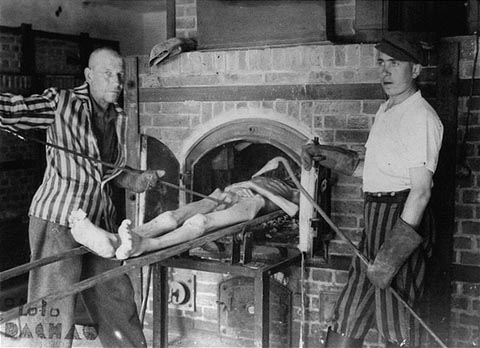
But in doing so, beware. To take a stand on anything implies that we have an absolute value system about that issue. It makes the statement that there are transcendent values; moral values that cannot be made or destroyed by human agency. Our Declaration of Independence labels these as “inalienable” rights. The right to LIFE, LIBERTY, and the PURSUIT OF HAPPINESS. Inalienable means a right that is transcendent and beyond human control. It CANNOT be taken away!
As published Christian authors, those of us who tell the Story of Truth can help to shape and mold public opinion. Writers have for centuries represent the forefront of cultural change mostly for the worse. But, we can do the opposite. We can write blog entries, essays, emails, Tweets, and, yes, stories that champion the kind of values that our culture has lost. We can be salt and light in the world, raising the beacon of Truth to a world steeped in darkness and evil. If we don’t speak up; if we don’t put into words our outrage over such changes in society, then God will hold us accountable for every letter, every word, every paragraph that was put forth for the world to see that failed to raise the light of Jesus Christ.
What do you think? What is our responsibility as followers of Christ? What can all of us, regardless of beliefs, do to help reshape a broken culture?
F.A.Q.s From the Faithless
 I have been invited to speak at a breakout session at the upcoming Evangelism Conference for the Louisiana Baptist Convention January 23 and 24 in Alexandria, Louisiana at Louisiana College. I will be speaking Tuesday afternoon on Frequently Asked Questions from the “Faithless”. It will be a two part session covering six of the most importantly asked questions from skeptics and nonbelievers regarding the Christian faith. Here is my description of the presentations:
F.A.Q.s from the Faithless! Part 1 and 2
This presentation will be two 45 minute sessions. Each session will discuss three of the most asked questions by skeptics and nonbelievers regarding the veracity of the Christian faith for a total of six questions. In today’s culture of growing hostility toward the Christian faith, Christian’s MUST be prepared to answers these challenging questions and practice “pre-evangelism”. In fact, these questions are asked by Christians and our inability to answer these questions is at the heart of many who are leaving the Christian faith. Come to both sessions and learn simple answers to these challenging questions. This introduction to “apologetics”, the defense of the Christian faith will show you there are answers to these questions and there are reliable resources available to equip Christians with the tools we need to defend our faith! Be prepared to answers these Frequently Asked Questions from the Faithless!
 F.A.Qs from the Faithless Part 1
Question #1:
In light of the bestselling books by the “new atheists” such as “The God Delusion” or “God is NOT Great” the prevailing thought is that if you believe in God you are delusional. Or, as Stephen Hawking would say, you’re believing in a “fairy tale”. What kind of rational, reasonable proof do we have that the God of the Bible exists?
Question #2:
Science and faith are at odds and science is the enemy of faith. The Bible says kooky things like the universe is only 6500 years old when the Chinese have written historical documents older than that. So, what gives? Are faith and science enemies? How can a Christian believe in science and the Scriptures?
Question #3:
Why can’t everyone just leave me alone. It’s up to me to decide what is good and what is bad. Truth is in the eyes of the beholder. Why should I confine myself to YOUR truth. Is there such a thing as absolute truth?
F.A.Q.s from the Faithless Part 2
Question #4:
Speaking of the Bible, it seems to be an old book written over thousands of years full of contradictions. I’m sure it has been changed over time to fit the current political climate of the church. How can I believe in an ancient book that has changed so much over the centuries and is filled with so many glaring errors?
Question #5:
Earthquakes, floods, wars, famines, disease — the world is filled with evil and suffering. If there is a God, why does He allow these things to happen? Since they are happening, there must not be a God.
Question #6:
Millions and millions; possibly billions of innocent people have been killed over the past two thousand years in the name of Christianity. Why should I become a Christian and join the ranks of those who perpetrate these atrocities?
Got Questions? Get Answers!
Are Demons Real?
 I often get asked if I believe demons are real.
I was an intern just seven months after my graduation from medical school rotating through the emergency room. It was a cold February night and a raging icestorm had transformed Shreveport, Louisiana into a crystalline wonderland. Unless you were driving in the stuff or if you were homeless. Dozens of people were crowded into the emergency room waiting room trying to stay warm. The ER was divided into the surgical side and the medical side. If you were a victim of the “knife and gun club” you came to the surgical side. If you could walk through the door under your own power, you came to the “Walk In Clinic”. This is where I found myself on that cold, frigid morning.
“Groundhog, it’s your turn to see the next psych patient.” One of my team members informed me. I never figured out why my nickname was Groundhog, but it was appropriate given it was Groundhog day, albeit only 2 A.M. I reluctantly got out of my chair and headed to the far hallway where we kept the crazies. My job was simple. Evaluate the patient to make sure the “psychotic” behavior wasn’t induced by a medical condition and if not, then call the psychiatry resident to come and admit the patient to the psych ward.
I should have known something was up the minute I rounded the corner of the coldest hallway in the winter. Two policeman were leaning against the wall and neither one would meet my gaze. In fact, they were nervous, if not downright frightened. I looked down the hallway toward the examining room and noticed a sheen of water on the floor. The fluorescent light fixtures had been broken and shattered tubes hung from exposed wires sometimes sparking as I made my way through the inch deep water toward the examining room.
The door to the room was ajar and when I stepped it, I was met by chaos. The sink had been partially ripped from the wall and water was gushing onto the floor. The mirror had been shattered into a million pieces and mirrored glass covered everything. Something sharp had ripped open the cover to the examining table and its stuffing filled the air with particles. Our “Wood’s” light, a black light used in the diagnosis of skin fungus, hung by a wire and the black light made the gases from the broken fluorescent light bulbs glow with an unearthly purplish hue. And, there wasn’t a patient in sight. However, from behind the examining table in the back corner I head a raspy, deep throated breathing.
It was a rapid breathing, a guttural exhalation and inhalation like some rabid beast was waiting to rip out my throat. Slowly, I stepped around the end of the table. Crouched in the far corner was a tiny African American girl probably in her early twenties buck naked with her back to me. Her rib cage was retracting with each beastly breath.
“Ma’am, I am Dr. Hennigan. How can I help you today?” I said with trembling lips. My heart was racing and my mouth was dry.
 She spun around quickly and with a twisted, feral look on her face hissed at me and shoved her clawed hands at my face. I will never forget the sound of her deep voice or the look of absolute madness in her eyes. But, more than anything, I will always remember the unmistakable sense of evil that emanated from this tiny girl.
I stumbled my way out of the room and fell in the cold water. The policemen came and dragged me from the hallway. With shaking hands, I dialed the psychiatry resident and informed him of his new patient. “You might want to pick up a priest on your way down.” Was the last thing I told him.
Later on, I learned the girl had no drugs in her system and once she reached the psychiatry floor, she calmed down but continued to exhibit bizarre behavior. She did not fit any prescribed psychiatric profile and I never found out what happened to her.
Since that time, I have learned to listen to the still, small voice within me that groans and moans in the presence of evil. I believe it to be the Holy Spirit. There have not been that many incidents in my life like the one above. But, they have happened and I am convinced beyond any shadow of a doubt that evil is real and I have dwelt for a moment in its presence.
Do I believe demons are real? You bet you, I do. I have met them. I have faced them and run away. I have struggled in the presence of their evil auras and I have fought them away with prayers and scripture. This is why I write about demons and angels. We must understand who are enemy is. We must be aware of the war that is raging around us for our very souls. To deny evil is real; to ignore the existence of the Enemy’s soldiers is to have already surrendered the world to the forces of evil. The question is: Do You Dare Look Evil in the Eye?
 The fight goes on. Whose side are you on?
Don’t forget I will be in Austin at LifeWay Christian Book Stores this Saturday, October 22, 2011 from 1 to 3 P.M. and here is a flyer with the information:
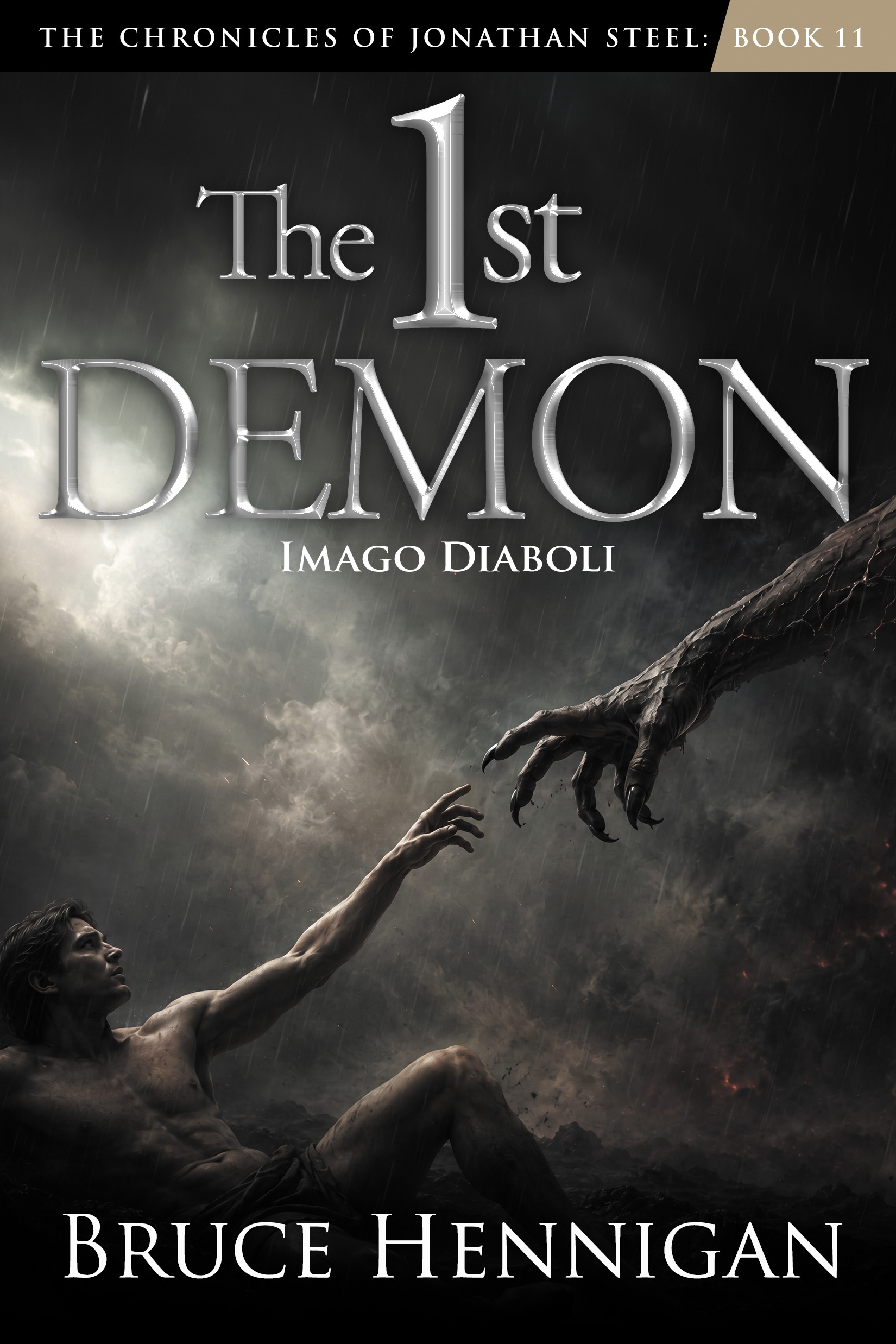

 Bruce Hennigan
You must be logged in to post a comment.